

6 Magnetoelectricity of Chiral Micromagnetic Structures
135
a)
b)
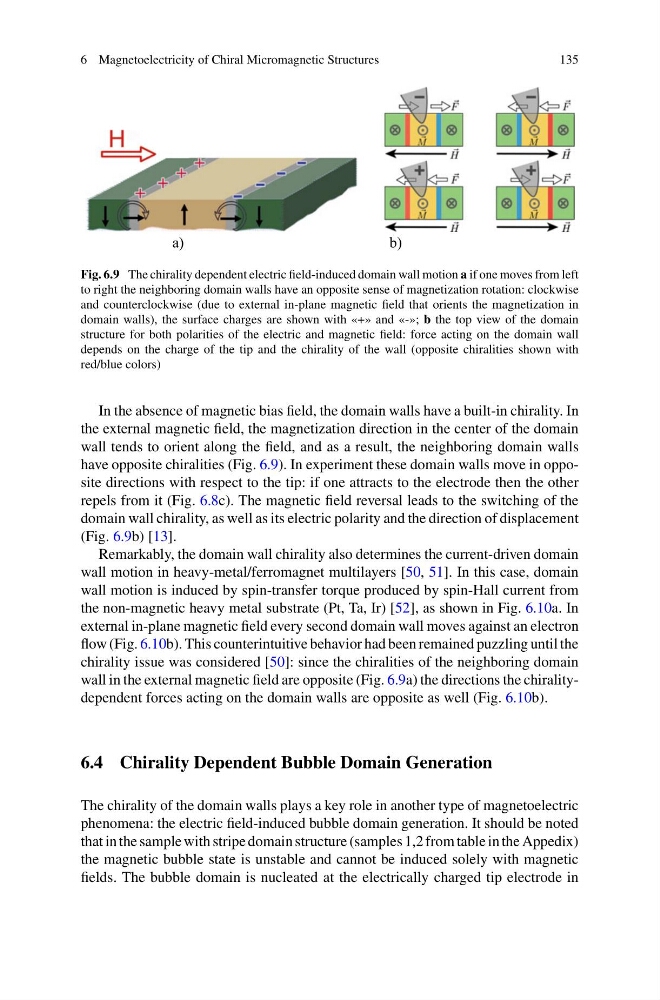
Fig. 6.9 The chirality dependent electric field-induced domain wall motion a if one moves from left
to right the neighboring domain walls have an opposite sense of magnetization rotation: clockwise
and counterclockwise (due to external in-plane magnetic field that orients the magnetization in
domain walls), the surface charges are shown with «+» and «-»; b the top view of the domain
structure for both polarities of the electric and magnetic field: force acting on the domain wall
depends on the charge of the tip and the chirality of the wall (opposite chiralities shown with
red/blue colors)
In the absence of magnetic bias field, the domain walls have a built-in chirality. In
the external magnetic field, the magnetization direction in the center of the domain
wall tends to orient along the field, and as a result, the neighboring domain walls
have opposite chiralities (Fig. 6.9). In experiment these domain walls move in opposite directions with respect to the tip: if one attracts to the electrode then the other
repels from it (Fig. 6.8c). The magnetic field reversal leads to the switching of the
domain wall chirality, as well as its electric polarity and the direction of displacement
(Fig. 6.9b) [13].
Remarkably, the domain wall chirality also determines the current-driven domain
wall motion in heavy-metal/ferromagnet multilayers [50, 51]. In this case, domain
wall motion is induced by spin-transfer torque produced by spin-Hall current from
the non-magnetic heavy metal substrate (Pt, Ta, Ir) [52], as shown in Fig. 6.10a. In
external in-plane magnetic field every second domain wall moves against an electron
flow (Fig. 6.10b). This counterintuitive behavior had been remained puzzling until the
chirality issue was considered [50]: since the chiralities of the neighboring domain
wall in the external magnetic field are opposite (Fig. 6.9a) the directions the chiralitydependent forces acting on the domain walls are opposite as well (Fig. 6.10b).
6.4 Chirality Dependent Bubble Domain Generation
The chirality of the domain walls plays a key role in another type of magnetoelectric
phenomena: the electric field-induced bubble domain generation. It should be noted
that in the sample with stripe domain structure (samples 1,2 from table in the Appedix)
the magnetic bubble state is unstable and cannot be induced solely with magnetic
fields. The bubble domain is nucleated at the electrically charged tip electrode in
135
a)
b)
Fig. 6.9 The chirality dependent electric field-induced domain wall motion a if one moves from left
to right the neighboring domain walls have an opposite sense of magnetization rotation: clockwise
and counterclockwise (due to external in-plane magnetic field that orients the magnetization in
domain walls), the surface charges are shown with «+» and «-»; b the top view of the domain
structure for both polarities of the electric and magnetic field: force acting on the domain wall
depends on the charge of the tip and the chirality of the wall (opposite chiralities shown with
red/blue colors)
In the absence of magnetic bias field, the domain walls have a built-in chirality. In
the external magnetic field, the magnetization direction in the center of the domain
wall tends to orient along the field, and as a result, the neighboring domain walls
have opposite chiralities (Fig. 6.9). In experiment these domain walls move in opposite directions with respect to the tip: if one attracts to the electrode then the other
repels from it (Fig. 6.8c). The magnetic field reversal leads to the switching of the
domain wall chirality, as well as its electric polarity and the direction of displacement
(Fig. 6.9b) [13].
Remarkably, the domain wall chirality also determines the current-driven domain
wall motion in heavy-metal/ferromagnet multilayers [50, 51]. In this case, domain
wall motion is induced by spin-transfer torque produced by spin-Hall current from
the non-magnetic heavy metal substrate (Pt, Ta, Ir) [52], as shown in Fig. 6.10a. In
external in-plane magnetic field every second domain wall moves against an electron
flow (Fig. 6.10b). This counterintuitive behavior had been remained puzzling until the
chirality issue was considered [50]: since the chiralities of the neighboring domain
wall in the external magnetic field are opposite (Fig. 6.9a) the directions the chiralitydependent forces acting on the domain walls are opposite as well (Fig. 6.10b).
6.4 Chirality Dependent Bubble Domain Generation
The chirality of the domain walls plays a key role in another type of magnetoelectric
phenomena: the electric field-induced bubble domain generation. It should be noted
that in the sample with stripe domain structure (samples 1,2 from table in the Appedix)
the magnetic bubble state is unstable and cannot be induced solely with magnetic
fields. The bubble domain is nucleated at the electrically charged tip electrode in