

130
A. P. Pyatakov et al.
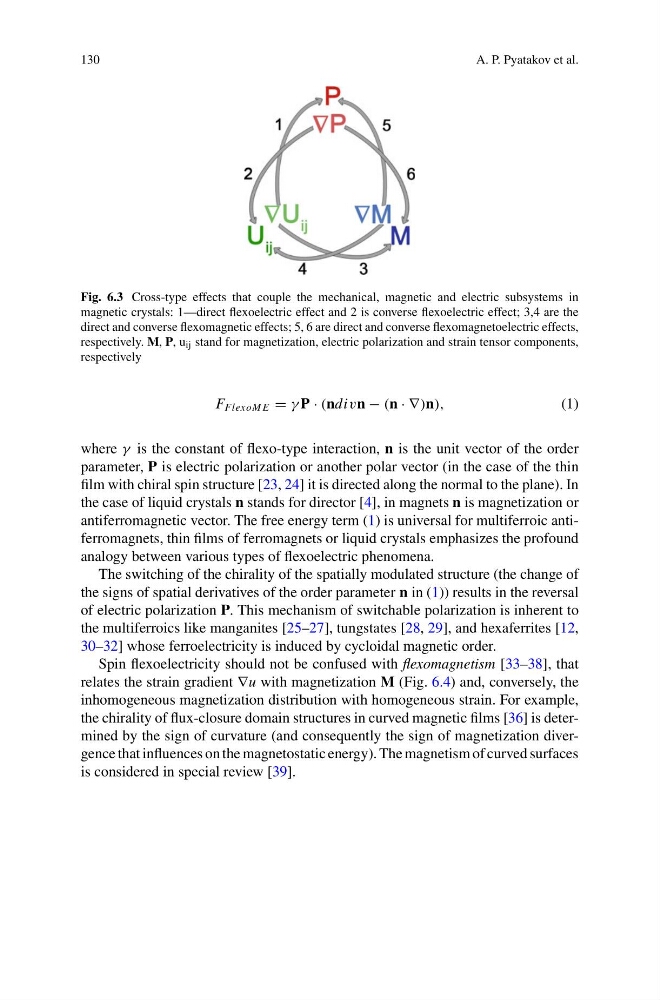
Fig. 6.3 Cross-type effects that couple the mechanical, magnetic and electric subsystems in
magnetic crystals: 1—direct flexoelectric effect and 2 is converse flexoelectric effect; 3,4 are the
direct and converse flexomagnetic effects; 5, 6 are direct and converse flexomagnetoelectric effects,
respectively. M, P, u ij stand for magnetization, electric polarization and strain tensor components,
respectively
F FlexoM E = γ P · (ndivn − (n · ∇)n),
(1)
where γ is the constant of flexo-type interaction, n is the unit vector of the order
parameter, P is electric polarization or another polar vector (in the case of the thin
film with chiral spin structure [23, 24] it is directed along the normal to the plane). In
the case of liquid crystals n stands for director [4], in magnets n is magnetization or
antiferromagnetic vector. The free energy term (1) is universal for multiferroic antiferromagnets, thin films of ferromagnets or liquid crystals emphasizes the profound
analogy between various types of flexoelectric phenomena.
The switching of the chirality of the spatially modulated structure (the change of
the signs of spatial derivatives of the order parameter n in (1)) results in the reversal
of electric polarization P. This mechanism of switchable polarization is inherent to
the multiferroics like manganites [25–27], tungstates [28, 29], and hexaferrites [12,
30–32] whose ferroelectricity is induced by cycloidal magnetic order.
Spin flexoelectricity should not be confused with flexomagnetism [33–38], that
relates the strain gradient ∇u with magnetization M (Fig. 6.4) and, conversely, the
inhomogeneous magnetization distribution with homogeneous strain. For example,
the chirality of flux-closure domain structures in curved magnetic films [36] is determined by the sign of curvature (and consequently the sign of magnetization divergence that influences on the magnetostatic energy). The magnetism of curved surfaces
is considered in special review [39].
A. P. Pyatakov et al.
Fig. 6.3 Cross-type effects that couple the mechanical, magnetic and electric subsystems in
magnetic crystals: 1—direct flexoelectric effect and 2 is converse flexoelectric effect; 3,4 are the
direct and converse flexomagnetic effects; 5, 6 are direct and converse flexomagnetoelectric effects,
respectively. M, P, u ij stand for magnetization, electric polarization and strain tensor components,
respectively
F FlexoM E = γ P · (ndivn − (n · ∇)n),
(1)
where γ is the constant of flexo-type interaction, n is the unit vector of the order
parameter, P is electric polarization or another polar vector (in the case of the thin
film with chiral spin structure [23, 24] it is directed along the normal to the plane). In
the case of liquid crystals n stands for director [4], in magnets n is magnetization or
antiferromagnetic vector. The free energy term (1) is universal for multiferroic antiferromagnets, thin films of ferromagnets or liquid crystals emphasizes the profound
analogy between various types of flexoelectric phenomena.
The switching of the chirality of the spatially modulated structure (the change of
the signs of spatial derivatives of the order parameter n in (1)) results in the reversal
of electric polarization P. This mechanism of switchable polarization is inherent to
the multiferroics like manganites [25–27], tungstates [28, 29], and hexaferrites [12,
30–32] whose ferroelectricity is induced by cycloidal magnetic order.
Spin flexoelectricity should not be confused with flexomagnetism [33–38], that
relates the strain gradient ∇u with magnetization M (Fig. 6.4) and, conversely, the
inhomogeneous magnetization distribution with homogeneous strain. For example,
the chirality of flux-closure domain structures in curved magnetic films [36] is determined by the sign of curvature (and consequently the sign of magnetization divergence that influences on the magnetostatic energy). The magnetism of curved surfaces
is considered in special review [39].