

10
dioxide, and zinc oxide are the most fabricated nanomaterials. Among these, silver
nanoparticles (24 wt%) are the most commonly found nanomaterial in the consumer
product inventory. The Project on Emerging Nanotechnologies’ consumer product
inventory is the largest compilation of nanoproducts available on the market, providing extremely useful information, such as the name of the product, producer
country, specific nanomaterial used, product functions, and so on.
However, a full product description is not available, particularly for the mass,
volume, and concentration of nanomaterials integrated into products or else the production volume of each product (Vance et al. 2015). Silicon dioxide consumption
was 198 kilo tons in 2015 and is expected to reach 768 kilo tons by 2022. Due to its
antibacterial property, nanosilver is very popular and has been used in consumer
products in a broad range of applications such as electronics, antibacterial textiles,
health care, and beauty (Global Market Insights Inc. 2017). The global market
growth of silver nanoparticles is expected to be 13% between 2016 and 2024.
Additionally, nanocellulose and nanoclay have shown constant growth signs as a
result of the increasing scope of their industrial applications. The Transparency
Market Research group forecasts that the market revenue of nanoclay and nanocellulose is expected to increase by 24.9% and 19%, respectively, until 2020 (TMR
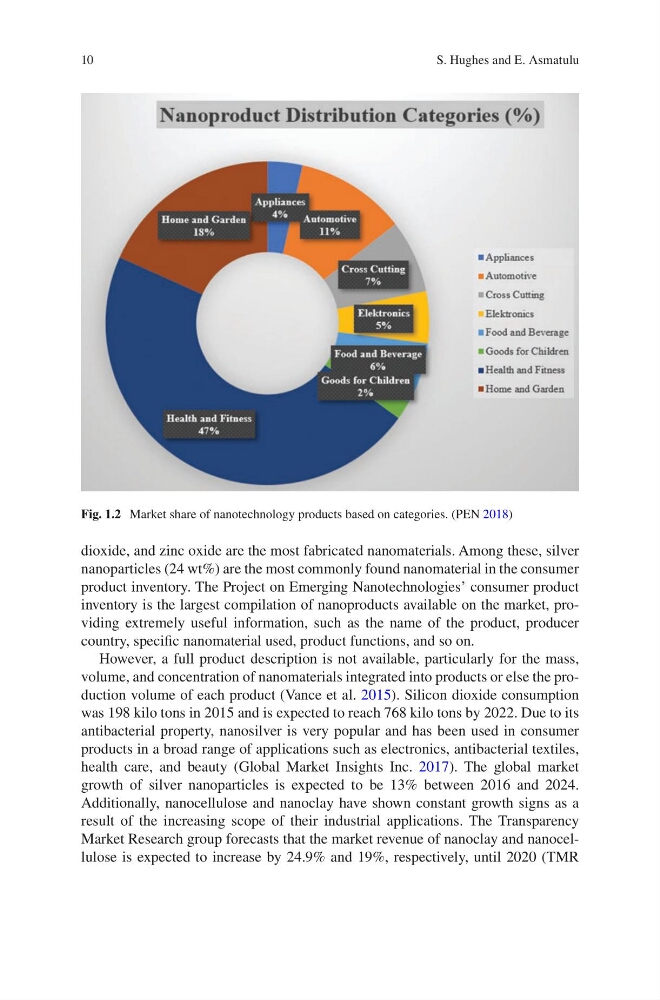
Fig. 1.2 Market share of nanotechnology products based on categories. (PEN 2018)
S. Hughes and E. Asmatulu
dioxide, and zinc oxide are the most fabricated nanomaterials. Among these, silver
nanoparticles (24 wt%) are the most commonly found nanomaterial in the consumer
product inventory. The Project on Emerging Nanotechnologies’ consumer product
inventory is the largest compilation of nanoproducts available on the market, providing extremely useful information, such as the name of the product, producer
country, specific nanomaterial used, product functions, and so on.
However, a full product description is not available, particularly for the mass,
volume, and concentration of nanomaterials integrated into products or else the production volume of each product (Vance et al. 2015). Silicon dioxide consumption
was 198 kilo tons in 2015 and is expected to reach 768 kilo tons by 2022. Due to its
antibacterial property, nanosilver is very popular and has been used in consumer
products in a broad range of applications such as electronics, antibacterial textiles,
health care, and beauty (Global Market Insights Inc. 2017). The global market
growth of silver nanoparticles is expected to be 13% between 2016 and 2024.
Additionally, nanocellulose and nanoclay have shown constant growth signs as a
result of the increasing scope of their industrial applications. The Transparency
Market Research group forecasts that the market revenue of nanoclay and nanocellulose is expected to increase by 24.9% and 19%, respectively, until 2020 (TMR
Fig. 1.2 Market share of nanotechnology products based on categories. (PEN 2018)
S. Hughes and E. Asmatulu