

144
polymeric substances. The efficacy of nanoparticles against antibiotic-resistant biofilms has also been shown. Superparamagnetic iron oxide nanoparticles in combination with fructose metabolites were explored as a new antimicrobial strategy, which
showed an 81% increase in antibiofilm efficacy (Durmus et al. 2013). Similarly,
in vitro antibiofilm and antiadhesion effects of magnesium oxide nanoparticles were
also observed by Hayat et al. (2018).
6.2.2 Effect of Biologically Synthesized Nanoparticles
on Drug-Resistant Bacteria
The biological synthesis of nanoparticles is an innovative approach that provides for
a simpler, cost-effective, nonpathogenic, and more environment-friendly process of
nanoparticle synthesis over chemical synthesis processes. Bacterial, fungal, and
plant-based resources have been used for the bio-fabrication of nanoparticles and
their effects on drug-resistant bacteria seen (Table 6.2). The effects of nanoparticles
include dose-dependent inhibition of bacterial growth, antibiofilm and antibacterial
activity, cell damage and death, and loss of cell viability. As observed earlier, silver
nanoparticles are among those widely studied. Antibacterial activity of antibiotics
was enhanced when impregnated with biologically synthesized silver nanoparticles
(Naqvi et al. 2013). The nanoparticle-impregnated antibiotics were able to exert
antibacterial effects on eight multidrug-resistant bacteria isolates. Similarly, twodrug combination of bio-silver nanoparticles and oregano essential oil was found to
be much more effective against multidrug-resistant strains, over individual treatments (Scandorieiro et al. 2016). Antibiofilm formation by resistant bacteria was
also inhibited by biologically synthesized silver nanoparticles (Ali et al. 2018; Das
et al. 2017a; Kanmani and Lim 2013).
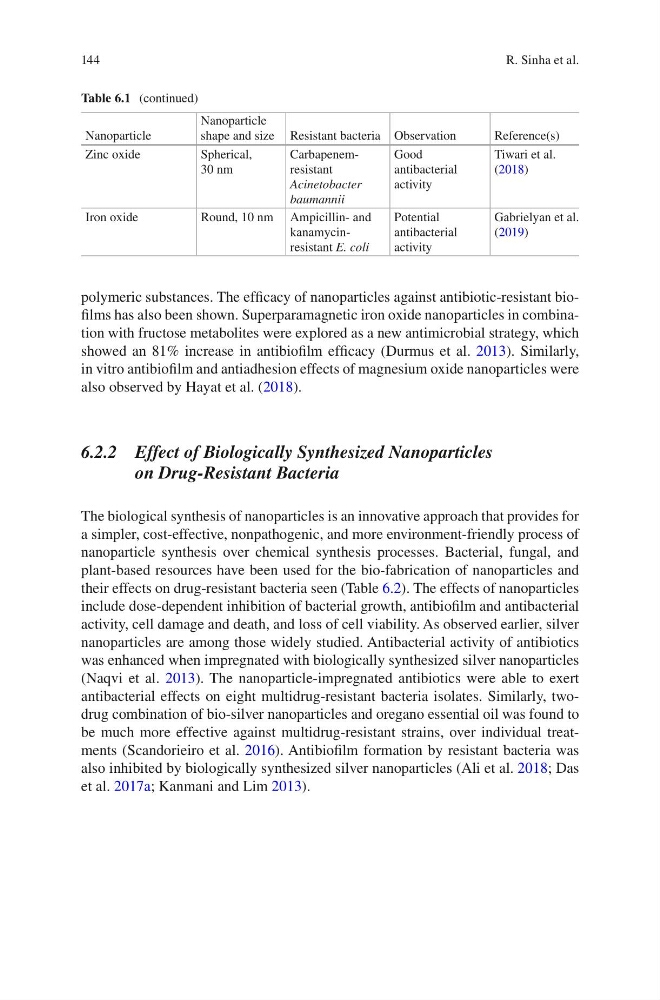
Nanoparticle
Nanoparticle
shape and size Resistant bacteria Observation
Reference(s)
Zinc oxide
Spherical,
30 nm
Carbapenemresistant
Acinetobacter
baumannii
Good
antibacterial
activity
Tiwari et al.
(2018)
Iron oxide
Round, 10 nm Ampicillin- and
kanamycinresistant E. coli
Potential
antibacterial
activity
Gabrielyan et al.
(2019)
Table 6.1 (continued)
R. Sinha et al.
polymeric substances. The efficacy of nanoparticles against antibiotic-resistant biofilms has also been shown. Superparamagnetic iron oxide nanoparticles in combination with fructose metabolites were explored as a new antimicrobial strategy, which
showed an 81% increase in antibiofilm efficacy (Durmus et al. 2013). Similarly,
in vitro antibiofilm and antiadhesion effects of magnesium oxide nanoparticles were
also observed by Hayat et al. (2018).
6.2.2 Effect of Biologically Synthesized Nanoparticles
on Drug-Resistant Bacteria
The biological synthesis of nanoparticles is an innovative approach that provides for
a simpler, cost-effective, nonpathogenic, and more environment-friendly process of
nanoparticle synthesis over chemical synthesis processes. Bacterial, fungal, and
plant-based resources have been used for the bio-fabrication of nanoparticles and
their effects on drug-resistant bacteria seen (Table 6.2). The effects of nanoparticles
include dose-dependent inhibition of bacterial growth, antibiofilm and antibacterial
activity, cell damage and death, and loss of cell viability. As observed earlier, silver
nanoparticles are among those widely studied. Antibacterial activity of antibiotics
was enhanced when impregnated with biologically synthesized silver nanoparticles
(Naqvi et al. 2013). The nanoparticle-impregnated antibiotics were able to exert
antibacterial effects on eight multidrug-resistant bacteria isolates. Similarly, twodrug combination of bio-silver nanoparticles and oregano essential oil was found to
be much more effective against multidrug-resistant strains, over individual treatments (Scandorieiro et al. 2016). Antibiofilm formation by resistant bacteria was
also inhibited by biologically synthesized silver nanoparticles (Ali et al. 2018; Das
et al. 2017a; Kanmani and Lim 2013).
Nanoparticle
Nanoparticle
shape and size Resistant bacteria Observation
Reference(s)
Zinc oxide
Spherical,
30 nm
Carbapenemresistant
Acinetobacter
baumannii
Good
antibacterial
activity
Tiwari et al.
(2018)
Iron oxide
Round, 10 nm Ampicillin- and
kanamycinresistant E. coli
Potential
antibacterial
activity
Gabrielyan et al.
(2019)
Table 6.1 (continued)
R. Sinha et al.