

336
R. dell’Erba
20
40
60
80
100
120
20
40
60
80
100
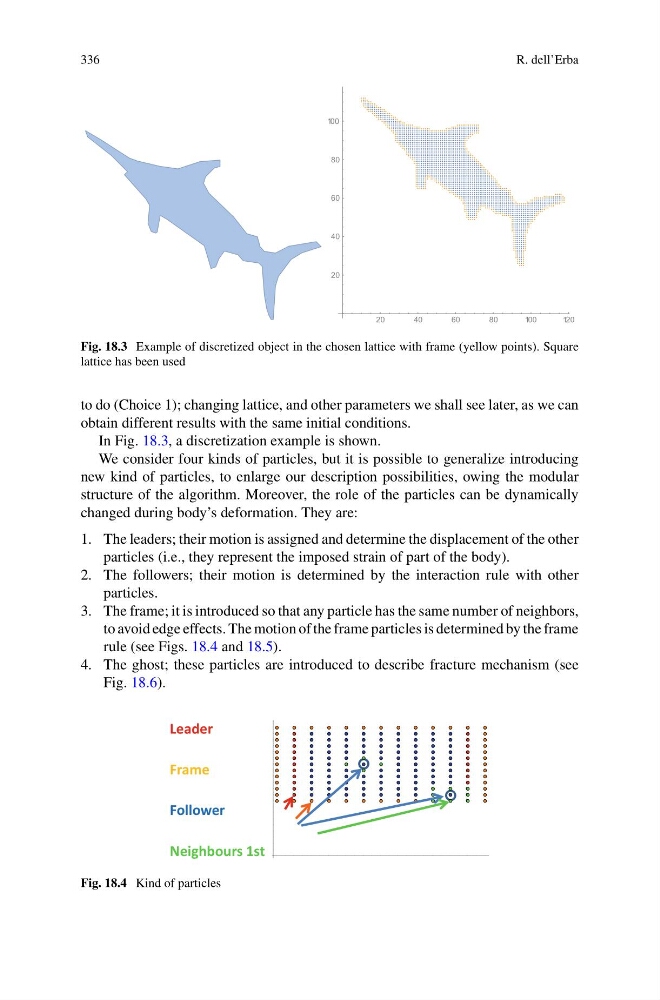
Fig. 18.3 Example of discretized object in the chosen lattice with frame (yellow points). Square
lattice has been used
to do (Choice 1); changing lattice, and other parameters we shall see later, as we can
obtain different results with the same initial conditions.
In Fig. 18.3, a discretization example is shown.
We consider four kinds of particles, but it is possible to generalize introducing
new kind of particles, to enlarge our description possibilities, owing the modular
structure of the algorithm. Moreover, the role of the particles can be dynamically
changed during body’s deformation. They are:
1. The leaders; their motion is assigned and determine the displacement of the other
particles (i.e., they represent the imposed strain of part of the body).
2. The followers; their motion is determined by the interaction rule with other
particles.
3. The frame; it is introduced so that any particle has the same number of neighbors,
to avoid edge effects. The motion of the frame particles is determined by the frame
rule (see Figs. 18.4 and 18.5).
4. The ghost; these particles are introduced to describe fracture mechanism (see
Fig. 18.6).
Leader
Frame
Follower
Neighbours 1st
Fig. 18.4 Kind of particles
R. dell’Erba
20
40
60
80
100
120
20
40
60
80
100
Fig. 18.3 Example of discretized object in the chosen lattice with frame (yellow points). Square
lattice has been used
to do (Choice 1); changing lattice, and other parameters we shall see later, as we can
obtain different results with the same initial conditions.
In Fig. 18.3, a discretization example is shown.
We consider four kinds of particles, but it is possible to generalize introducing
new kind of particles, to enlarge our description possibilities, owing the modular
structure of the algorithm. Moreover, the role of the particles can be dynamically
changed during body’s deformation. They are:
1. The leaders; their motion is assigned and determine the displacement of the other
particles (i.e., they represent the imposed strain of part of the body).
2. The followers; their motion is determined by the interaction rule with other
particles.
3. The frame; it is introduced so that any particle has the same number of neighbors,
to avoid edge effects. The motion of the frame particles is determined by the frame
rule (see Figs. 18.4 and 18.5).
4. The ghost; these particles are introduced to describe fracture mechanism (see
Fig. 18.6).
Leader
Frame
Follower
Neighbours 1st
Fig. 18.4 Kind of particles