

16 Strain Gradient Models for Growing Solid Bodies
295
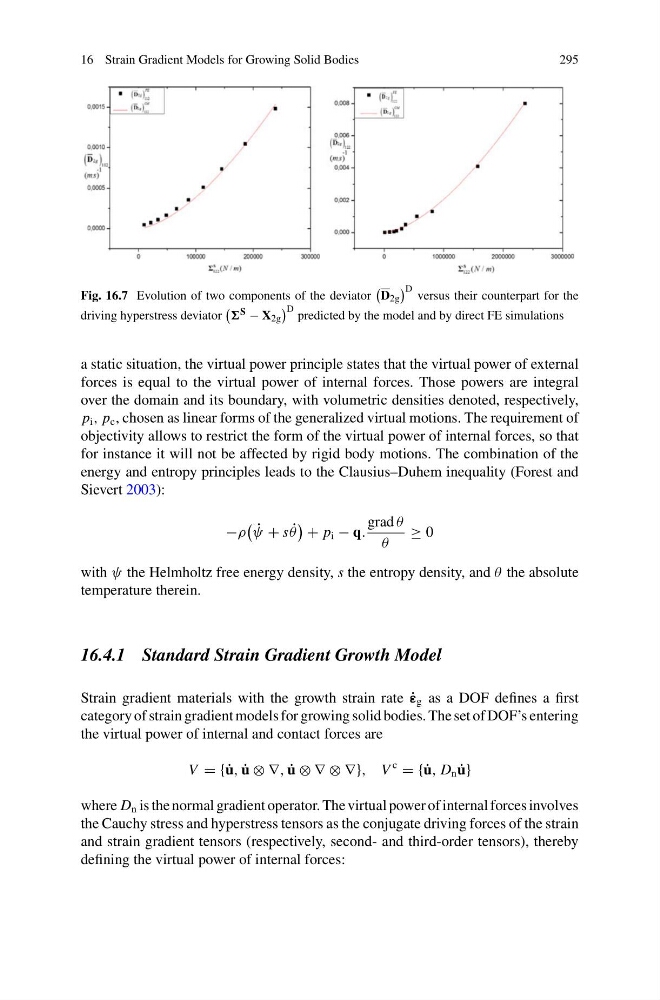
Fig. 16.7 Evolution of two components of the deviator
D 2g
D versus their counterpart for the
driving hyperstress deviator
S − X 2g
D predicted by the model and by direct FE simulations
a static situation, the virtual power principle states that the virtual power of external
forces is equal to the virtual power of internal forces. Those powers are integral
over the domain and its boundary, with volumetric densities denoted, respectively,
p i , p c , chosen as linear forms of the generalized virtual motions. The requirement of
objectivity allows to restrict the form of the virtual power of internal forces, so that
for instance it will not be affected by rigid body motions. The combination of the
energy and entropy principles leads to the Clausius–Duhem inequality (Forest and
Sievert 2003):
−ρ
˙
ψ + s ˙
θ
+ p i − q.
grad θ
θ
≥ 0
with ψ the Helmholtz free energy density, s the entropy density, and θ the absolute
temperature therein.
16.4.1 Standard Strain Gradient Growth Model
Strain gradient materials with the growth strain rate ˙
ε g as a DOF defines a first
category of strain gradient models for growing solid bodies. The set of DOF’s entering
the virtual power of internal and contact forces are
V = { ˙
u, ˙
u ⊗ ∇, ˙
u ⊗ ∇ ⊗ ∇}, V
c
= { ˙
u, D n ˙
u}
where D n is the normal gradient operator. The virtual power of internal forces involves
the Cauchy stress and hyperstress tensors as the conjugate driving forces of the strain
and strain gradient tensors (respectively, second- and third-order tensors), thereby
defining the virtual power of internal forces:
295
Fig. 16.7 Evolution of two components of the deviator
D 2g
D versus their counterpart for the
driving hyperstress deviator
S − X 2g
D predicted by the model and by direct FE simulations
a static situation, the virtual power principle states that the virtual power of external
forces is equal to the virtual power of internal forces. Those powers are integral
over the domain and its boundary, with volumetric densities denoted, respectively,
p i , p c , chosen as linear forms of the generalized virtual motions. The requirement of
objectivity allows to restrict the form of the virtual power of internal forces, so that
for instance it will not be affected by rigid body motions. The combination of the
energy and entropy principles leads to the Clausius–Duhem inequality (Forest and
Sievert 2003):
−ρ
˙
ψ + s ˙
θ
+ p i − q.
grad θ
θ
≥ 0
with ψ the Helmholtz free energy density, s the entropy density, and θ the absolute
temperature therein.
16.4.1 Standard Strain Gradient Growth Model
Strain gradient materials with the growth strain rate ˙
ε g as a DOF defines a first
category of strain gradient models for growing solid bodies. The set of DOF’s entering
the virtual power of internal and contact forces are
V = { ˙
u, ˙
u ⊗ ∇, ˙
u ⊗ ∇ ⊗ ∇}, V
c
= { ˙
u, D n ˙
u}
where D n is the normal gradient operator. The virtual power of internal forces involves
the Cauchy stress and hyperstress tensors as the conjugate driving forces of the strain
and strain gradient tensors (respectively, second- and third-order tensors), thereby
defining the virtual power of internal forces: