

294
Z. Louna et al.
100000
1000000
1E7
1E8
1E-4
1E-3
0,01
0,1
1
( )( / )
S
Σ
J
N m
2
1
1
(
)
( . )
D
−
g
J
m s
1000000
1E7
1E8
1E-7
1E-5
1E-3
2
( )( / )
S
Σ
J
N m
2
2
1
(
)
( . )
D
−
g
J
m s
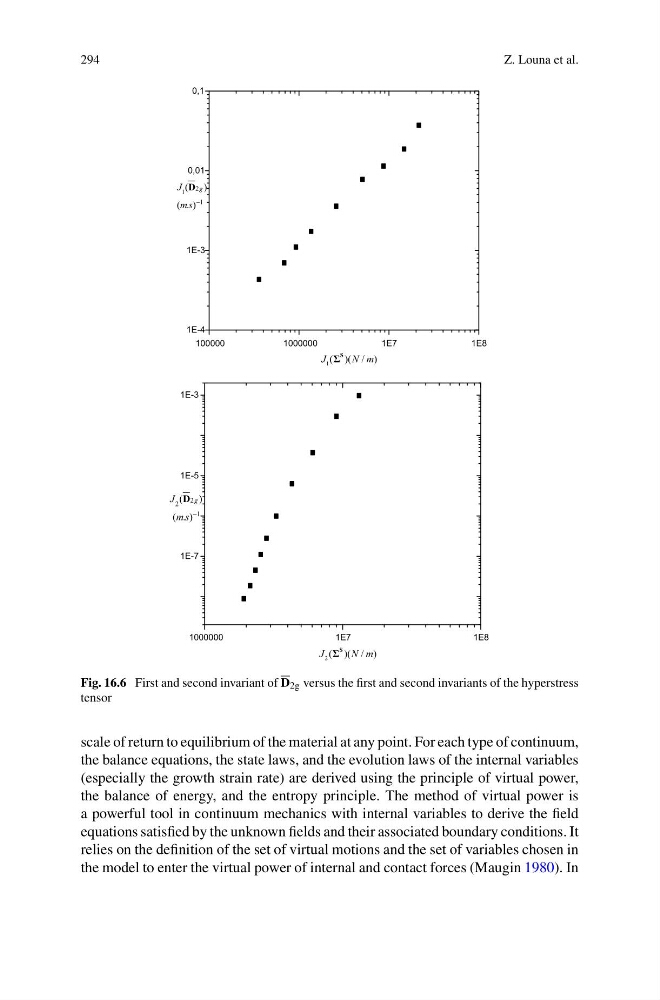
Fig. 16.6 First and second invariant of D 2g versus the first and second invariants of the hyperstress
tensor
scale of return to equilibrium of the material at any point. For each type of continuum,
the balance equations, the state laws, and the evolution laws of the internal variables
(especially the growth strain rate) are derived using the principle of virtual power,
the balance of energy, and the entropy principle. The method of virtual power is
a powerful tool in continuum mechanics with internal variables to derive the field
equations satisfied by the unknown fields and their associated boundary conditions. It
relies on the definition of the set of virtual motions and the set of variables chosen in
the model to enter the virtual power of internal and contact forces (Maugin 1980). In
Z. Louna et al.
100000
1000000
1E7
1E8
1E-4
1E-3
0,01
0,1
1
( )( / )
S
Σ
J
N m
2
1
1
(
)
( . )
D
−
g
J
m s
1000000
1E7
1E8
1E-7
1E-5
1E-3
2
( )( / )
S
Σ
J
N m
2
2
1
(
)
( . )
D
−
g
J
m s
Fig. 16.6 First and second invariant of D 2g versus the first and second invariants of the hyperstress
tensor
scale of return to equilibrium of the material at any point. For each type of continuum,
the balance equations, the state laws, and the evolution laws of the internal variables
(especially the growth strain rate) are derived using the principle of virtual power,
the balance of energy, and the entropy principle. The method of virtual power is
a powerful tool in continuum mechanics with internal variables to derive the field
equations satisfied by the unknown fields and their associated boundary conditions. It
relies on the definition of the set of virtual motions and the set of variables chosen in
the model to enter the virtual power of internal and contact forces (Maugin 1980). In