

182
L. Igumnov et al.
a
b
c
d
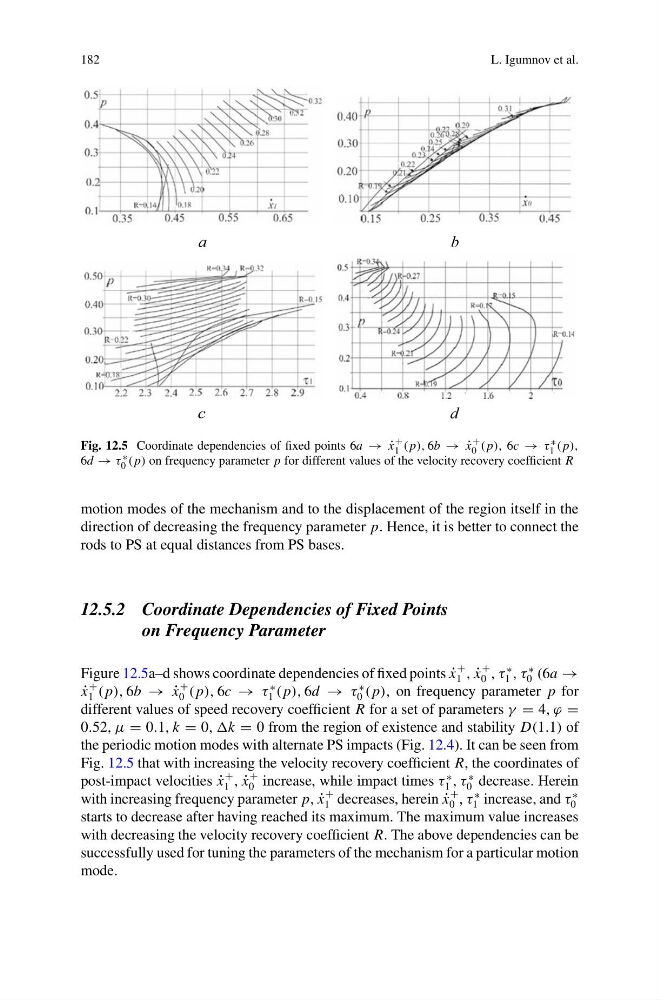
Fig. 12.5 Coordinate dependencies of fixed points 6a → ˙
x
+
1 ( p), 6b → ˙
x
+
0 ( p), 6c → τ ∗
1 ( p),
6d → τ ∗
0 ( p) on frequency parameter p for different values of the velocity recovery coefficient R
motion modes of the mechanism and to the displacement of the region itself in the
direction of decreasing the frequency parameter p. Hence, it is better to connect the
rods to PS at equal distances from PS bases.
12.5.2 Coordinate Dependencies of Fixed Points
on Frequency Parameter
Figure 12.5a–d shows coordinate dependencies of fixed points ˙
x
+
1 , ˙
x
+
0 , τ
∗
1 , τ
∗
0 (6a →
˙
x
+
1 ( p), 6b → ˙
x
+
0 ( p), 6c → τ
∗
1 ( p), 6d → τ
∗
0 ( p), on frequency parameter p for
different values of speed recovery coefficient R for a set of parameters γ = 4, ϕ =
0.52, μ = 0.1, k = 0, ,k = 0 from the region of existence and stability D(1.1) of
the periodic motion modes with alternate PS impacts (Fig. 12.4). It can be seen from
Fig. 12.5 that with increasing the velocity recovery coefficient R, the coordinates of
post-impact velocities ˙
x
+
1 , ˙
x
+
0 increase, while impact times τ
∗
1 , τ
∗
0 decrease. Herein
with increasing frequency parameter p, ˙
x
+
1 decreases, herein ˙
x
+
0 , τ
∗
1 increase, and τ
∗
0
starts to decrease after having reached its maximum. The maximum value increases
with decreasing the velocity recovery coefficient R. The above dependencies can be
successfully used for tuning the parameters of the mechanism for a particular motion
mode.
L. Igumnov et al.
a
b
c
d
Fig. 12.5 Coordinate dependencies of fixed points 6a → ˙
x
+
1 ( p), 6b → ˙
x
+
0 ( p), 6c → τ ∗
1 ( p),
6d → τ ∗
0 ( p) on frequency parameter p for different values of the velocity recovery coefficient R
motion modes of the mechanism and to the displacement of the region itself in the
direction of decreasing the frequency parameter p. Hence, it is better to connect the
rods to PS at equal distances from PS bases.
12.5.2 Coordinate Dependencies of Fixed Points
on Frequency Parameter
Figure 12.5a–d shows coordinate dependencies of fixed points ˙
x
+
1 , ˙
x
+
0 , τ
∗
1 , τ
∗
0 (6a →
˙
x
+
1 ( p), 6b → ˙
x
+
0 ( p), 6c → τ
∗
1 ( p), 6d → τ
∗
0 ( p), on frequency parameter p for
different values of speed recovery coefficient R for a set of parameters γ = 4, ϕ =
0.52, μ = 0.1, k = 0, ,k = 0 from the region of existence and stability D(1.1) of
the periodic motion modes with alternate PS impacts (Fig. 12.4). It can be seen from
Fig. 12.5 that with increasing the velocity recovery coefficient R, the coordinates of
post-impact velocities ˙
x
+
1 , ˙
x
+
0 increase, while impact times τ
∗
1 , τ
∗
0 decrease. Herein
with increasing frequency parameter p, ˙
x
+
1 decreases, herein ˙
x
+
0 , τ
∗
1 increase, and τ
∗
0
starts to decrease after having reached its maximum. The maximum value increases
with decreasing the velocity recovery coefficient R. The above dependencies can be
successfully used for tuning the parameters of the mechanism for a particular motion
mode.