

385
highly porous organic matrix substances that can store hydrogen
and other gases (see Figure 11.3 in Chapter 11).
Batteries, as fuel cells, are also electrochemical power sources.
However, in contrast to fuel cells, which produce electricity continuously as long as a fuel and an oxidant are delivered, batteries
convert chemical energy into electrical energy by electrochemical
reactions occurring between the already existing constituents. A
battery is composed of one or more electrochemical cells, which
can be connected in parallel or series to deliver power. A typical
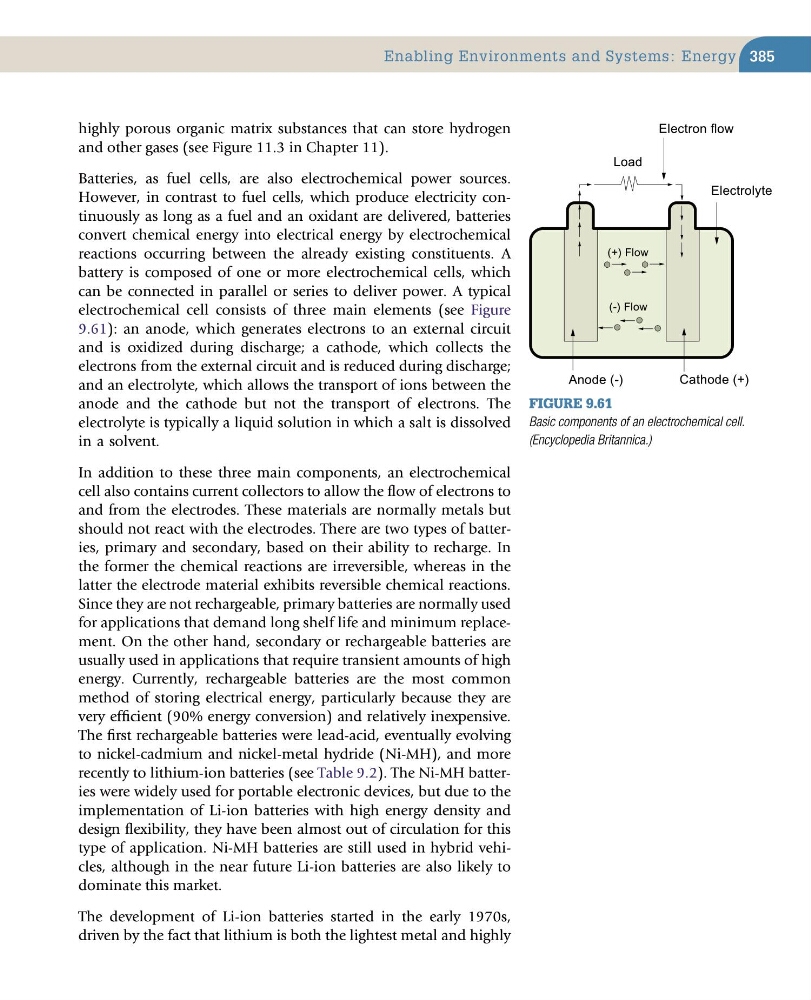
electrochemical cell consists of three main elements (see Figure
9.61): an anode, which generates electrons to an external circuit
and is oxidized during discharge; a cathode, which collects the
electrons from the external circuit and is reduced during discharge;
and an electrolyte, which allows the transport of ions between the
anode and the cathode but not the transport of electrons. The
electrolyte is typically a liquid solution in which a salt is dissolved
in a solvent.
In addition to these three main components, an electrochemical
cell also contains current collectors to allow the flow of electrons to
and from the electrodes. These materials are normally metals but
should not react with the electrodes. There are two types of batteries, primary and secondary, based on their ability to recharge. In
the former the chemical reactions are irreversible, whereas in the
latter the electrode material exhibits reversible chemical reactions.
Since they are not rechargeable, primary batteries are normally used
for applications that demand long shelf life and minimum replacement. On the other hand, secondary or rechargeable batteries are
usually used in applications that require transient amounts of high
energy. Currently, rechargeable batteries are the most common
method of storing electrical energy, particularly because they are
very efficient (90% energy conversion) and relatively inexpensive.
The first rechargeable batteries were lead-acid, eventually evolving
to nickel-cadmium and nickel-metal hydride (Ni-MH), and more
recently to lithium-ion batteries (see Table 9.2). The Ni-MH batteries were widely used for portable electronic devices, but due to the
implementation of Li-ion batteries with high energy density and
design flexibility, they have been almost out of circulation for this
type of application. Ni-MH batteries are still used in hybrid vehicles, although in the near future Li-ion batteries are also likely to
dominate this market.
The development of Li-ion batteries started in the early 1970s,
driven by the fact that lithium is both the lightest metal and highly
Figure 9.61
Basic components of an electrochemical cell.
(Encyclopedia Britannica.)
Anode (-)
Cathode (+)
Electrolyte
Load
Electron flow
(+) Flow
(-) Flow
Enabling Environments and Systems: Energy
highly porous organic matrix substances that can store hydrogen
and other gases (see Figure 11.3 in Chapter 11).
Batteries, as fuel cells, are also electrochemical power sources.
However, in contrast to fuel cells, which produce electricity continuously as long as a fuel and an oxidant are delivered, batteries
convert chemical energy into electrical energy by electrochemical
reactions occurring between the already existing constituents. A
battery is composed of one or more electrochemical cells, which
can be connected in parallel or series to deliver power. A typical
electrochemical cell consists of three main elements (see Figure
9.61): an anode, which generates electrons to an external circuit
and is oxidized during discharge; a cathode, which collects the
electrons from the external circuit and is reduced during discharge;
and an electrolyte, which allows the transport of ions between the
anode and the cathode but not the transport of electrons. The
electrolyte is typically a liquid solution in which a salt is dissolved
in a solvent.
In addition to these three main components, an electrochemical
cell also contains current collectors to allow the flow of electrons to
and from the electrodes. These materials are normally metals but
should not react with the electrodes. There are two types of batteries, primary and secondary, based on their ability to recharge. In
the former the chemical reactions are irreversible, whereas in the
latter the electrode material exhibits reversible chemical reactions.
Since they are not rechargeable, primary batteries are normally used
for applications that demand long shelf life and minimum replacement. On the other hand, secondary or rechargeable batteries are
usually used in applications that require transient amounts of high
energy. Currently, rechargeable batteries are the most common
method of storing electrical energy, particularly because they are
very efficient (90% energy conversion) and relatively inexpensive.
The first rechargeable batteries were lead-acid, eventually evolving
to nickel-cadmium and nickel-metal hydride (Ni-MH), and more
recently to lithium-ion batteries (see Table 9.2). The Ni-MH batteries were widely used for portable electronic devices, but due to the
implementation of Li-ion batteries with high energy density and
design flexibility, they have been almost out of circulation for this
type of application. Ni-MH batteries are still used in hybrid vehicles, although in the near future Li-ion batteries are also likely to
dominate this market.
The development of Li-ion batteries started in the early 1970s,
driven by the fact that lithium is both the lightest metal and highly
Figure 9.61
Basic components of an electrochemical cell.
(Encyclopedia Britannica.)
Anode (-)
Cathode (+)
Electrolyte
Load
Electron flow
(+) Flow
(-) Flow
Enabling Environments and Systems: Energy