

201
ground and air transport, for space exploration, and for defense
derive their strength from a nanoscale dispersion of particles.
Why should finely divided or structured materials have properties that differ from those of a more conventional scale? Why does
almost anything with a nanoscale component to its structure have
unusual properties? In this section we explore the gains to be made
and the problems to be overcome in using nanostructuring to
increase the hardness and strength of materials.
the Mechanical Properties of
nanostructured Materials
Mechanical properties and their origins were introduced in Chapter
4, Section 4.3. There the point was made that the strengths of metals
and ceramics lay far below the theoretically achievable limit. In this
section we explore the ways in which nanostructuring begins to
close the gap between theory and reality.
nanodispersions
The use of nanostructuring to achieve high strength is not new.
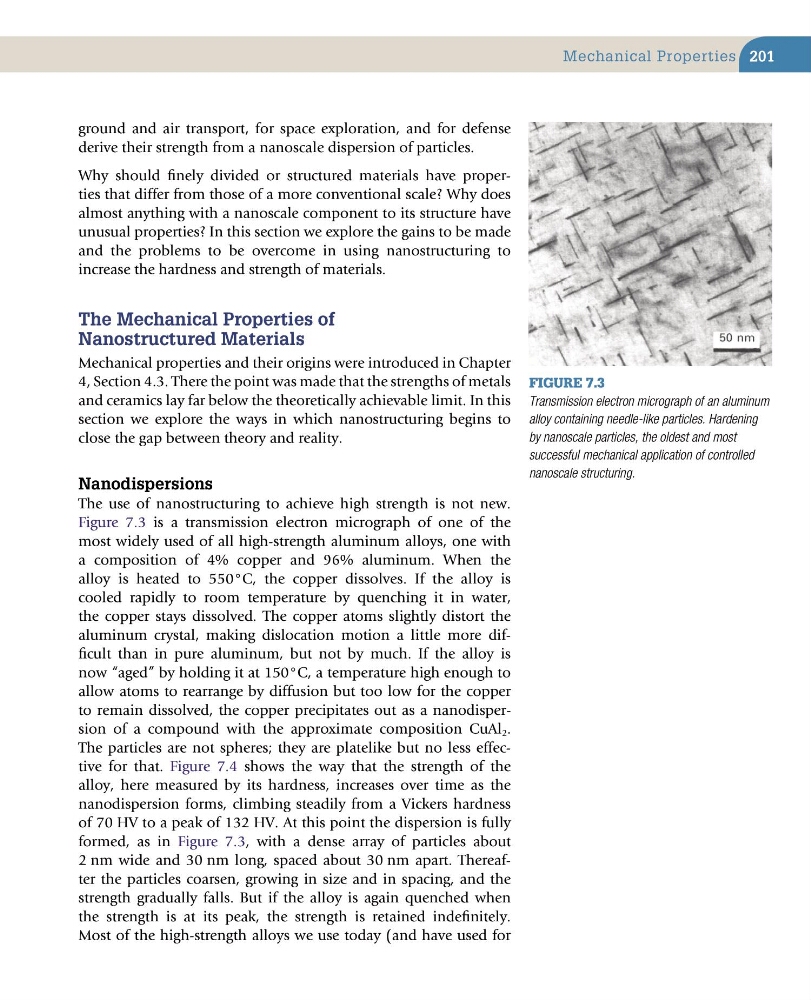
Figure 7.3 is a transmission electron micrograph of one of the
most widely used of all high-strength aluminum alloys, one with
a composition of 4% copper and 96% aluminum. When the
alloy is heated to 550°C, the copper dissolves. If the alloy is
cooled rapidly to room temperature by quenching it in water,
the copper stays dissolved. The copper atoms slightly distort the
aluminum crystal, making dislocation motion a little more difficult than in pure aluminum, but not by much. If the alloy is
now “aged” by holding it at 150°C, a temperature high enough to
allow atoms to rearrange by diffusion but too low for the copper
to remain dissolved, the copper precipitates out as a nanodispersion of a compound with the approximate composition CuAl 2 .
The particles are not spheres; they are platelike but no less effective for that. Figure 7.4 shows the way that the strength of the
alloy, here measured by its hardness, increases over time as the
nanodispersion forms, climbing steadily from a Vickers hardness
of 70 HV to a peak of 132 HV. At this point the dispersion is fully
formed, as in Figure 7.3, with a dense array of particles about
2 nm wide and 30 nm long, spaced about 30 nm apart. Thereafter the particles coarsen, growing in size and in spacing, and the
strength gradually falls. But if the alloy is again quenched when
the strength is at its peak, the strength is retained indefinitely.
Most of the high-strength alloys we use today (and have used for
Figure 7.3
Transmission electron micrograph of an aluminum
alloy containing needle-like particles. Hardening
by nanoscale particles, the oldest and most
successful mechanical application of controlled
nanoscale structuring.
Mechanical Properties
ground and air transport, for space exploration, and for defense
derive their strength from a nanoscale dispersion of particles.
Why should finely divided or structured materials have properties that differ from those of a more conventional scale? Why does
almost anything with a nanoscale component to its structure have
unusual properties? In this section we explore the gains to be made
and the problems to be overcome in using nanostructuring to
increase the hardness and strength of materials.
the Mechanical Properties of
nanostructured Materials
Mechanical properties and their origins were introduced in Chapter
4, Section 4.3. There the point was made that the strengths of metals
and ceramics lay far below the theoretically achievable limit. In this
section we explore the ways in which nanostructuring begins to
close the gap between theory and reality.
nanodispersions
The use of nanostructuring to achieve high strength is not new.
Figure 7.3 is a transmission electron micrograph of one of the
most widely used of all high-strength aluminum alloys, one with
a composition of 4% copper and 96% aluminum. When the
alloy is heated to 550°C, the copper dissolves. If the alloy is
cooled rapidly to room temperature by quenching it in water,
the copper stays dissolved. The copper atoms slightly distort the
aluminum crystal, making dislocation motion a little more difficult than in pure aluminum, but not by much. If the alloy is
now “aged” by holding it at 150°C, a temperature high enough to
allow atoms to rearrange by diffusion but too low for the copper
to remain dissolved, the copper precipitates out as a nanodispersion of a compound with the approximate composition CuAl 2 .
The particles are not spheres; they are platelike but no less effective for that. Figure 7.4 shows the way that the strength of the
alloy, here measured by its hardness, increases over time as the
nanodispersion forms, climbing steadily from a Vickers hardness
of 70 HV to a peak of 132 HV. At this point the dispersion is fully
formed, as in Figure 7.3, with a dense array of particles about
2 nm wide and 30 nm long, spaced about 30 nm apart. Thereafter the particles coarsen, growing in size and in spacing, and the
strength gradually falls. But if the alloy is again quenched when
the strength is at its peak, the strength is retained indefinitely.
Most of the high-strength alloys we use today (and have used for
Figure 7.3
Transmission electron micrograph of an aluminum
alloy containing needle-like particles. Hardening
by nanoscale particles, the oldest and most
successful mechanical application of controlled
nanoscale structuring.
Mechanical Properties