

process. A very related electronic structure was reported for the dinitrogen-bridged
Mo 2 derivative, but reactivity with ammonia resulted in N–H and C–N bond
cleavage for one of the imino fragment, leading to a bridging parent imido
species [69].
The Herbert group very recently interrogated both P
I and P
III complexes with the
same bulky pdi derivative and observed that the low oxidation state derivative shows
reversible reduction at À1.38 V vs. Fc/Fc
+
, likely related to backbone-based redoxchemistry [70]. Berry and co-workers investigated dinuclear Ru complexes with pdi
and a bridging dinitrogen ligand [71]. The size of the imino substituents influenced
electronic communication between both one-electron reduced pdi ligand radicals
and therefore the overall spin state of the system.
2.2 2,2
0 ,2
00 -Terpyridine and Substituted Derivatives Thereof
Although omnipresent in research related to photo-, magneto- and supramolecular
chemistry as well as in catalysis [72], the exploitation of the redox activity of
2,2
0 ,2
00 -terpyridine (tpy)-based systems is strikingly underrepresented. This is particularly noteworthy in connection to the fact that their bidentate 2,2
0 -bipyridinebased counterparts are well-established and frequently employed for their redox
activity, e.g. in electrocatalytic CO 2 reduction. Recent studies using tpy as locus for
redox activity have emerged, nonetheless. The free tpy molecule undergoes a
reversible reduction at À2.55 V vs. Fc/Fc
+ to generate the radical anion tpy
À•
.
Scanning more negatively results in a second, but irreversible, reduction at
À3.05 V [73, 74]. Wieghardt and co-workers have thoroughly investigated the
electronic structure of a series of homoleptic M(tpy) 2 complexes with varying
overall charge. Redox-chemistry almost invariably occurs at the tpy ligand, with
the formation of mixed valent [M(tpy
À•
)(tpy)] as well as diradical [M(tpy
À•
) 2 ]
species disclosed [75, 76]. Remarkable ‘outlier’ in this regard proved to be the
complex Co(tpy) 2 , where metal-centred redox was observed [77].
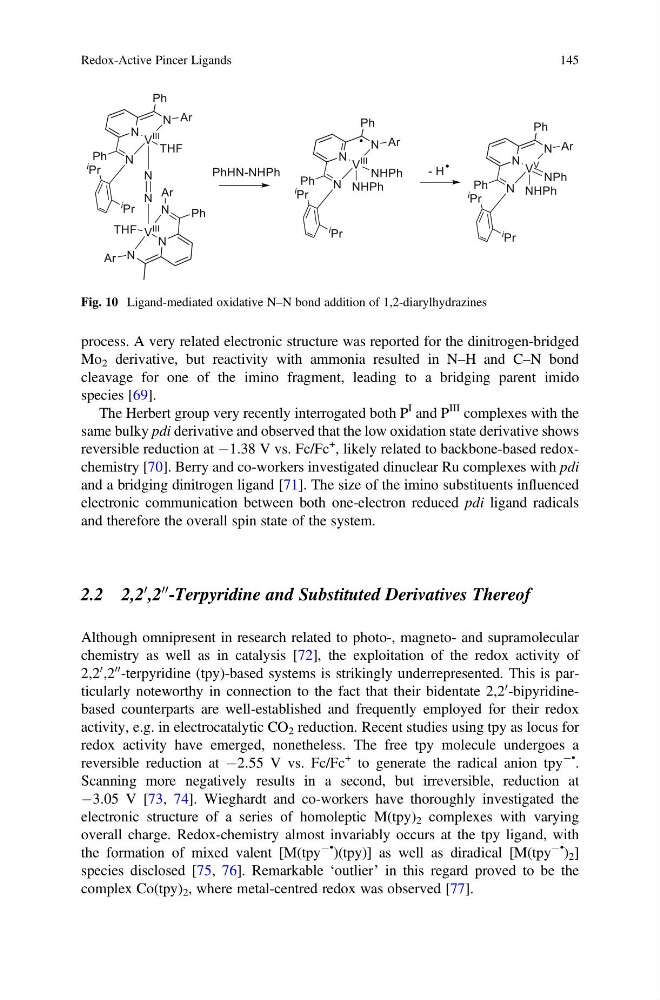
Fig. 10 Ligand-mediated oxidative N–N bond addition of 1,2-diarylhydrazines
Redox-Active Pincer Ligands
145
Mo 2 derivative, but reactivity with ammonia resulted in N–H and C–N bond
cleavage for one of the imino fragment, leading to a bridging parent imido
species [69].
The Herbert group very recently interrogated both P
I and P
III complexes with the
same bulky pdi derivative and observed that the low oxidation state derivative shows
reversible reduction at À1.38 V vs. Fc/Fc
+
, likely related to backbone-based redoxchemistry [70]. Berry and co-workers investigated dinuclear Ru complexes with pdi
and a bridging dinitrogen ligand [71]. The size of the imino substituents influenced
electronic communication between both one-electron reduced pdi ligand radicals
and therefore the overall spin state of the system.
2.2 2,2
0 ,2
00 -Terpyridine and Substituted Derivatives Thereof
Although omnipresent in research related to photo-, magneto- and supramolecular
chemistry as well as in catalysis [72], the exploitation of the redox activity of
2,2
0 ,2
00 -terpyridine (tpy)-based systems is strikingly underrepresented. This is particularly noteworthy in connection to the fact that their bidentate 2,2
0 -bipyridinebased counterparts are well-established and frequently employed for their redox
activity, e.g. in electrocatalytic CO 2 reduction. Recent studies using tpy as locus for
redox activity have emerged, nonetheless. The free tpy molecule undergoes a
reversible reduction at À2.55 V vs. Fc/Fc
+ to generate the radical anion tpy
À•
.
Scanning more negatively results in a second, but irreversible, reduction at
À3.05 V [73, 74]. Wieghardt and co-workers have thoroughly investigated the
electronic structure of a series of homoleptic M(tpy) 2 complexes with varying
overall charge. Redox-chemistry almost invariably occurs at the tpy ligand, with
the formation of mixed valent [M(tpy
À•
)(tpy)] as well as diradical [M(tpy
À•
) 2 ]
species disclosed [75, 76]. Remarkable ‘outlier’ in this regard proved to be the
complex Co(tpy) 2 , where metal-centred redox was observed [77].
Fig. 10 Ligand-mediated oxidative N–N bond addition of 1,2-diarylhydrazines
Redox-Active Pincer Ligands
145