

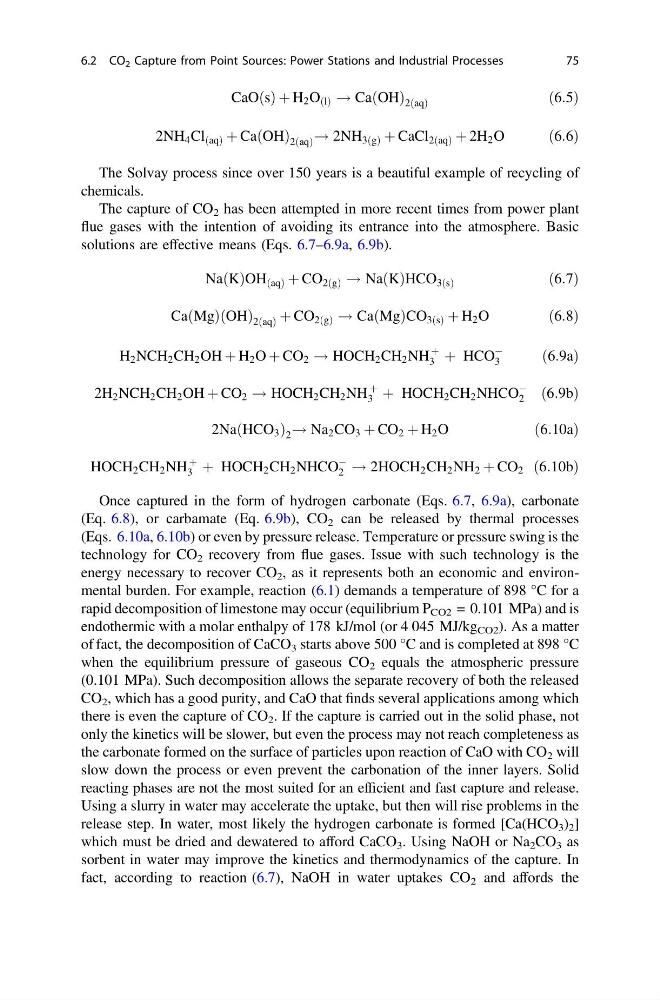
CaO s
ð Þ þ H 2 O ðlÞ ! Ca OH
ð Þ 2ðaqÞ
ð6:5Þ
2NH 4 Cl ðaqÞ þ Ca OH
ð Þ 2 aq
ð Þ ! 2NH 3 g
ð Þ þ CaCl 2ðaqÞ þ 2H 2 O
ð6:6Þ
The Solvay process since over 150 years is a beautiful example of recycling of
chemicals.
The capture of CO 2 has been attempted in more recent times from power plant
flue gases with the intention of avoiding its entrance into the atmosphere. Basic
solutions are effective means (Eqs. 6.7–6.9a, 6.9b).
Na K
ð ÞOH ðaqÞ þ CO 2ðgÞ ! Na K
ð ÞHCO 3ðsÞ
ð6:7Þ
Ca Mg
ð Þ OH
ð Þ 2ðaqÞ þ CO 2ðgÞ ! Ca Mg
ð ÞCO 3ðsÞ þ H 2 O
ð6:8Þ
H 2 NCH 2 CH 2 OH þ H 2 O þ CO 2 ! HOCH 2 CH 2 NH
þ
3 þ HCO
À
3
ð6:9aÞ
2H 2 NCH 2 CH 2 OH þ CO 2 ! HOCH 2 CH 2 NH
þ
3 þ HOCH 2 CH 2 NHCO
À
2
ð6:9bÞ
2Na HCO 3
ð
Þ 2 ! Na 2 CO 3 þ CO 2 þ H 2 O
ð6:10aÞ
HOCH 2 CH 2 NH
þ
3 þ HOCH 2 CH 2 NHCO
À
2 ! 2HOCH 2 CH 2 NH 2 þ CO 2 ð6:10bÞ
Once captured in the form of hydrogen carbonate (Eqs. 6.7, 6.9a), carbonate
(Eq. 6.8), or carbamate (Eq. 6.9b), CO 2 can be released by thermal processes
(Eqs. 6.10a, 6.10b) or even by pressure release. Temperature or pressure swing is the
technology for CO 2 recovery from flue gases. Issue with such technology is the
energy necessary to recover CO 2 , as it represents both an economic and environmental burden. For example, reaction (6.1) demands a temperature of 898 °C for a
rapid decomposition of limestone may occur (equilibrium P CO2 = 0.101 MPa) and is
endothermic with a molar enthalpy of 178 kJ/mol (or 4 045 MJ/kg CO2 ). As a matter
of fact, the decomposition of CaCO 3 starts above 500 °C and is completed at 898 °C
when the equilibrium pressure of gaseous CO 2 equals the atmospheric pressure
(0.101 MPa). Such decomposition allows the separate recovery of both the released
CO 2 , which has a good purity, and CaO that finds several applications among which
there is even the capture of CO 2 . If the capture is carried out in the solid phase, not
only the kinetics will be slower, but even the process may not reach completeness as
the carbonate formed on the surface of particles upon reaction of CaO with CO 2 will
slow down the process or even prevent the carbonation of the inner layers. Solid
reacting phases are not the most suited for an efficient and fast capture and release.
Using a slurry in water may accelerate the uptake, but then will rise problems in the
release step. In water, most likely the hydrogen carbonate is formed [Ca(HCO 3 ) 2 ]
which must be dried and dewatered to afford CaCO 3 . Using NaOH or Na 2 CO 3 as
sorbent in water may improve the kinetics and thermodynamics of the capture. In
fact, according to reaction (6.7), NaOH in water uptakes CO 2 and affords the
6.2 CO 2 Capture from Point Sources: Power Stations and Industrial Processes
75
ð Þ þ H 2 O ðlÞ ! Ca OH
ð Þ 2ðaqÞ
ð6:5Þ
2NH 4 Cl ðaqÞ þ Ca OH
ð Þ 2 aq
ð Þ ! 2NH 3 g
ð Þ þ CaCl 2ðaqÞ þ 2H 2 O
ð6:6Þ
The Solvay process since over 150 years is a beautiful example of recycling of
chemicals.
The capture of CO 2 has been attempted in more recent times from power plant
flue gases with the intention of avoiding its entrance into the atmosphere. Basic
solutions are effective means (Eqs. 6.7–6.9a, 6.9b).
Na K
ð ÞOH ðaqÞ þ CO 2ðgÞ ! Na K
ð ÞHCO 3ðsÞ
ð6:7Þ
Ca Mg
ð Þ OH
ð Þ 2ðaqÞ þ CO 2ðgÞ ! Ca Mg
ð ÞCO 3ðsÞ þ H 2 O
ð6:8Þ
H 2 NCH 2 CH 2 OH þ H 2 O þ CO 2 ! HOCH 2 CH 2 NH
þ
3 þ HCO
À
3
ð6:9aÞ
2H 2 NCH 2 CH 2 OH þ CO 2 ! HOCH 2 CH 2 NH
þ
3 þ HOCH 2 CH 2 NHCO
À
2
ð6:9bÞ
2Na HCO 3
ð
Þ 2 ! Na 2 CO 3 þ CO 2 þ H 2 O
ð6:10aÞ
HOCH 2 CH 2 NH
þ
3 þ HOCH 2 CH 2 NHCO
À
2 ! 2HOCH 2 CH 2 NH 2 þ CO 2 ð6:10bÞ
Once captured in the form of hydrogen carbonate (Eqs. 6.7, 6.9a), carbonate
(Eq. 6.8), or carbamate (Eq. 6.9b), CO 2 can be released by thermal processes
(Eqs. 6.10a, 6.10b) or even by pressure release. Temperature or pressure swing is the
technology for CO 2 recovery from flue gases. Issue with such technology is the
energy necessary to recover CO 2 , as it represents both an economic and environmental burden. For example, reaction (6.1) demands a temperature of 898 °C for a
rapid decomposition of limestone may occur (equilibrium P CO2 = 0.101 MPa) and is
endothermic with a molar enthalpy of 178 kJ/mol (or 4 045 MJ/kg CO2 ). As a matter
of fact, the decomposition of CaCO 3 starts above 500 °C and is completed at 898 °C
when the equilibrium pressure of gaseous CO 2 equals the atmospheric pressure
(0.101 MPa). Such decomposition allows the separate recovery of both the released
CO 2 , which has a good purity, and CaO that finds several applications among which
there is even the capture of CO 2 . If the capture is carried out in the solid phase, not
only the kinetics will be slower, but even the process may not reach completeness as
the carbonate formed on the surface of particles upon reaction of CaO with CO 2 will
slow down the process or even prevent the carbonation of the inner layers. Solid
reacting phases are not the most suited for an efficient and fast capture and release.
Using a slurry in water may accelerate the uptake, but then will rise problems in the
release step. In water, most likely the hydrogen carbonate is formed [Ca(HCO 3 ) 2 ]
which must be dried and dewatered to afford CaCO 3 . Using NaOH or Na 2 CO 3 as
sorbent in water may improve the kinetics and thermodynamics of the capture. In
fact, according to reaction (6.7), NaOH in water uptakes CO 2 and affords the
6.2 CO 2 Capture from Point Sources: Power Stations and Industrial Processes
75