

96
10 Physical Effects of Nuclear Weapons
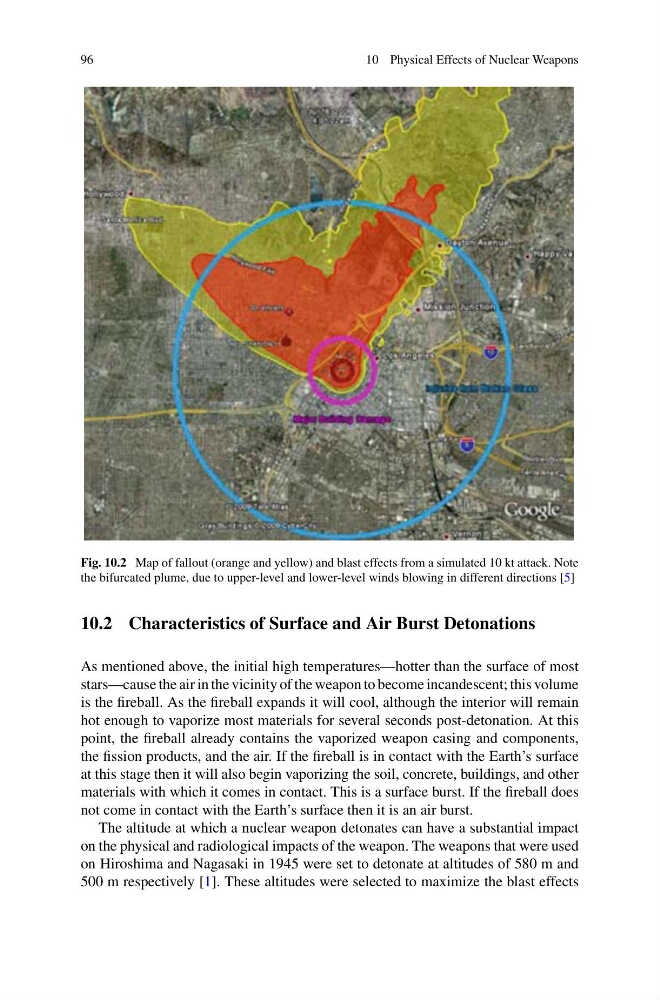
Fig. 10.2 Map of fallout (orange and yellow) and blast effects from a simulated 10 kt attack. Note
the bifurcated plume, due to upper-level and lower-level winds blowing in different directions [5]
10.2 Characteristics of Surface and Air Burst Detonations
As mentioned above, the initial high temperatures—hotter than the surface of most
stars—cause the air in the vicinity of the weapon to become incandescent; this volume
is the fireball. As the fireball expands it will cool, although the interior will remain
hot enough to vaporize most materials for several seconds post-detonation. At this
point, the fireball already contains the vaporized weapon casing and components,
the fission products, and the air. If the fireball is in contact with the Earth’s surface
at this stage then it will also begin vaporizing the soil, concrete, buildings, and other
materials with which it comes in contact. This is a surface burst. If the fireball does
not come in contact with the Earth’s surface then it is an air burst.
The altitude at which a nuclear weapon detonates can have a substantial impact
on the physical and radiological impacts of the weapon. The weapons that were used
on Hiroshima and Nagasaki in 1945 were set to detonate at altitudes of 580 m and
500 m respectively [1]. These altitudes were selected to maximize the blast effects
10 Physical Effects of Nuclear Weapons
Fig. 10.2 Map of fallout (orange and yellow) and blast effects from a simulated 10 kt attack. Note
the bifurcated plume, due to upper-level and lower-level winds blowing in different directions [5]
10.2 Characteristics of Surface and Air Burst Detonations
As mentioned above, the initial high temperatures—hotter than the surface of most
stars—cause the air in the vicinity of the weapon to become incandescent; this volume
is the fireball. As the fireball expands it will cool, although the interior will remain
hot enough to vaporize most materials for several seconds post-detonation. At this
point, the fireball already contains the vaporized weapon casing and components,
the fission products, and the air. If the fireball is in contact with the Earth’s surface
at this stage then it will also begin vaporizing the soil, concrete, buildings, and other
materials with which it comes in contact. This is a surface burst. If the fireball does
not come in contact with the Earth’s surface then it is an air burst.
The altitude at which a nuclear weapon detonates can have a substantial impact
on the physical and radiological impacts of the weapon. The weapons that were used
on Hiroshima and Nagasaki in 1945 were set to detonate at altitudes of 580 m and
500 m respectively [1]. These altitudes were selected to maximize the blast effects