

524
A. del Val et al.
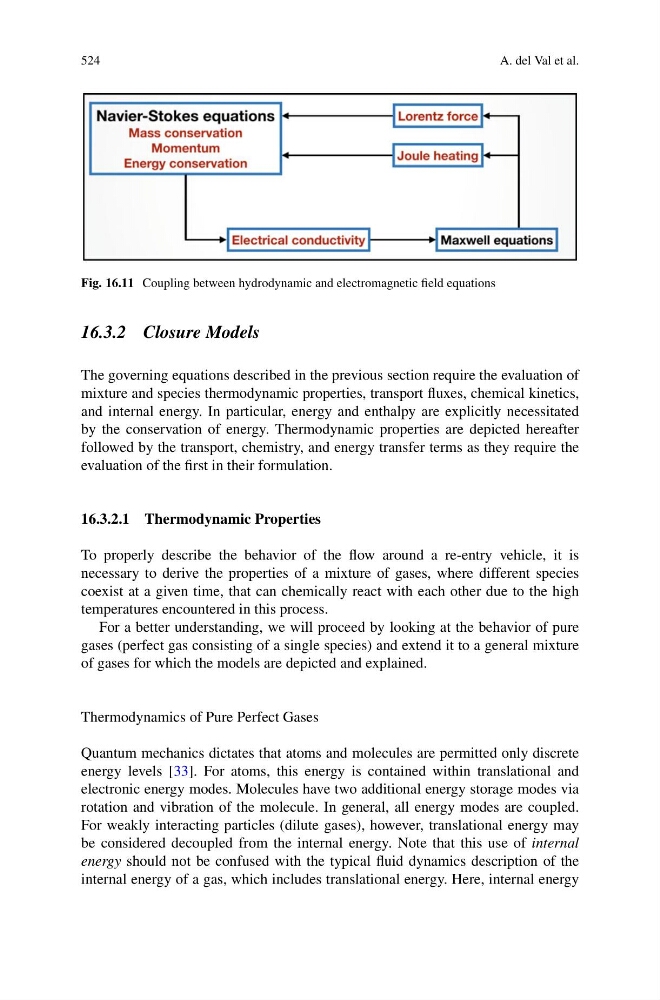
Fig. 16.11 Coupling between hydrodynamic and electromagnetic field equations
16.3.2 Closure Models
The governing equations described in the previous section require the evaluation of
mixture and species thermodynamic properties, transport fluxes, chemical kinetics,
and internal energy. In particular, energy and enthalpy are explicitly necessitated
by the conservation of energy. Thermodynamic properties are depicted hereafter
followed by the transport, chemistry, and energy transfer terms as they require the
evaluation of the first in their formulation.
16.3.2.1 Thermodynamic Properties
To properly describe the behavior of the flow around a re-entry vehicle, it is
necessary to derive the properties of a mixture of gases, where different species
coexist at a given time, that can chemically react with each other due to the high
temperatures encountered in this process.
For a better understanding, we will proceed by looking at the behavior of pure
gases (perfect gas consisting of a single species) and extend it to a general mixture
of gases for which the models are depicted and explained.
Thermodynamics of Pure Perfect Gases
Quantum mechanics dictates that atoms and molecules are permitted only discrete
energy levels [33]. For atoms, this energy is contained within translational and
electronic energy modes. Molecules have two additional energy storage modes via
rotation and vibration of the molecule. In general, all energy modes are coupled.
For weakly interacting particles (dilute gases), however, translational energy may
be considered decoupled from the internal energy. Note that this use of internal
energy should not be confused with the typical fluid dynamics description of the
internal energy of a gas, which includes translational energy. Here, internal energy