

16 Uncertainty Treatment Applications: High-Enthalpy Flow Ground Testing
519
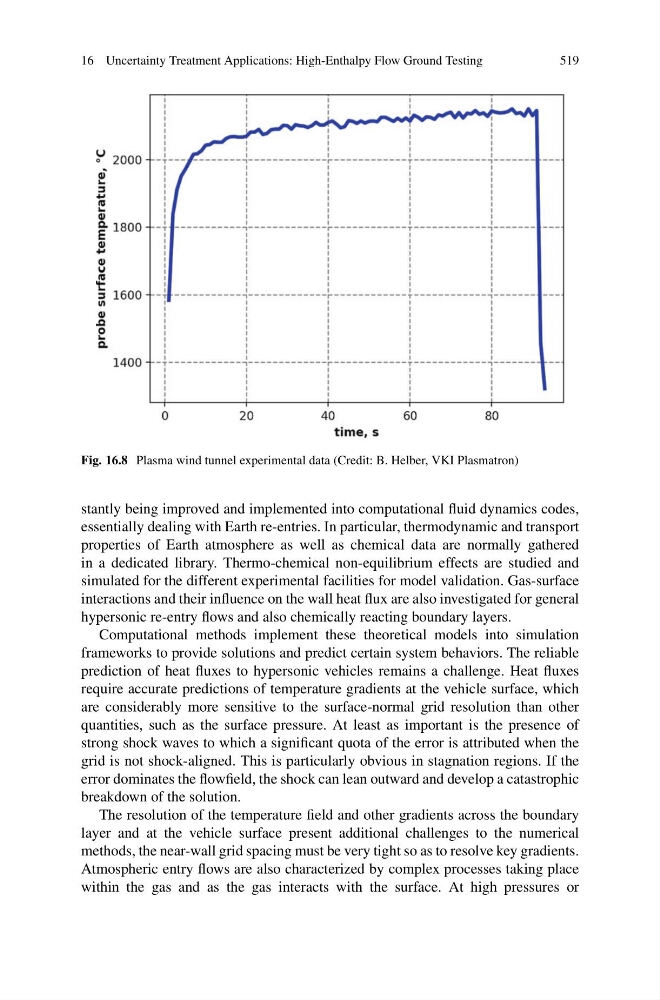
Fig. 16.8 Plasma wind tunnel experimental data (Credit: B. Helber, VKI Plasmatron)
stantly being improved and implemented into computational fluid dynamics codes,
essentially dealing with Earth re-entries. In particular, thermodynamic and transport
properties of Earth atmosphere as well as chemical data are normally gathered
in a dedicated library. Thermo-chemical non-equilibrium effects are studied and
simulated for the different experimental facilities for model validation. Gas-surface
interactions and their influence on the wall heat flux are also investigated for general
hypersonic re-entry flows and also chemically reacting boundary layers.
Computational methods implement these theoretical models into simulation
frameworks to provide solutions and predict certain system behaviors. The reliable
prediction of heat fluxes to hypersonic vehicles remains a challenge. Heat fluxes
require accurate predictions of temperature gradients at the vehicle surface, which
are considerably more sensitive to the surface-normal grid resolution than other
quantities, such as the surface pressure. At least as important is the presence of
strong shock waves to which a significant quota of the error is attributed when the
grid is not shock-aligned. This is particularly obvious in stagnation regions. If the
error dominates the flowfield, the shock can lean outward and develop a catastrophic
breakdown of the solution.
The resolution of the temperature field and other gradients across the boundary
layer and at the vehicle surface present additional challenges to the numerical
methods, the near-wall grid spacing must be very tight so as to resolve key gradients.
Atmospheric entry flows are also characterized by complex processes taking place
within the gas and as the gas interacts with the surface. At high pressures or