

512
A. del Val et al.
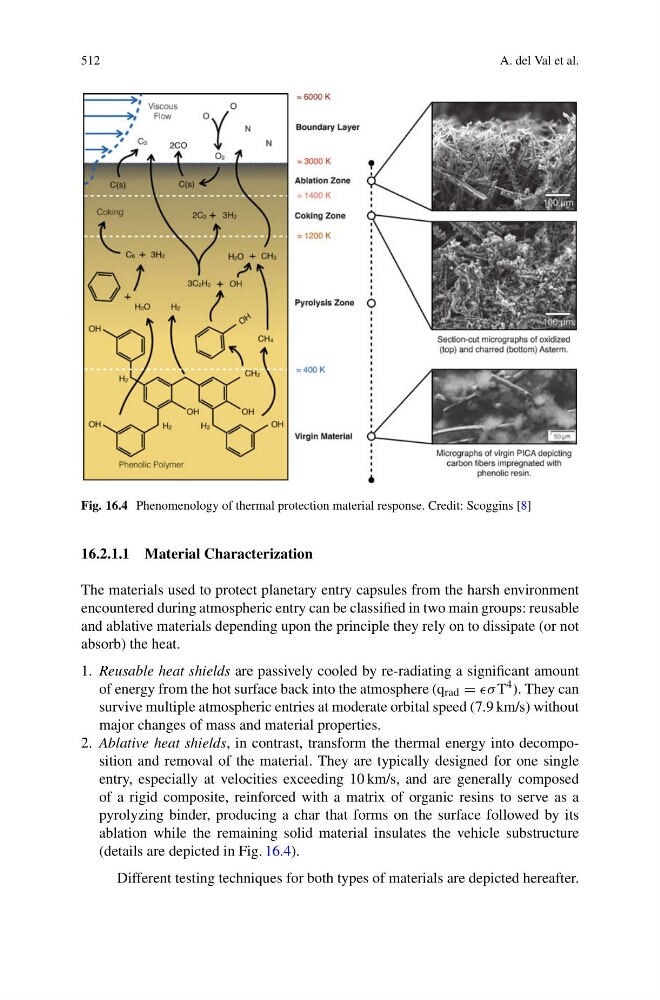
Fig. 16.4 Phenomenology of thermal protection material response. Credit: Scoggins [8]
16.2.1.1 Material Characterization
The materials used to protect planetary entry capsules from the harsh environment
encountered during atmospheric entry can be classified in two main groups: reusable
and ablative materials depending upon the principle they rely on to dissipate (or not
absorb) the heat.
1. Reusable heat shields are passively cooled by re-radiating a significant amount
of energy from the hot surface back into the atmosphere (q rad = σ T 4 ). They can
survive multiple atmospheric entries at moderate orbital speed (7.9 km/s) without
major changes of mass and material properties.
2. Ablative heat shields, in contrast, transform the thermal energy into decomposition and removal of the material. They are typically designed for one single
entry, especially at velocities exceeding 10 km/s, and are generally composed
of a rigid composite, reinforced with a matrix of organic resins to serve as a
pyrolyzing binder, producing a char that forms on the surface followed by its
ablation while the remaining solid material insulates the vehicle substructure
(details are depicted in Fig. 16.4).
Different testing techniques for both types of materials are depicted hereafter.