

10 Sequential Parameter Optimization for Mixed-Discrete Problems
351
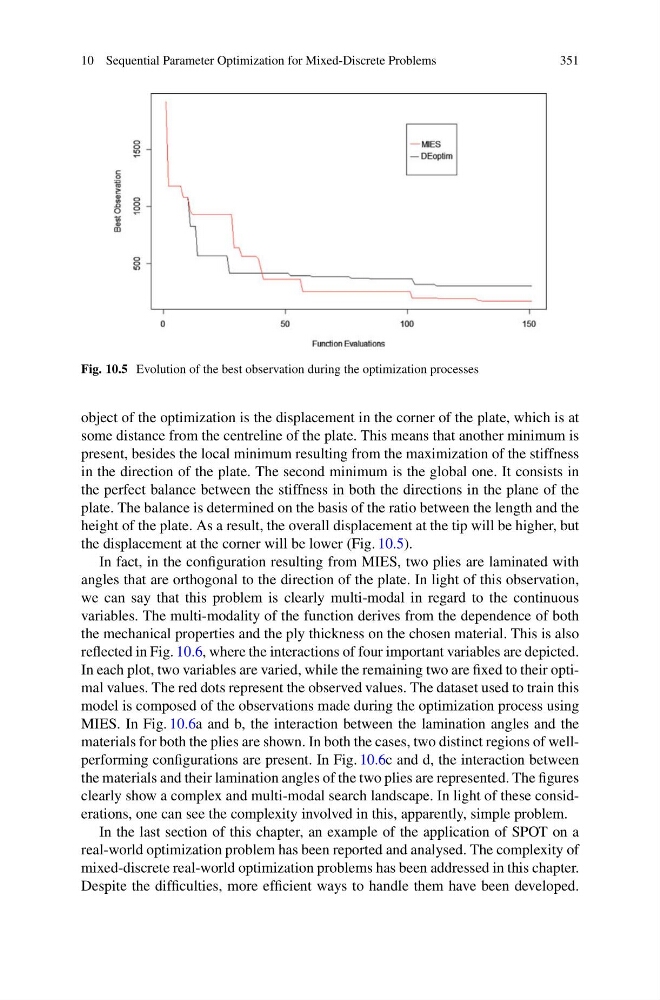
Fig. 10.5 Evolution of the best observation during the optimization processes
object of the optimization is the displacement in the corner of the plate, which is at
some distance from the centreline of the plate. This means that another minimum is
present, besides the local minimum resulting from the maximization of the stiffness
in the direction of the plate. The second minimum is the global one. It consists in
the perfect balance between the stiffness in both the directions in the plane of the
plate. The balance is determined on the basis of the ratio between the length and the
height of the plate. As a result, the overall displacement at the tip will be higher, but
the displacement at the corner will be lower (Fig. 10.5).
In fact, in the configuration resulting from MIES, two plies are laminated with
angles that are orthogonal to the direction of the plate. In light of this observation,
we can say that this problem is clearly multi-modal in regard to the continuous
variables. The multi-modality of the function derives from the dependence of both
the mechanical properties and the ply thickness on the chosen material. This is also
reflected in Fig. 10.6, where the interactions of four important variables are depicted.
In each plot, two variables are varied, while the remaining two are fixed to their optimal values. The red dots represent the observed values. The dataset used to train this
model is composed of the observations made during the optimization process using
MIES. In Fig. 10.6a and b, the interaction between the lamination angles and the
materials for both the plies are shown. In both the cases, two distinct regions of wellperforming configurations are present. In Fig. 10.6c and d, the interaction between
the materials and their lamination angles of the two plies are represented. The figures
clearly show a complex and multi-modal search landscape. In light of these considerations, one can see the complexity involved in this, apparently, simple problem.
In the last section of this chapter, an example of the application of SPOT on a
real-world optimization problem has been reported and analysed. The complexity of
mixed-discrete real-world optimization problems has been addressed in this chapter.
Despite the difficulties, more efficient ways to handle them have been developed.
351
Fig. 10.5 Evolution of the best observation during the optimization processes
object of the optimization is the displacement in the corner of the plate, which is at
some distance from the centreline of the plate. This means that another minimum is
present, besides the local minimum resulting from the maximization of the stiffness
in the direction of the plate. The second minimum is the global one. It consists in
the perfect balance between the stiffness in both the directions in the plane of the
plate. The balance is determined on the basis of the ratio between the length and the
height of the plate. As a result, the overall displacement at the tip will be higher, but
the displacement at the corner will be lower (Fig. 10.5).
In fact, in the configuration resulting from MIES, two plies are laminated with
angles that are orthogonal to the direction of the plate. In light of this observation,
we can say that this problem is clearly multi-modal in regard to the continuous
variables. The multi-modality of the function derives from the dependence of both
the mechanical properties and the ply thickness on the chosen material. This is also
reflected in Fig. 10.6, where the interactions of four important variables are depicted.
In each plot, two variables are varied, while the remaining two are fixed to their optimal values. The red dots represent the observed values. The dataset used to train this
model is composed of the observations made during the optimization process using
MIES. In Fig. 10.6a and b, the interaction between the lamination angles and the
materials for both the plies are shown. In both the cases, two distinct regions of wellperforming configurations are present. In Fig. 10.6c and d, the interaction between
the materials and their lamination angles of the two plies are represented. The figures
clearly show a complex and multi-modal search landscape. In light of these considerations, one can see the complexity involved in this, apparently, simple problem.
In the last section of this chapter, an example of the application of SPOT on a
real-world optimization problem has been reported and analysed. The complexity of
mixed-discrete real-world optimization problems has been addressed in this chapter.
Despite the difficulties, more efficient ways to handle them have been developed.