

28 Techno-Economic Assessment on Waste from Palm Oil Mill …
431
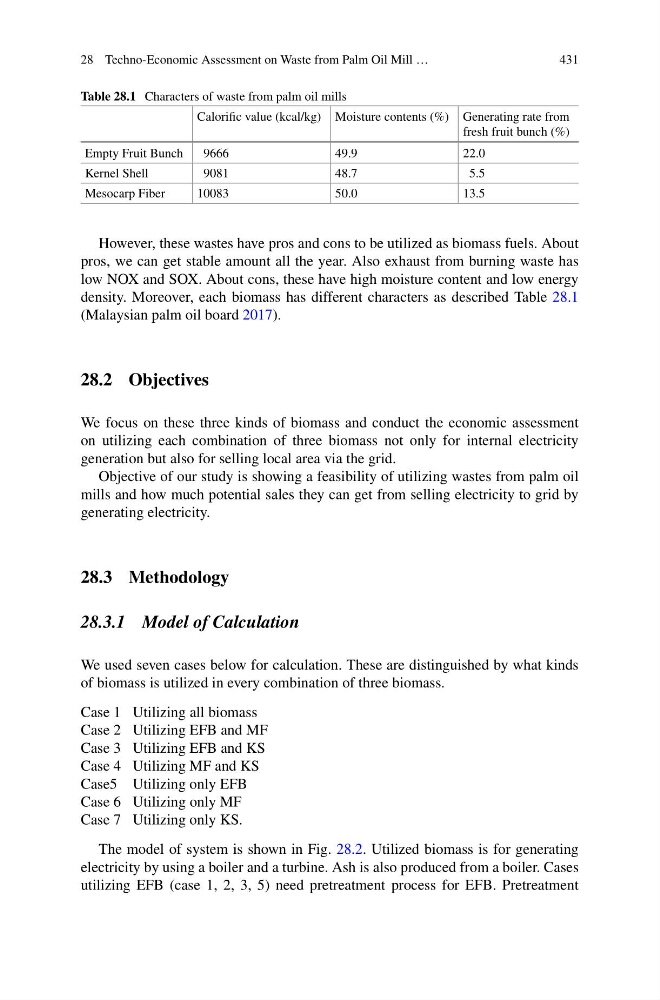
Table 28.1 Characters of waste from palm oil mills
Calorific value (kcal/kg) Moisture contents (%) Generating rate from
fresh fruit bunch (%)
Empty Fruit Bunch
9666
49.9
22.0
Kernel Shell
9081
48.7
5.5
Mesocarp Fiber
10083
50.0
13.5
However, these wastes have pros and cons to be utilized as biomass fuels. About
pros, we can get stable amount all the year. Also exhaust from burning waste has
low NOX and SOX. About cons, these have high moisture content and low energy
density. Moreover, each biomass has different characters as described Table 28.1
(Malaysian palm oil board 2017).
28.2 Objectives
We focus on these three kinds of biomass and conduct the economic assessment
on utilizing each combination of three biomass not only for internal electricity
generation but also for selling local area via the grid.
Objective of our study is showing a feasibility of utilizing wastes from palm oil
mills and how much potential sales they can get from selling electricity to grid by
generating electricity.
28.3 Methodology
28.3.1 Model of Calculation
We used seven cases below for calculation. These are distinguished by what kinds
of biomass is utilized in every combination of three biomass.
Case 1 Utilizing all biomass
Case 2 Utilizing EFB and MF
Case 3 Utilizing EFB and KS
Case 4 Utilizing MF and KS
Case5 Utilizing only EFB
Case 6 Utilizing only MF
Case 7 Utilizing only KS.
The model of system is shown in Fig. 28.2. Utilized biomass is for generating
electricity by using a boiler and a turbine. Ash is also produced from a boiler. Cases
utilizing EFB (case 1, 2, 3, 5) need pretreatment process for EFB. Pretreatment
431
Table 28.1 Characters of waste from palm oil mills
Calorific value (kcal/kg) Moisture contents (%) Generating rate from
fresh fruit bunch (%)
Empty Fruit Bunch
9666
49.9
22.0
Kernel Shell
9081
48.7
5.5
Mesocarp Fiber
10083
50.0
13.5
However, these wastes have pros and cons to be utilized as biomass fuels. About
pros, we can get stable amount all the year. Also exhaust from burning waste has
low NOX and SOX. About cons, these have high moisture content and low energy
density. Moreover, each biomass has different characters as described Table 28.1
(Malaysian palm oil board 2017).
28.2 Objectives
We focus on these three kinds of biomass and conduct the economic assessment
on utilizing each combination of three biomass not only for internal electricity
generation but also for selling local area via the grid.
Objective of our study is showing a feasibility of utilizing wastes from palm oil
mills and how much potential sales they can get from selling electricity to grid by
generating electricity.
28.3 Methodology
28.3.1 Model of Calculation
We used seven cases below for calculation. These are distinguished by what kinds
of biomass is utilized in every combination of three biomass.
Case 1 Utilizing all biomass
Case 2 Utilizing EFB and MF
Case 3 Utilizing EFB and KS
Case 4 Utilizing MF and KS
Case5 Utilizing only EFB
Case 6 Utilizing only MF
Case 7 Utilizing only KS.
The model of system is shown in Fig. 28.2. Utilized biomass is for generating
electricity by using a boiler and a turbine. Ash is also produced from a boiler. Cases
utilizing EFB (case 1, 2, 3, 5) need pretreatment process for EFB. Pretreatment