

27 Scenario Analysis of Environmental Impact of Paddy Rice …
423
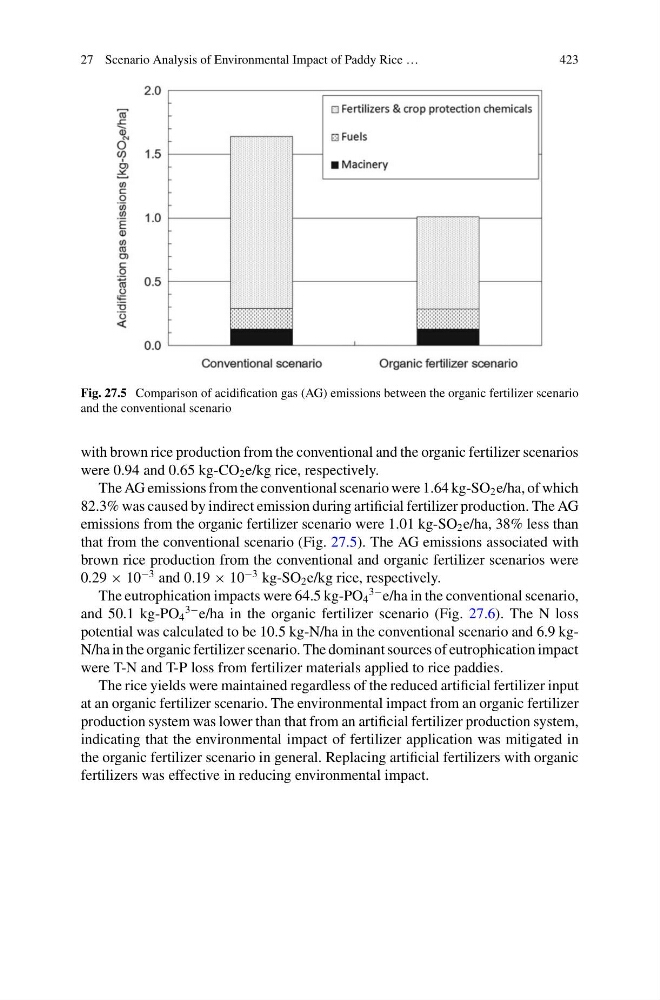
Fig. 27.5 Comparison of acidification gas (AG) emissions between the organic fertilizer scenario
and the conventional scenario
with brown rice production from the conventional and the organic fertilizer scenarios
were 0.94 and 0.65 kg-CO 2 e/kg rice, respectively.
The AG emissions from the conventional scenario were 1.64 kg-SO 2 e/ha, of which
82.3% was caused by indirect emission during artificial fertilizer production. The AG
emissions from the organic fertilizer scenario were 1.01 kg-SO 2 e/ha, 38% less than
that from the conventional scenario (Fig. 27.5). The AG emissions associated with
brown rice production from the conventional and organic fertilizer scenarios were
0.29 × 10
−3 and 0.19 × 10
−3 kg-SO 2 e/kg rice, respectively.
The eutrophication impacts were 64.5 kg-PO 4
3− e/ha in the conventional scenario,
and 50.1 kg-PO 4
3− e/ha in the organic fertilizer scenario (Fig. 27.6). The N loss
potential was calculated to be 10.5 kg-N/ha in the conventional scenario and 6.9 kgN/ha in the organic fertilizer scenario. The dominant sources of eutrophication impact
were T-N and T-P loss from fertilizer materials applied to rice paddies.
The rice yields were maintained regardless of the reduced artificial fertilizer input
at an organic fertilizer scenario. The environmental impact from an organic fertilizer
production system was lower than that from an artificial fertilizer production system,
indicating that the environmental impact of fertilizer application was mitigated in
the organic fertilizer scenario in general. Replacing artificial fertilizers with organic
fertilizers was effective in reducing environmental impact.
423
Fig. 27.5 Comparison of acidification gas (AG) emissions between the organic fertilizer scenario
and the conventional scenario
with brown rice production from the conventional and the organic fertilizer scenarios
were 0.94 and 0.65 kg-CO 2 e/kg rice, respectively.
The AG emissions from the conventional scenario were 1.64 kg-SO 2 e/ha, of which
82.3% was caused by indirect emission during artificial fertilizer production. The AG
emissions from the organic fertilizer scenario were 1.01 kg-SO 2 e/ha, 38% less than
that from the conventional scenario (Fig. 27.5). The AG emissions associated with
brown rice production from the conventional and organic fertilizer scenarios were
0.29 × 10
−3 and 0.19 × 10
−3 kg-SO 2 e/kg rice, respectively.
The eutrophication impacts were 64.5 kg-PO 4
3− e/ha in the conventional scenario,
and 50.1 kg-PO 4
3− e/ha in the organic fertilizer scenario (Fig. 27.6). The N loss
potential was calculated to be 10.5 kg-N/ha in the conventional scenario and 6.9 kgN/ha in the organic fertilizer scenario. The dominant sources of eutrophication impact
were T-N and T-P loss from fertilizer materials applied to rice paddies.
The rice yields were maintained regardless of the reduced artificial fertilizer input
at an organic fertilizer scenario. The environmental impact from an organic fertilizer
production system was lower than that from an artificial fertilizer production system,
indicating that the environmental impact of fertilizer application was mitigated in
the organic fertilizer scenario in general. Replacing artificial fertilizers with organic
fertilizers was effective in reducing environmental impact.