

410
J. Druschke et al.
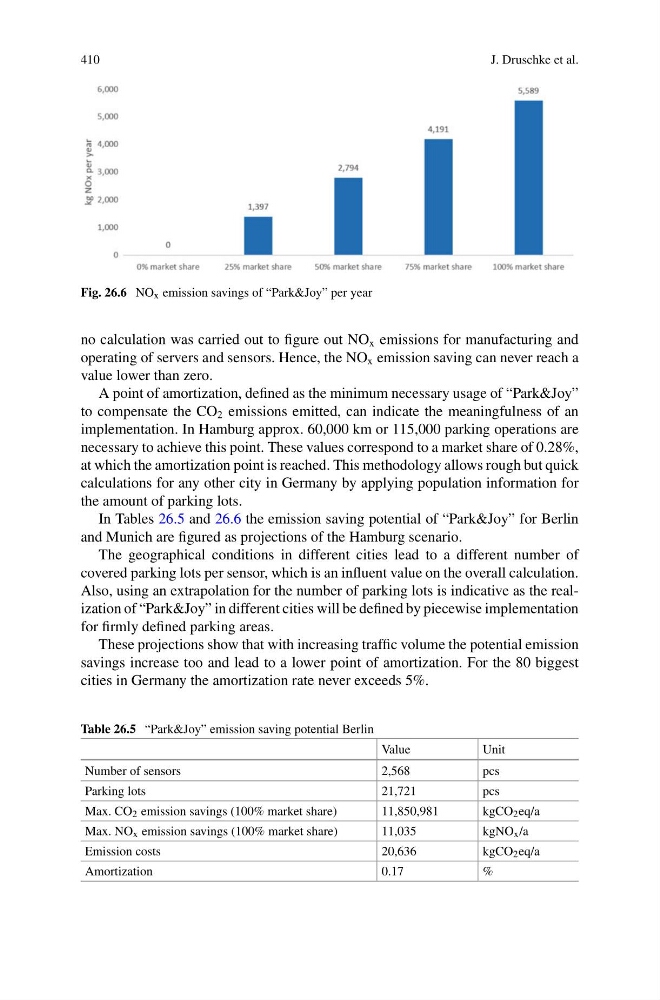
Fig. 26.6 NO x emission savings of “Park&Joy” per year
no calculation was carried out to figure out NO x emissions for manufacturing and
operating of servers and sensors. Hence, the NO x emission saving can never reach a
value lower than zero.
A point of amortization, defined as the minimum necessary usage of “Park&Joy”
to compensate the CO 2 emissions emitted, can indicate the meaningfulness of an
implementation. In Hamburg approx. 60,000 km or 115,000 parking operations are
necessary to achieve this point. These values correspond to a market share of 0.28%,
at which the amortization point is reached. This methodology allows rough but quick
calculations for any other city in Germany by applying population information for
the amount of parking lots.
In Tables 26.5 and 26.6 the emission saving potential of “Park&Joy” for Berlin
and Munich are figured as projections of the Hamburg scenario.
The geographical conditions in different cities lead to a different number of
covered parking lots per sensor, which is an influent value on the overall calculation.
Also, using an extrapolation for the number of parking lots is indicative as the realization of “Park&Joy” in different cities will be defined by piecewise implementation
for firmly defined parking areas.
These projections show that with increasing traffic volume the potential emission
savings increase too and lead to a lower point of amortization. For the 80 biggest
cities in Germany the amortization rate never exceeds 5%.
Table 26.5 “Park&Joy” emission saving potential Berlin
Value
Unit
Number of sensors
2,568
pcs
Parking lots
21,721
pcs
Max. CO 2 emission savings (100% market share)
11,850,981
kgCO 2 eq/a
Max. NO x emission savings (100% market share)
11,035
kgNO x /a
Emission costs
20,636
kgCO 2 eq/a
Amortization
0.17
%
J. Druschke et al.
Fig. 26.6 NO x emission savings of “Park&Joy” per year
no calculation was carried out to figure out NO x emissions for manufacturing and
operating of servers and sensors. Hence, the NO x emission saving can never reach a
value lower than zero.
A point of amortization, defined as the minimum necessary usage of “Park&Joy”
to compensate the CO 2 emissions emitted, can indicate the meaningfulness of an
implementation. In Hamburg approx. 60,000 km or 115,000 parking operations are
necessary to achieve this point. These values correspond to a market share of 0.28%,
at which the amortization point is reached. This methodology allows rough but quick
calculations for any other city in Germany by applying population information for
the amount of parking lots.
In Tables 26.5 and 26.6 the emission saving potential of “Park&Joy” for Berlin
and Munich are figured as projections of the Hamburg scenario.
The geographical conditions in different cities lead to a different number of
covered parking lots per sensor, which is an influent value on the overall calculation.
Also, using an extrapolation for the number of parking lots is indicative as the realization of “Park&Joy” in different cities will be defined by piecewise implementation
for firmly defined parking areas.
These projections show that with increasing traffic volume the potential emission
savings increase too and lead to a lower point of amortization. For the 80 biggest
cities in Germany the amortization rate never exceeds 5%.
Table 26.5 “Park&Joy” emission saving potential Berlin
Value
Unit
Number of sensors
2,568
pcs
Parking lots
21,721
pcs
Max. CO 2 emission savings (100% market share)
11,850,981
kgCO 2 eq/a
Max. NO x emission savings (100% market share)
11,035
kgNO x /a
Emission costs
20,636
kgCO 2 eq/a
Amortization
0.17
%