

22 Adopting Life Cycle Assessment for Various Greenhouse …
353
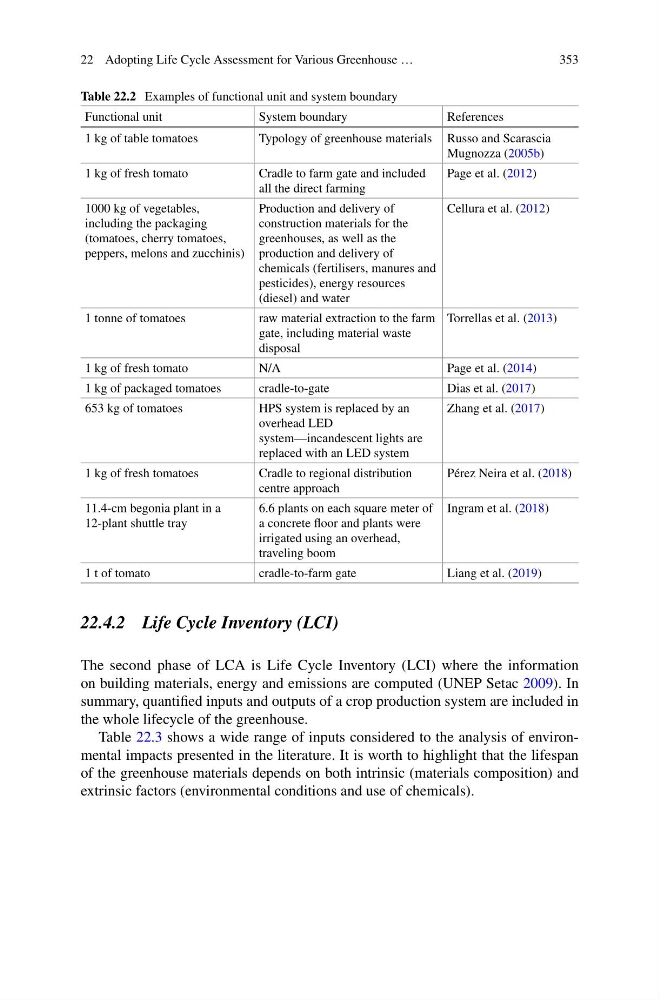
Table 22.2 Examples of functional unit and system boundary
Functional unit
System boundary
References
1 kg of table tomatoes
Typology of greenhouse materials Russo and Scarascia
Mugnozza (2005b)
1 kg of fresh tomato
Cradle to farm gate and included
all the direct farming
Page et al. (2012)
1000 kg of vegetables,
including the packaging
(tomatoes, cherry tomatoes,
peppers, melons and zucchinis)
Production and delivery of
construction materials for the
greenhouses, as well as the
production and delivery of
chemicals (fertilisers, manures and
pesticides), energy resources
(diesel) and water
Cellura et al. (2012)
1 tonne of tomatoes
raw material extraction to the farm
gate, including material waste
disposal
Torrellas et al. (2013)
1 kg of fresh tomato
N/A
Page et al. (2014)
1 kg of packaged tomatoes
cradle-to-gate
Dias et al. (2017)
653 kg of tomatoes
HPS system is replaced by an
overhead LED
system—incandescent lights are
replaced with an LED system
Zhang et al. (2017)
1 kg of fresh tomatoes
Cradle to regional distribution
centre approach
Pérez Neira et al. (2018)
11.4-cm begonia plant in a
12-plant shuttle tray
6.6 plants on each square meter of
a concrete floor and plants were
irrigated using an overhead,
traveling boom
Ingram et al. (2018)
1 t of tomato
cradle-to-farm gate
Liang et al. (2019)
22.4.2 Life Cycle Inventory (LCI)
The second phase of LCA is Life Cycle Inventory (LCI) where the information
on building materials, energy and emissions are computed (UNEP Setac 2009). In
summary, quantified inputs and outputs of a crop production system are included in
the whole lifecycle of the greenhouse.
Table 22.3 shows a wide range of inputs considered to the analysis of environmental impacts presented in the literature. It is worth to highlight that the lifespan
of the greenhouse materials depends on both intrinsic (materials composition) and
extrinsic factors (environmental conditions and use of chemicals).
353
Table 22.2 Examples of functional unit and system boundary
Functional unit
System boundary
References
1 kg of table tomatoes
Typology of greenhouse materials Russo and Scarascia
Mugnozza (2005b)
1 kg of fresh tomato
Cradle to farm gate and included
all the direct farming
Page et al. (2012)
1000 kg of vegetables,
including the packaging
(tomatoes, cherry tomatoes,
peppers, melons and zucchinis)
Production and delivery of
construction materials for the
greenhouses, as well as the
production and delivery of
chemicals (fertilisers, manures and
pesticides), energy resources
(diesel) and water
Cellura et al. (2012)
1 tonne of tomatoes
raw material extraction to the farm
gate, including material waste
disposal
Torrellas et al. (2013)
1 kg of fresh tomato
N/A
Page et al. (2014)
1 kg of packaged tomatoes
cradle-to-gate
Dias et al. (2017)
653 kg of tomatoes
HPS system is replaced by an
overhead LED
system—incandescent lights are
replaced with an LED system
Zhang et al. (2017)
1 kg of fresh tomatoes
Cradle to regional distribution
centre approach
Pérez Neira et al. (2018)
11.4-cm begonia plant in a
12-plant shuttle tray
6.6 plants on each square meter of
a concrete floor and plants were
irrigated using an overhead,
traveling boom
Ingram et al. (2018)
1 t of tomato
cradle-to-farm gate
Liang et al. (2019)
22.4.2 Life Cycle Inventory (LCI)
The second phase of LCA is Life Cycle Inventory (LCI) where the information
on building materials, energy and emissions are computed (UNEP Setac 2009). In
summary, quantified inputs and outputs of a crop production system are included in
the whole lifecycle of the greenhouse.
Table 22.3 shows a wide range of inputs considered to the analysis of environmental impacts presented in the literature. It is worth to highlight that the lifespan
of the greenhouse materials depends on both intrinsic (materials composition) and
extrinsic factors (environmental conditions and use of chemicals).