

322
S. Tajima et al.
Table 20.3 (continued)
Teams Target Age(s)
Means
Activities
Core message
G
Children
- School visit
- Visit a
net-zero-energy
house at the
competition site
- Presentation in
school
- Visiting a
net-zero-energy
house at the
competition site and
playing educational
games
- “Begin to be
concerned for the
environment so as to
become a citizen that
understands the need
for a sustainable
lifestyle and adopt
such a lifestyle
accordingly.”
- “Help preserve our
environment in
routines, and grasp
basic knowledge
about sustainability”
H
Children (Ages
4–13 years)
- School visit
- Visit a
net-zero-energy
house at the
competition site
- Teaching on solar
homes
- Drawing own
house
- Plant trees in the
school yard
- Public tour (Kid’s
Area)
- “You can use the
sun to do your
housework! It’s fun
and cheerful!”
- “At this age,
sustainability-based
life decisions can be
made.”
- “Learn that being
“green”, or “eco”
means taking care of
nature.”
I
Children (Ages
6–11 years)
Primary school
visit, afterschool,
classes, and events
about ecology and
the environment
- Afterschool
classes, events
about ecology and
the environment
- Education at
school camp
activities
- “In the world of
children, nature
plays a major role.
How is human
behavior related to
the state of the
environment and
climate change?”
- “This is a key
question to teaching
sustainable living
from an early age.“
(continued)
of being able to act correctly after becoming an adult. Because the lecture was
conducted by university students, their skills are not as developed as those of a professional architect, but the presented content was sufficient enough to raise awareness
of sustainable living (as considered from the responses of participating students).
In other words, Team CUJ’s communication strategy with children was successful.
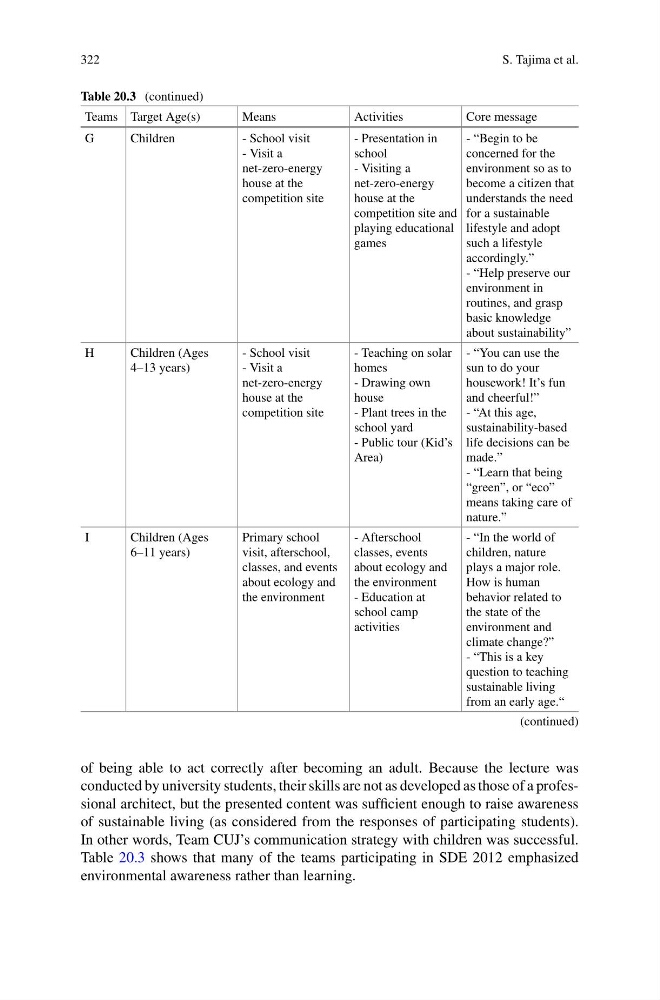
Table 20.3 shows that many of the teams participating in SDE 2012 emphasized
environmental awareness rather than learning.
S. Tajima et al.
Table 20.3 (continued)
Teams Target Age(s)
Means
Activities
Core message
G
Children
- School visit
- Visit a
net-zero-energy
house at the
competition site
- Presentation in
school
- Visiting a
net-zero-energy
house at the
competition site and
playing educational
games
- “Begin to be
concerned for the
environment so as to
become a citizen that
understands the need
for a sustainable
lifestyle and adopt
such a lifestyle
accordingly.”
- “Help preserve our
environment in
routines, and grasp
basic knowledge
about sustainability”
H
Children (Ages
4–13 years)
- School visit
- Visit a
net-zero-energy
house at the
competition site
- Teaching on solar
homes
- Drawing own
house
- Plant trees in the
school yard
- Public tour (Kid’s
Area)
- “You can use the
sun to do your
housework! It’s fun
and cheerful!”
- “At this age,
sustainability-based
life decisions can be
made.”
- “Learn that being
“green”, or “eco”
means taking care of
nature.”
I
Children (Ages
6–11 years)
Primary school
visit, afterschool,
classes, and events
about ecology and
the environment
- Afterschool
classes, events
about ecology and
the environment
- Education at
school camp
activities
- “In the world of
children, nature
plays a major role.
How is human
behavior related to
the state of the
environment and
climate change?”
- “This is a key
question to teaching
sustainable living
from an early age.“
(continued)
of being able to act correctly after becoming an adult. Because the lecture was
conducted by university students, their skills are not as developed as those of a professional architect, but the presented content was sufficient enough to raise awareness
of sustainable living (as considered from the responses of participating students).
In other words, Team CUJ’s communication strategy with children was successful.
Table 20.3 shows that many of the teams participating in SDE 2012 emphasized
environmental awareness rather than learning.