

9 Enhancing Role and Participation of Industry and Community …
141
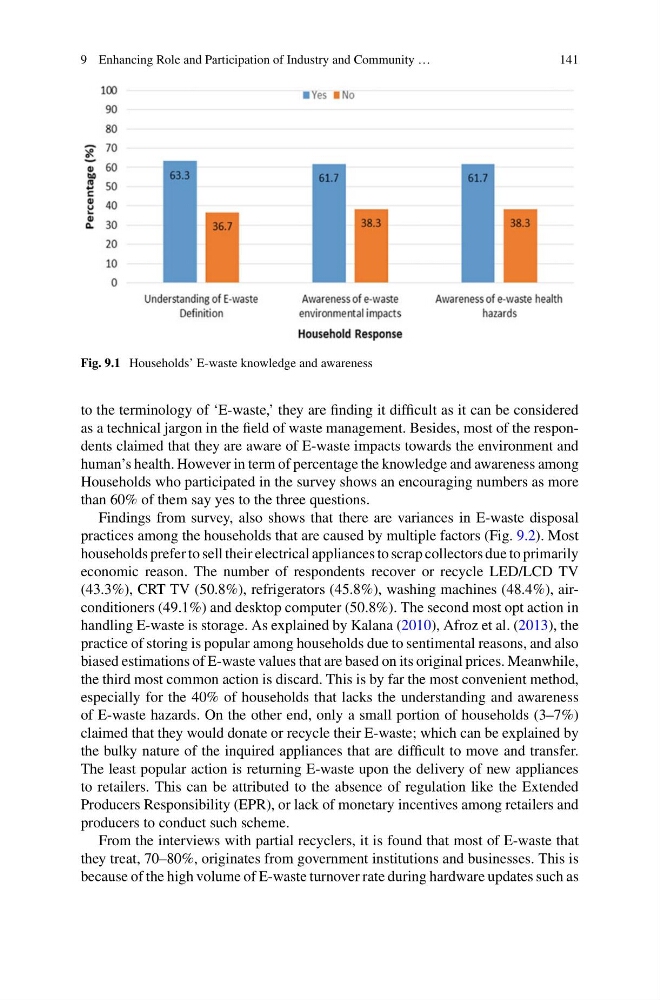
Fig. 9.1 Households’ E-waste knowledge and awareness
to the terminology of ‘E-waste,’ they are finding it difficult as it can be considered
as a technical jargon in the field of waste management. Besides, most of the respondents claimed that they are aware of E-waste impacts towards the environment and
human’s health. However in term of percentage the knowledge and awareness among
Households who participated in the survey shows an encouraging numbers as more
than 60% of them say yes to the three questions.
Findings from survey, also shows that there are variances in E-waste disposal
practices among the households that are caused by multiple factors (Fig. 9.2). Most
households prefer to sell their electrical appliances to scrap collectors due to primarily
economic reason. The number of respondents recover or recycle LED/LCD TV
(43.3%), CRT TV (50.8%), refrigerators (45.8%), washing machines (48.4%), airconditioners (49.1%) and desktop computer (50.8%). The second most opt action in
handling E-waste is storage. As explained by Kalana (2010), Afroz et al. (2013), the
practice of storing is popular among households due to sentimental reasons, and also
biased estimations of E-waste values that are based on its original prices. Meanwhile,
the third most common action is discard. This is by far the most convenient method,
especially for the 40% of households that lacks the understanding and awareness
of E-waste hazards. On the other end, only a small portion of households (3–7%)
claimed that they would donate or recycle their E-waste; which can be explained by
the bulky nature of the inquired appliances that are difficult to move and transfer.
The least popular action is returning E-waste upon the delivery of new appliances
to retailers. This can be attributed to the absence of regulation like the Extended
Producers Responsibility (EPR), or lack of monetary incentives among retailers and
producers to conduct such scheme.
From the interviews with partial recyclers, it is found that most of E-waste that
they treat, 70–80%, originates from government institutions and businesses. This is
because of the high volume of E-waste turnover rate during hardware updates such as
141
Fig. 9.1 Households’ E-waste knowledge and awareness
to the terminology of ‘E-waste,’ they are finding it difficult as it can be considered
as a technical jargon in the field of waste management. Besides, most of the respondents claimed that they are aware of E-waste impacts towards the environment and
human’s health. However in term of percentage the knowledge and awareness among
Households who participated in the survey shows an encouraging numbers as more
than 60% of them say yes to the three questions.
Findings from survey, also shows that there are variances in E-waste disposal
practices among the households that are caused by multiple factors (Fig. 9.2). Most
households prefer to sell their electrical appliances to scrap collectors due to primarily
economic reason. The number of respondents recover or recycle LED/LCD TV
(43.3%), CRT TV (50.8%), refrigerators (45.8%), washing machines (48.4%), airconditioners (49.1%) and desktop computer (50.8%). The second most opt action in
handling E-waste is storage. As explained by Kalana (2010), Afroz et al. (2013), the
practice of storing is popular among households due to sentimental reasons, and also
biased estimations of E-waste values that are based on its original prices. Meanwhile,
the third most common action is discard. This is by far the most convenient method,
especially for the 40% of households that lacks the understanding and awareness
of E-waste hazards. On the other end, only a small portion of households (3–7%)
claimed that they would donate or recycle their E-waste; which can be explained by
the bulky nature of the inquired appliances that are difficult to move and transfer.
The least popular action is returning E-waste upon the delivery of new appliances
to retailers. This can be attributed to the absence of regulation like the Extended
Producers Responsibility (EPR), or lack of monetary incentives among retailers and
producers to conduct such scheme.
From the interviews with partial recyclers, it is found that most of E-waste that
they treat, 70–80%, originates from government institutions and businesses. This is
because of the high volume of E-waste turnover rate during hardware updates such as