

382
5 X-ray Pulsar-Based Navigation: Theories and Experiments
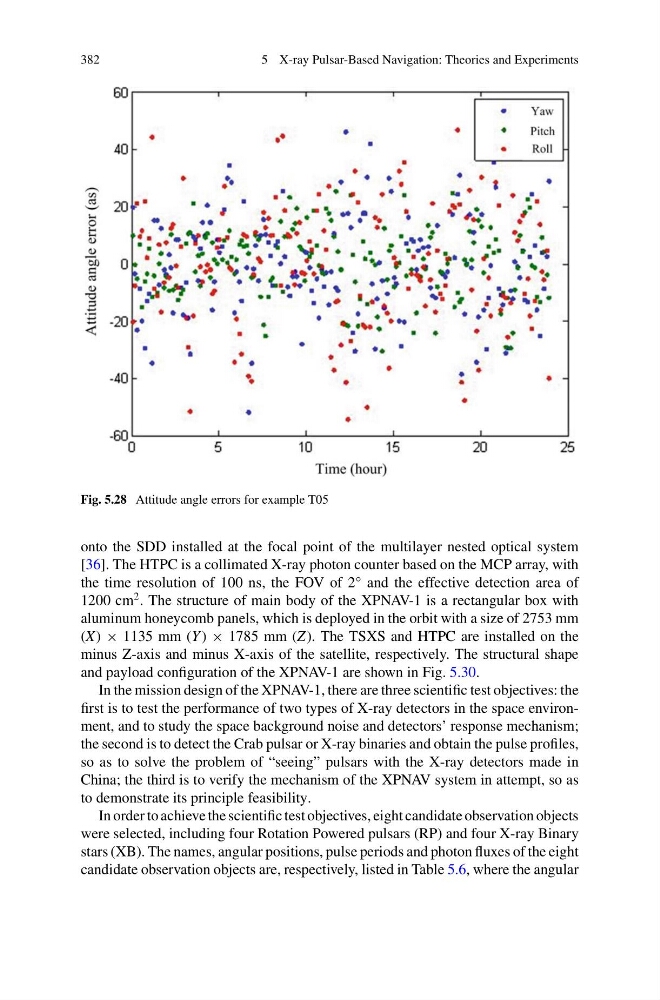
Fig. 5.28 Attitude angle errors for example T05
onto the SDD installed at the focal point of the multilayer nested optical system
[36]. The HTPC is a collimated X-ray photon counter based on the MCP array, with
the time resolution of 100 ns, the FOV of 2° and the effective detection area of
1200 cm
2 . The structure of main body of the XPNAV-1 is a rectangular box with
aluminum honeycomb panels, which is deployed in the orbit with a size of 2753 mm
(X) × 1135 mm (Y ) × 1785 mm (Z). The TSXS and HTPC are installed on the
minus Z-axis and minus X-axis of the satellite, respectively. The structural shape
and payload configuration of the XPNAV-1 are shown in Fig. 5.30.
In the mission design of the XPNAV-1, there are three scientific test objectives: the
first is to test the performance of two types of X-ray detectors in the space environment, and to study the space background noise and detectors’ response mechanism;
the second is to detect the Crab pulsar or X-ray binaries and obtain the pulse profiles,
so as to solve the problem of “seeing” pulsars with the X-ray detectors made in
China; the third is to verify the mechanism of the XPNAV system in attempt, so as
to demonstrate its principle feasibility.
In order to achieve the scientific test objectives, eight candidate observation objects
were selected, including four Rotation Powered pulsars (RP) and four X-ray Binary
stars (XB). The names, angular positions, pulse periods and photon fluxes of the eight
candidate observation objects are, respectively, listed in Table 5.6, where the angular
5 X-ray Pulsar-Based Navigation: Theories and Experiments
Fig. 5.28 Attitude angle errors for example T05
onto the SDD installed at the focal point of the multilayer nested optical system
[36]. The HTPC is a collimated X-ray photon counter based on the MCP array, with
the time resolution of 100 ns, the FOV of 2° and the effective detection area of
1200 cm
2 . The structure of main body of the XPNAV-1 is a rectangular box with
aluminum honeycomb panels, which is deployed in the orbit with a size of 2753 mm
(X) × 1135 mm (Y ) × 1785 mm (Z). The TSXS and HTPC are installed on the
minus Z-axis and minus X-axis of the satellite, respectively. The structural shape
and payload configuration of the XPNAV-1 are shown in Fig. 5.30.
In the mission design of the XPNAV-1, there are three scientific test objectives: the
first is to test the performance of two types of X-ray detectors in the space environment, and to study the space background noise and detectors’ response mechanism;
the second is to detect the Crab pulsar or X-ray binaries and obtain the pulse profiles,
so as to solve the problem of “seeing” pulsars with the X-ray detectors made in
China; the third is to verify the mechanism of the XPNAV system in attempt, so as
to demonstrate its principle feasibility.
In order to achieve the scientific test objectives, eight candidate observation objects
were selected, including four Rotation Powered pulsars (RP) and four X-ray Binary
stars (XB). The names, angular positions, pulse periods and photon fluxes of the eight
candidate observation objects are, respectively, listed in Table 5.6, where the angular