

5.8 The First Space Flight Test and Its Results
381
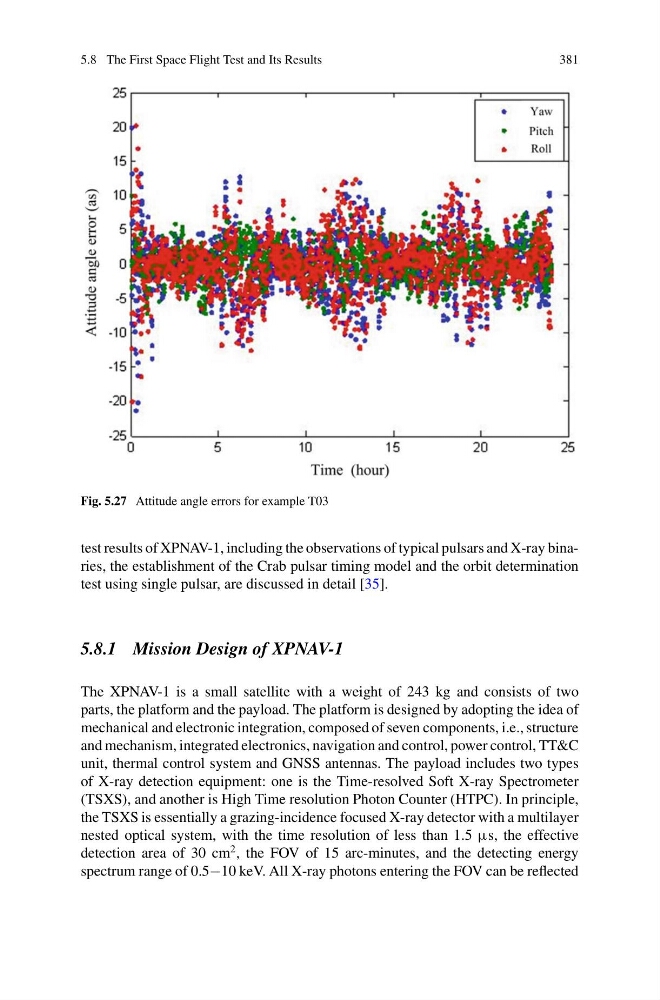
Fig. 5.27 Attitude angle errors for example T03
test results of XPNAV-1, including the observations of typical pulsars and X-ray binaries, the establishment of the Crab pulsar timing model and the orbit determination
test using single pulsar, are discussed in detail [35].
5.8.1 Mission Design of XPNAV-1
The XPNAV-1 is a small satellite with a weight of 243 kg and consists of two
parts, the platform and the payload. The platform is designed by adopting the idea of
mechanical and electronic integration, composed of seven components, i.e., structure
and mechanism, integrated electronics, navigation and control, power control, TT&C
unit, thermal control system and GNSS antennas. The payload includes two types
of X-ray detection equipment: one is the Time-resolved Soft X-ray Spectrometer
(TSXS), and another is High Time resolution Photon Counter (HTPC). In principle,
the TSXS is essentially a grazing-incidence focused X-ray detector with a multilayer
nested optical system, with the time resolution of less than 1.5 μs, the effective
detection area of 30 cm
2 , the FOV of 15 arc-minutes, and the detecting energy
spectrum range of 0.5−10 keV. All X-ray photons entering the FOV can be reflected
381
Fig. 5.27 Attitude angle errors for example T03
test results of XPNAV-1, including the observations of typical pulsars and X-ray binaries, the establishment of the Crab pulsar timing model and the orbit determination
test using single pulsar, are discussed in detail [35].
5.8.1 Mission Design of XPNAV-1
The XPNAV-1 is a small satellite with a weight of 243 kg and consists of two
parts, the platform and the payload. The platform is designed by adopting the idea of
mechanical and electronic integration, composed of seven components, i.e., structure
and mechanism, integrated electronics, navigation and control, power control, TT&C
unit, thermal control system and GNSS antennas. The payload includes two types
of X-ray detection equipment: one is the Time-resolved Soft X-ray Spectrometer
(TSXS), and another is High Time resolution Photon Counter (HTPC). In principle,
the TSXS is essentially a grazing-incidence focused X-ray detector with a multilayer
nested optical system, with the time resolution of less than 1.5 μs, the effective
detection area of 30 cm
2 , the FOV of 15 arc-minutes, and the detecting energy
spectrum range of 0.5−10 keV. All X-ray photons entering the FOV can be reflected