

380
5 X-ray Pulsar-Based Navigation: Theories and Experiments
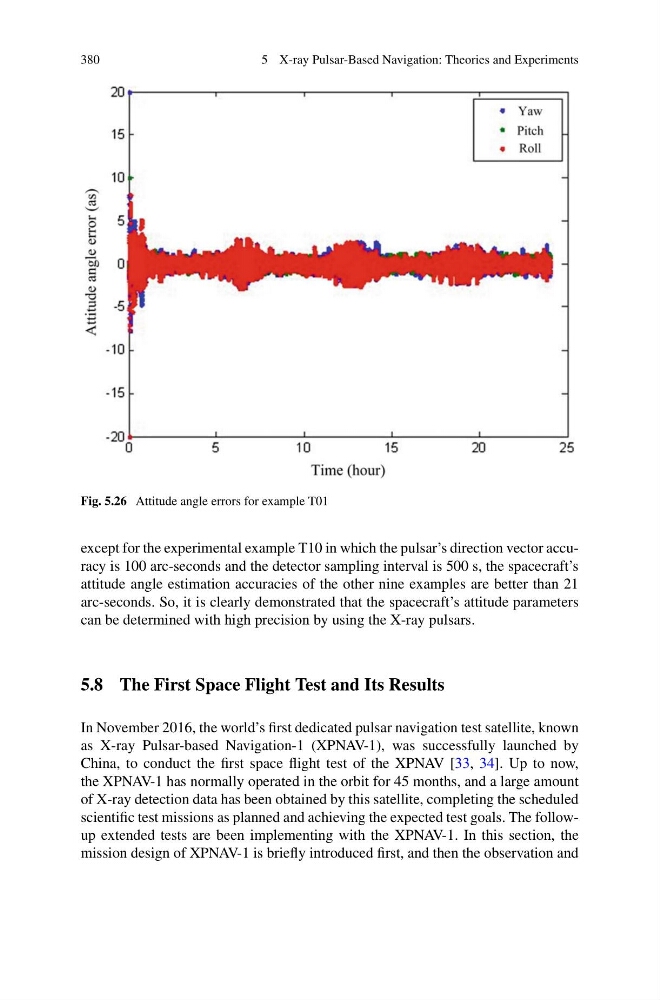
Fig. 5.26 Attitude angle errors for example T01
except for the experimental example T10 in which the pulsar’s direction vector accuracy is 100 arc-seconds and the detector sampling interval is 500 s, the spacecraft’s
attitude angle estimation accuracies of the other nine examples are better than 21
arc-seconds. So, it is clearly demonstrated that the spacecraft’s attitude parameters
can be determined with high precision by using the X-ray pulsars.
5.8 The First Space Flight Test and Its Results
In November 2016, the world’s first dedicated pulsar navigation test satellite, known
as X-ray Pulsar-based Navigation-1 (XPNAV-1), was successfully launched by
China, to conduct the first space flight test of the XPNAV [33, 34]. Up to now,
the XPNAV-1 has normally operated in the orbit for 45 months, and a large amount
of X-ray detection data has been obtained by this satellite, completing the scheduled
scientific test missions as planned and achieving the expected test goals. The followup extended tests are been implementing with the XPNAV-1. In this section, the
mission design of XPNAV-1 is briefly introduced first, and then the observation and
5 X-ray Pulsar-Based Navigation: Theories and Experiments
Fig. 5.26 Attitude angle errors for example T01
except for the experimental example T10 in which the pulsar’s direction vector accuracy is 100 arc-seconds and the detector sampling interval is 500 s, the spacecraft’s
attitude angle estimation accuracies of the other nine examples are better than 21
arc-seconds. So, it is clearly demonstrated that the spacecraft’s attitude parameters
can be determined with high precision by using the X-ray pulsars.
5.8 The First Space Flight Test and Its Results
In November 2016, the world’s first dedicated pulsar navigation test satellite, known
as X-ray Pulsar-based Navigation-1 (XPNAV-1), was successfully launched by
China, to conduct the first space flight test of the XPNAV [33, 34]. Up to now,
the XPNAV-1 has normally operated in the orbit for 45 months, and a large amount
of X-ray detection data has been obtained by this satellite, completing the scheduled
scientific test missions as planned and achieving the expected test goals. The followup extended tests are been implementing with the XPNAV-1. In this section, the
mission design of XPNAV-1 is briefly introduced first, and then the observation and