

4.2 Two-Body Problem: N-N Scattering at Low Energies …
43
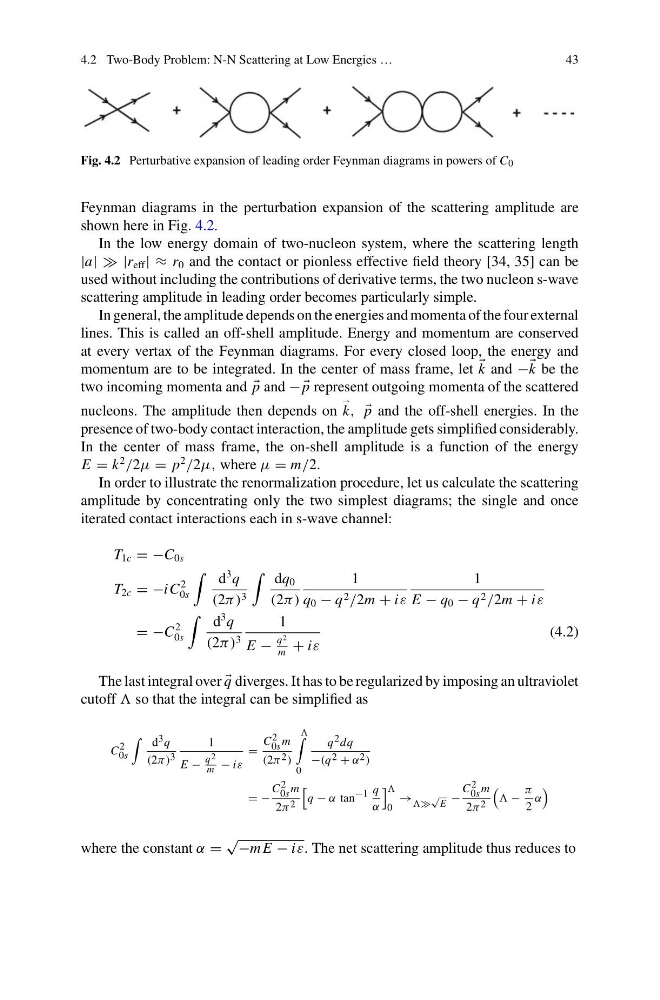
Fig. 4.2 Perturbative expansion of leading order Feynman diagrams in powers of C 0
Feynman diagrams in the perturbation expansion of the scattering amplitude are
shown here in Fig. 4.2.
In the low energy domain of two-nucleon system, where the scattering length
|a| |r eff | ≈ r 0 and the contact or pionless effective field theory [34, 35] can be
used without including the contributions of derivative terms, the two nucleon s-wave
scattering amplitude in leading order becomes particularly simple.
In general, the amplitude depends on the energies and momenta of the four external
lines. This is called an off-shell amplitude. Energy and momentum are conserved
at every vertax of the Feynman diagrams. For every closed loop, the energy and
momentum are to be integrated. In the center of mass frame, let
k and −
k be the
two incoming momenta and
p and − −
p represent outgoing momenta of the scattered
nucleons. The amplitude then depends on
k,
p and the off-shell energies. In the
presence of two-body contact interaction, the amplitude gets simplified considerably.
In the center of mass frame, the on-shell amplitude is a function of the energy
E = k
2
/2μ = p
2
/2μ, where μ = m/2.
In order to illustrate the renormalization procedure, let us calculate the scattering
amplitude by concentrating only the two simplest diagrams; the single and once
iterated contact interactions each in s-wave channel:
T 1c = −C 0s
T 2c = −iC
2
0s
d
3 q
(2π) 3
dq 0
(2π)
1
q 0 − q 2 /2m + iε
1
E − q 0 − q 2 /2m + iε
= −C
2
0s
d
3 q
(2π) 3
1
E −
q 2
m
+ iε
(4.2)
The last integral over
q diverges. It has to be regularized by imposing an ultraviolet
cutoff so that the integral can be simplified as
C 2
0s
d 3 q
(2π) 3
1
E −
q 2
m − iε
=
C 2
0s m
(2π 2 )
0
q 2 dq
−(q 2 + α 2 )
= −
C 2
0s m
2π 2
q − α tan −1 q
α
0
→
√
E
−
C 2
0s m
2π 2
−
π
2
α
where the constant α =
√ −m E − iε. The net scattering amplitude thus reduces to
43
Fig. 4.2 Perturbative expansion of leading order Feynman diagrams in powers of C 0
Feynman diagrams in the perturbation expansion of the scattering amplitude are
shown here in Fig. 4.2.
In the low energy domain of two-nucleon system, where the scattering length
|a| |r eff | ≈ r 0 and the contact or pionless effective field theory [34, 35] can be
used without including the contributions of derivative terms, the two nucleon s-wave
scattering amplitude in leading order becomes particularly simple.
In general, the amplitude depends on the energies and momenta of the four external
lines. This is called an off-shell amplitude. Energy and momentum are conserved
at every vertax of the Feynman diagrams. For every closed loop, the energy and
momentum are to be integrated. In the center of mass frame, let
k and −
k be the
two incoming momenta and
p and − −
p represent outgoing momenta of the scattered
nucleons. The amplitude then depends on
k,
p and the off-shell energies. In the
presence of two-body contact interaction, the amplitude gets simplified considerably.
In the center of mass frame, the on-shell amplitude is a function of the energy
E = k
2
/2μ = p
2
/2μ, where μ = m/2.
In order to illustrate the renormalization procedure, let us calculate the scattering
amplitude by concentrating only the two simplest diagrams; the single and once
iterated contact interactions each in s-wave channel:
T 1c = −C 0s
T 2c = −iC
2
0s
d
3 q
(2π) 3
dq 0
(2π)
1
q 0 − q 2 /2m + iε
1
E − q 0 − q 2 /2m + iε
= −C
2
0s
d
3 q
(2π) 3
1
E −
q 2
m
+ iε
(4.2)
The last integral over
q diverges. It has to be regularized by imposing an ultraviolet
cutoff so that the integral can be simplified as
C 2
0s
d 3 q
(2π) 3
1
E −
q 2
m − iε
=
C 2
0s m
(2π 2 )
0
q 2 dq
−(q 2 + α 2 )
= −
C 2
0s m
2π 2
q − α tan −1 q
α
0
→
√
E
−
C 2
0s m
2π 2
−
π
2
α
where the constant α =
√ −m E − iε. The net scattering amplitude thus reduces to