

106
CARBON NANOSTRUCTURES
lr
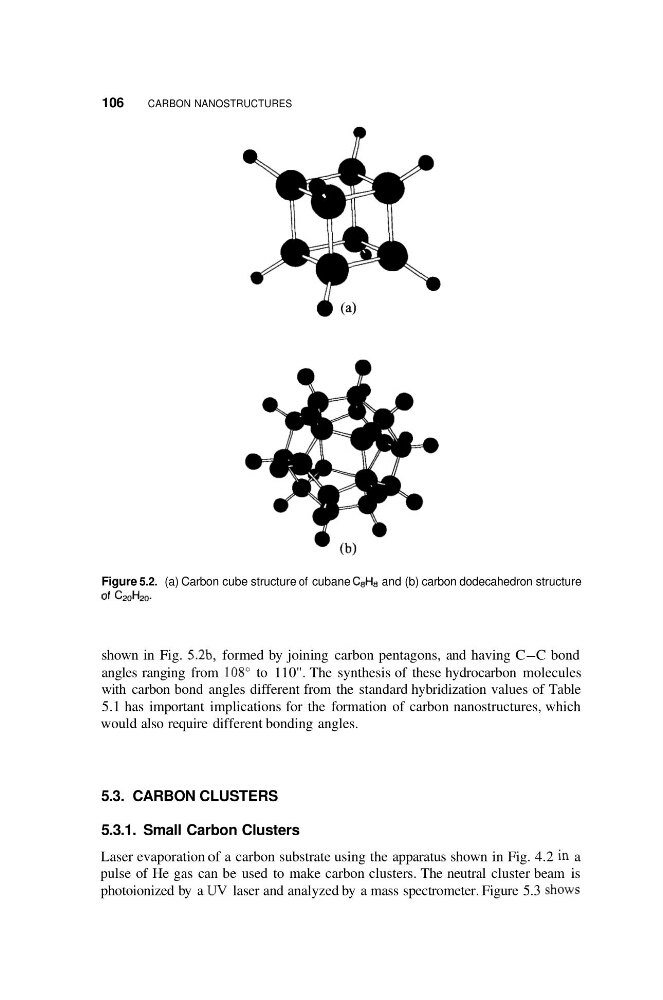
Figure 5.2. (a) Carbon cube structure of cubane C8H8 and (b) carbon dodecahedron structure
of CzoHzo.
shown in Fig. 5.2b, formed by joining carbon pentagons, and having C-C bond
angles ranging from 108" to 110". The synthesis of these hydrocarbon molecules
with carbon bond angles different from the standard hybridization values of Table
5.1 has important implications for the formation of carbon nanostructures, which
would also require different bonding angles.
5.3. CARBON CLUSTERS
5.3.1. Small Carbon Clusters
Laser evaporation of a carbon substrate using the apparatus shown in Fig. 4.2 in a
pulse of He gas can be used to make carbon clusters. The neutral cluster beam is
photoionized by a UV laser and analyzed by a mass spectrometer. Figure 5.3 shows
CARBON NANOSTRUCTURES
lr
Figure 5.2. (a) Carbon cube structure of cubane C8H8 and (b) carbon dodecahedron structure
of CzoHzo.
shown in Fig. 5.2b, formed by joining carbon pentagons, and having C-C bond
angles ranging from 108" to 110". The synthesis of these hydrocarbon molecules
with carbon bond angles different from the standard hybridization values of Table
5.1 has important implications for the formation of carbon nanostructures, which
would also require different bonding angles.
5.3. CARBON CLUSTERS
5.3.1. Small Carbon Clusters
Laser evaporation of a carbon substrate using the apparatus shown in Fig. 4.2 in a
pulse of He gas can be used to make carbon clusters. The neutral cluster beam is
photoionized by a UV laser and analyzed by a mass spectrometer. Figure 5.3 shows