

E1C11 09/14/2010
13:14:2 Page 478
to a tensile force of 30 kN. Determine the resistance change of the strain gauge if the resistance of the
gauge was 120 V in the absence of the axial load.
KNOWN
GF ¼ 2
E m ¼ 200 Â 10
6 kN/m
2
F N ¼ 30 kN
R ¼ 120 V A c ¼ 0:03 m  0:01 m
FIND The resistance change of the strain gauge for a tensile force of 30 kN
SOLUTION The stress in the bar under this loading condition is
s a ¼
F N
A c
¼
30 kN
0:03 m
ð
Þ 0:01 m
ð
Þ
¼ 1 Â 10
5 kN/m
2
and the resulting strain is
e a ¼
s a
E m
¼
1 Â 10
5 kN/m
2
200 Â 10
6 kN/m 2 ¼ 5 Â 10
À4 m/m
ð11:16Þ
For strain along the axis of the strain gauge, the change in resistance from Equation 11.11 is
dR=R ¼ eGF
or
dR ¼ ReGF ¼ 120V
ð
Þ 5 Â 10
À4
À
Á
2
ð Þ ¼ 0:12 V
Example 11.4
Suppose the strain gauge described in Example 11.3 is to be connected to a measurement device
capable of determining a change in resistance with a stated uncertainty of Æ0.005 V (95%). This
stated uncertainty includes a resolution of 0.001 V. What uncertainty in stress would result when
using this resistance measurement device?
KNOWN A stress is to be inferred from a strain measurement using a strain gauge having a
gauge factor of 2 and a zero load resistance of 120 V. The measurement of resistance has a stated
uncertainty of Æ0.005 V (95%).
E i
E o
Tensile
loading
Gauge
axis
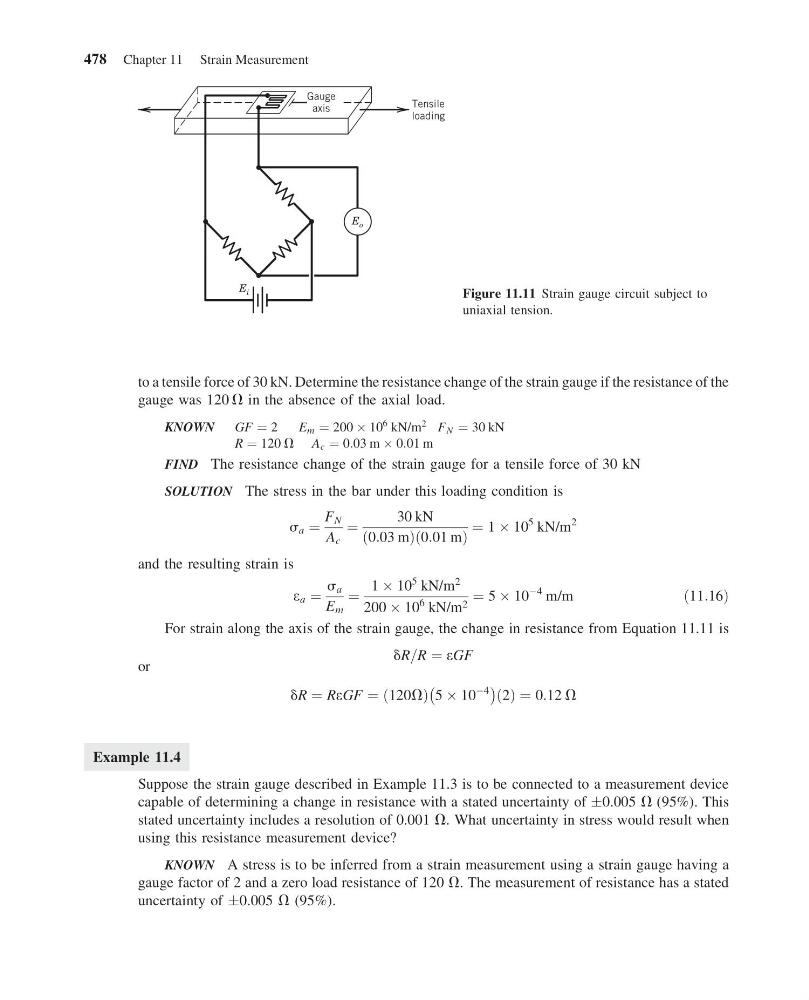
Figure 11.11 Strain gauge circuit subject to
uniaxial tension.
478 Chapter 11 Strain Measurement
13:14:2 Page 478
to a tensile force of 30 kN. Determine the resistance change of the strain gauge if the resistance of the
gauge was 120 V in the absence of the axial load.
KNOWN
GF ¼ 2
E m ¼ 200 Â 10
6 kN/m
2
F N ¼ 30 kN
R ¼ 120 V A c ¼ 0:03 m  0:01 m
FIND The resistance change of the strain gauge for a tensile force of 30 kN
SOLUTION The stress in the bar under this loading condition is
s a ¼
F N
A c
¼
30 kN
0:03 m
ð
Þ 0:01 m
ð
Þ
¼ 1 Â 10
5 kN/m
2
and the resulting strain is
e a ¼
s a
E m
¼
1 Â 10
5 kN/m
2
200 Â 10
6 kN/m 2 ¼ 5 Â 10
À4 m/m
ð11:16Þ
For strain along the axis of the strain gauge, the change in resistance from Equation 11.11 is
dR=R ¼ eGF
or
dR ¼ ReGF ¼ 120V
ð
Þ 5 Â 10
À4
À
Á
2
ð Þ ¼ 0:12 V
Example 11.4
Suppose the strain gauge described in Example 11.3 is to be connected to a measurement device
capable of determining a change in resistance with a stated uncertainty of Æ0.005 V (95%). This
stated uncertainty includes a resolution of 0.001 V. What uncertainty in stress would result when
using this resistance measurement device?
KNOWN A stress is to be inferred from a strain measurement using a strain gauge having a
gauge factor of 2 and a zero load resistance of 120 V. The measurement of resistance has a stated
uncertainty of Æ0.005 V (95%).
E i
E o
Tensile
loading
Gauge
axis
Figure 11.11 Strain gauge circuit subject to
uniaxial tension.
478 Chapter 11 Strain Measurement