

E1C07 09/14/2010
14:43:51 Page 294
Data Transmission
Serial communication implies that data are sent in successive streams of information, one bit at a
time. The value of each bit is represented by an analog voltage pulse with a 1 and 0 distinguished by
two equal voltages of opposite polarity in the 3- to 25-V range. Communication rates are measured
in baud, which refers to the number of signal pulses per second.
A typical asynchronous transmission is 10 serial bits composed of a start bit followed by a 7- or
8-bit data stream, either one or no parity bit, and terminated by 1 or 2 stop bits. The start and stop bits
form the serial ‘‘handshake’’. Asynchronous transmission means that information may be sent at
random intervals. So the start and stop bits are signals used to initiate and to end the transmission of
each byte of data transmitted, hence the analogy of a handshake. The start bit allows for synchronization of the clocks of the two communicating devices. The parity bit allows for limited error
checking. Parity involves counting the number of 1’s in a byte. In 1 byte of data, there will be an
even or odd number of bits with a value of 1. An additional bit added to each byte to make the
number of 1 bits a predetermined even or odd number is called a parity bit. The receiving device
counts the number of transmitted bits, checking for the predetermined even (even parity) or odd (odd
parity) number. In synchronous transmission, the two devices initialize and synchronize communication with each other. Even when there are no data to send, the devices transmit characters just to
maintain synchronization. Stop and start bits are then unnecessary, allowing for higher data transfer
rates.
Devices that employ data buffers, a region of RAM that serves as a data holding area, use a
software handshaking protocol such as XON/XOFF. With this, the receiving device transmits an
XOFF signal to halt transmission as the buffer nears full and an XON signal when it has emptied and
is again ready to receive.
Bluetooth Communications
Bluetooth is a standardized specification permitting wireless communication between devices. The
specification is based on the use of radio waves to transmit information, allowing signals to pass
n
i
P
n
i
P
2
3
7
2
3
7
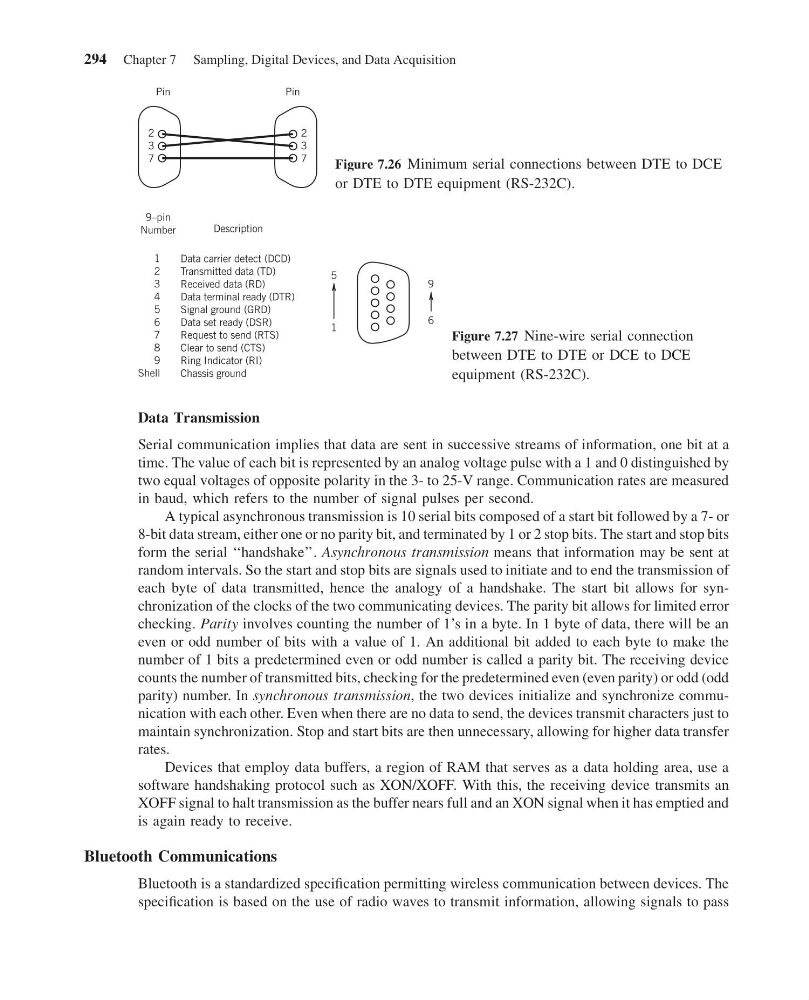
Figure 7.26 Minimum serial connections between DTE to DCE
or DTE to DTE equipment (RS-232C).
Description
5
9
1
6
9–pin
Number
1
2
3
4
5
6
7
8
9
Shell
Data carrier detect (DCD)
Transmitted data (TD)
Received data (RD)
Data terminal ready (DTR)
Signal ground (GRD)
Data set ready (DSR)
Request to send (RTS)
Clear to send (CTS)
Ring Indicator (RI)
Chassis ground
Figure 7.27 Nine-wire serial connection
between DTE to DTE or DCE to DCE
equipment (RS-232C).
294 Chapter 7 Sampling, Digital Devices, and Data Acquisition
14:43:51 Page 294
Data Transmission
Serial communication implies that data are sent in successive streams of information, one bit at a
time. The value of each bit is represented by an analog voltage pulse with a 1 and 0 distinguished by
two equal voltages of opposite polarity in the 3- to 25-V range. Communication rates are measured
in baud, which refers to the number of signal pulses per second.
A typical asynchronous transmission is 10 serial bits composed of a start bit followed by a 7- or
8-bit data stream, either one or no parity bit, and terminated by 1 or 2 stop bits. The start and stop bits
form the serial ‘‘handshake’’. Asynchronous transmission means that information may be sent at
random intervals. So the start and stop bits are signals used to initiate and to end the transmission of
each byte of data transmitted, hence the analogy of a handshake. The start bit allows for synchronization of the clocks of the two communicating devices. The parity bit allows for limited error
checking. Parity involves counting the number of 1’s in a byte. In 1 byte of data, there will be an
even or odd number of bits with a value of 1. An additional bit added to each byte to make the
number of 1 bits a predetermined even or odd number is called a parity bit. The receiving device
counts the number of transmitted bits, checking for the predetermined even (even parity) or odd (odd
parity) number. In synchronous transmission, the two devices initialize and synchronize communication with each other. Even when there are no data to send, the devices transmit characters just to
maintain synchronization. Stop and start bits are then unnecessary, allowing for higher data transfer
rates.
Devices that employ data buffers, a region of RAM that serves as a data holding area, use a
software handshaking protocol such as XON/XOFF. With this, the receiving device transmits an
XOFF signal to halt transmission as the buffer nears full and an XON signal when it has emptied and
is again ready to receive.
Bluetooth Communications
Bluetooth is a standardized specification permitting wireless communication between devices. The
specification is based on the use of radio waves to transmit information, allowing signals to pass
n
i
P
n
i
P
2
3
7
2
3
7
Figure 7.26 Minimum serial connections between DTE to DCE
or DTE to DTE equipment (RS-232C).
Description
5
9
1
6
9–pin
Number
1
2
3
4
5
6
7
8
9
Shell
Data carrier detect (DCD)
Transmitted data (TD)
Received data (RD)
Data terminal ready (DTR)
Signal ground (GRD)
Data set ready (DSR)
Request to send (RTS)
Clear to send (CTS)
Ring Indicator (RI)
Chassis ground
Figure 7.27 Nine-wire serial connection
between DTE to DTE or DCE to DCE
equipment (RS-232C).
294 Chapter 7 Sampling, Digital Devices, and Data Acquisition