

3.1 Rh-Catalyzed C–H Bond Arylation
33
5.0 mol %[RhCl(PPh 3 ) 3 ]
Cl 2 CHCHCl 2 , 120 C, 20 h
N
+ Ph 4 Sn
N
Ph
+
N
Ph
Ph
56% yield
20% yield
(a)
5.0 mol % [{RhCl(C 2 H 4 ) 2 } 2 ) 3 ]
20 mol % P[p-(CF 3 )C 6 H 4 ] 3
6.0 eq. TEMPO
10:1 1,4-diocane/tBuOH
130 C, 9 h
N
+ PhB(OH) 2
N
Ph
+
N
Ph
Ph
50% yield
18% yield
(b)
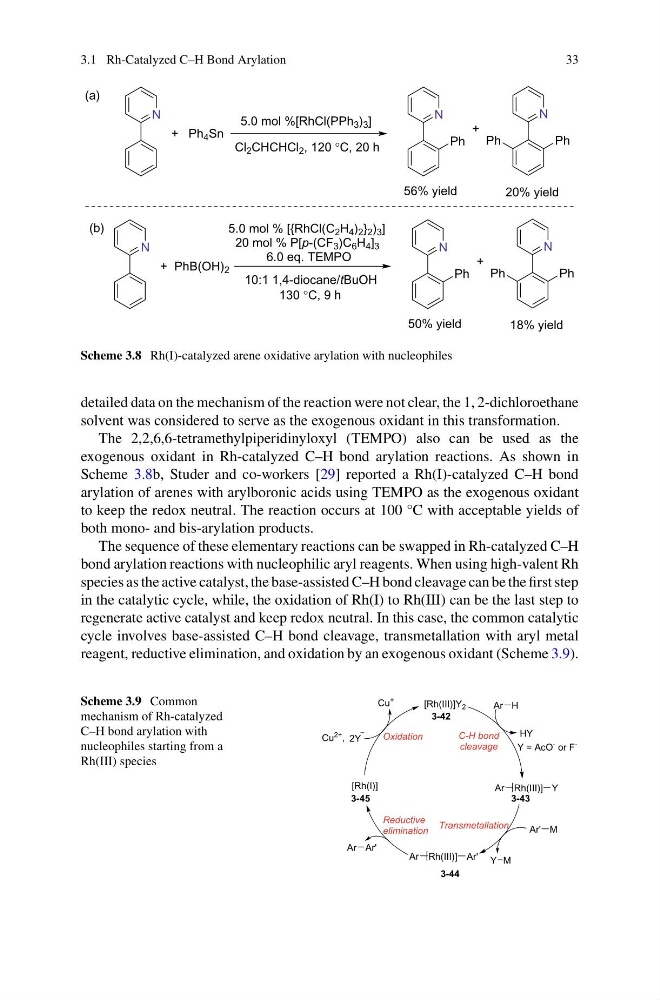
Scheme 3.8 Rh(I)-catalyzed arene oxidative arylation with nucleophiles
detailed data on the mechanism of the reaction were not clear, the 1, 2-dichloroethane
solvent was considered to serve as the exogenous oxidant in this transformation.
The 2,2,6,6-tetramethylpiperidinyloxyl (TEMPO) also can be used as the
exogenous oxidant in Rh-catalyzed C–H bond arylation reactions. As shown in
Scheme 3.8b, Studer and co-workers [29] reported a Rh(I)-catalyzed C–H bond
arylation of arenes with arylboronic acids using TEMPO as the exogenous oxidant
to keep the redox neutral. The reaction occurs at 100 °C with acceptable yields of
both mono- and bis-arylation products.
The sequence of these elementary reactions can be swapped in Rh-catalyzed C–H
bond arylation reactions with nucleophilic aryl reagents. When using high-valent Rh
species as the active catalyst, the base-assisted C–H bond cleavage can be the first step
in the catalytic cycle, while, the oxidation of Rh(I) to Rh(III) can be the last step to
regenerate active catalyst and keep redox neutral. In this case, the common catalytic
cycle involves base-assisted C–H bond cleavage, transmetallation with aryl metal
reagent, reductive elimination, and oxidation by an exogenous oxidant (Scheme 3.9).
Scheme 3.9 Common
mechanism of Rh-catalyzed
C–H bond arylation with
nucleophiles starting from a
Rh(III) species
[Rh(III)]Y 2
2Y
Ar H
HY
Ar Rh(III)]
Ar Ar'
Ar' M
Y M
3-44
3-43
Ar Rh(III)] Ar'
[Rh(I)]
Oxidation
Cu
2+ ,
Y = AcO
- or F
-
3-42
3-45
Transmetallation
Reductive
elimination
C-H bond
cleavage
Cu
+
Y
33
5.0 mol %[RhCl(PPh 3 ) 3 ]
Cl 2 CHCHCl 2 , 120 C, 20 h
N
+ Ph 4 Sn
N
Ph
+
N
Ph
Ph
56% yield
20% yield
(a)
5.0 mol % [{RhCl(C 2 H 4 ) 2 } 2 ) 3 ]
20 mol % P[p-(CF 3 )C 6 H 4 ] 3
6.0 eq. TEMPO
10:1 1,4-diocane/tBuOH
130 C, 9 h
N
+ PhB(OH) 2
N
Ph
+
N
Ph
Ph
50% yield
18% yield
(b)
Scheme 3.8 Rh(I)-catalyzed arene oxidative arylation with nucleophiles
detailed data on the mechanism of the reaction were not clear, the 1, 2-dichloroethane
solvent was considered to serve as the exogenous oxidant in this transformation.
The 2,2,6,6-tetramethylpiperidinyloxyl (TEMPO) also can be used as the
exogenous oxidant in Rh-catalyzed C–H bond arylation reactions. As shown in
Scheme 3.8b, Studer and co-workers [29] reported a Rh(I)-catalyzed C–H bond
arylation of arenes with arylboronic acids using TEMPO as the exogenous oxidant
to keep the redox neutral. The reaction occurs at 100 °C with acceptable yields of
both mono- and bis-arylation products.
The sequence of these elementary reactions can be swapped in Rh-catalyzed C–H
bond arylation reactions with nucleophilic aryl reagents. When using high-valent Rh
species as the active catalyst, the base-assisted C–H bond cleavage can be the first step
in the catalytic cycle, while, the oxidation of Rh(I) to Rh(III) can be the last step to
regenerate active catalyst and keep redox neutral. In this case, the common catalytic
cycle involves base-assisted C–H bond cleavage, transmetallation with aryl metal
reagent, reductive elimination, and oxidation by an exogenous oxidant (Scheme 3.9).
Scheme 3.9 Common
mechanism of Rh-catalyzed
C–H bond arylation with
nucleophiles starting from a
Rh(III) species
[Rh(III)]Y 2
2Y
Ar H
HY
Ar Rh(III)]
Ar Ar'
Ar' M
Y M
3-44
3-43
Ar Rh(III)] Ar'
[Rh(I)]
Oxidation
Cu
2+ ,
Y = AcO
- or F
-
3-42
3-45
Transmetallation
Reductive
elimination
C-H bond
cleavage
Cu
+
Y