

8
1 Theoretical View of Rh-Catalyzed C–H Functionalization
N
N
N
N
Me
THF, 160
o C, 20h
5 mol % [RhCl(coe) 2 ] 2
7.5 mol % PCy 3
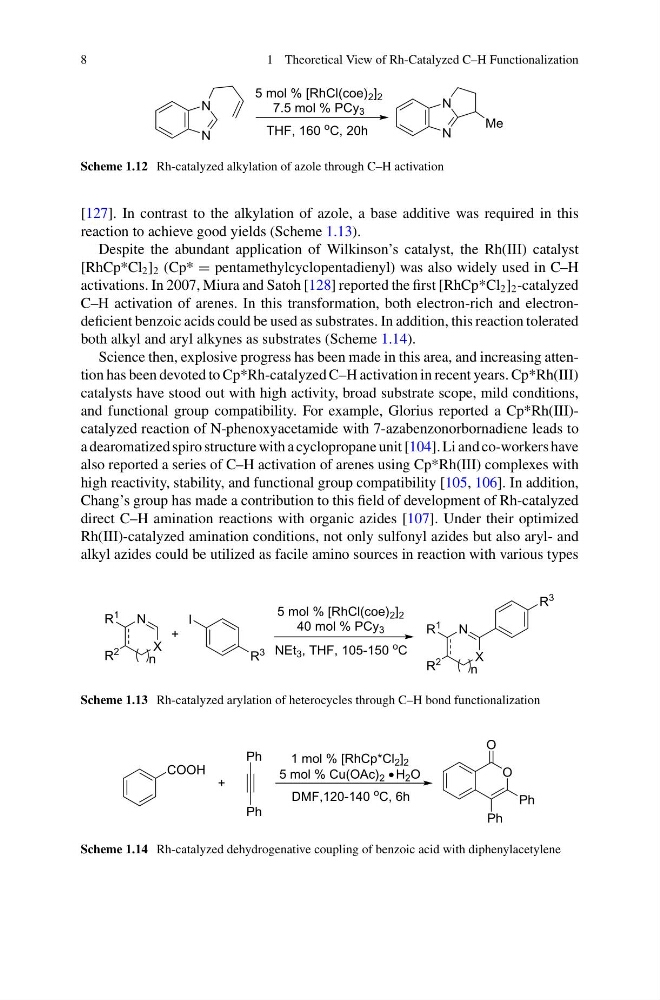
Scheme 1.12 Rh-catalyzed alkylation of azole through C–H activation
[127]. In contrast to the alkylation of azole, a base additive was required in this
reaction to achieve good yields (Scheme 1.13).
Despite the abundant application of Wilkinson’s catalyst, the Rh(III) catalyst
[RhCp*Cl 2 ] 2 (Cp* = pentamethylcyclopentadienyl) was also widely used in C–H
activations. In 2007, Miura and Satoh [128] reported the first [RhCp*Cl 2 ] 2 -catalyzed
C–H activation of arenes. In this transformation, both electron-rich and electrondeficient benzoic acids could be used as substrates. In addition, this reaction tolerated
both alkyl and aryl alkynes as substrates (Scheme 1.14).
Science then, explosive progress has been made in this area, and increasing attention has been devoted to Cp*Rh-catalyzed C–H activation in recent years. Cp*Rh(III)
catalysts have stood out with high activity, broad substrate scope, mild conditions,
and functional group compatibility. For example, Glorius reported a Cp*Rh(III)catalyzed reaction of N-phenoxyacetamide with 7-azabenzonorbornadiene leads to
a dearomatized spiro structure with a cyclopropane unit [104]. Li and co-workers have
also reported a series of C–H activation of arenes using Cp*Rh(III) complexes with
high reactivity, stability, and functional group compatibility [105, 106]. In addition,
Chang’s group has made a contribution to this field of development of Rh-catalyzed
direct C–H amination reactions with organic azides [107]. Under their optimized
Rh(III)-catalyzed amination conditions, not only sulfonyl azides but also aryl- and
alkyl azides could be utilized as facile amino sources in reaction with various types
X
N
R
1
R
2
n
+
I
R
3
X
N
R
1
R
2
n
R
3
NEt 3 , THF, 105-150
o C
5 mol % [RhCl(coe) 2 ] 2
40 mol % PCy 3
Scheme 1.13 Rh-catalyzed arylation of heterocycles through C–H bond functionalization
COOH
Ph
Ph
+
O
O
Ph
Ph
1 mol % [RhCp*Cl 2 ] 2
5 mol % Cu(OAc) 2 H 2 O
DMF,120-140
o C, 6h
Scheme 1.14 Rh-catalyzed dehydrogenative coupling of benzoic acid with diphenylacetylene
1 Theoretical View of Rh-Catalyzed C–H Functionalization
N
N
N
N
Me
THF, 160
o C, 20h
5 mol % [RhCl(coe) 2 ] 2
7.5 mol % PCy 3
Scheme 1.12 Rh-catalyzed alkylation of azole through C–H activation
[127]. In contrast to the alkylation of azole, a base additive was required in this
reaction to achieve good yields (Scheme 1.13).
Despite the abundant application of Wilkinson’s catalyst, the Rh(III) catalyst
[RhCp*Cl 2 ] 2 (Cp* = pentamethylcyclopentadienyl) was also widely used in C–H
activations. In 2007, Miura and Satoh [128] reported the first [RhCp*Cl 2 ] 2 -catalyzed
C–H activation of arenes. In this transformation, both electron-rich and electrondeficient benzoic acids could be used as substrates. In addition, this reaction tolerated
both alkyl and aryl alkynes as substrates (Scheme 1.14).
Science then, explosive progress has been made in this area, and increasing attention has been devoted to Cp*Rh-catalyzed C–H activation in recent years. Cp*Rh(III)
catalysts have stood out with high activity, broad substrate scope, mild conditions,
and functional group compatibility. For example, Glorius reported a Cp*Rh(III)catalyzed reaction of N-phenoxyacetamide with 7-azabenzonorbornadiene leads to
a dearomatized spiro structure with a cyclopropane unit [104]. Li and co-workers have
also reported a series of C–H activation of arenes using Cp*Rh(III) complexes with
high reactivity, stability, and functional group compatibility [105, 106]. In addition,
Chang’s group has made a contribution to this field of development of Rh-catalyzed
direct C–H amination reactions with organic azides [107]. Under their optimized
Rh(III)-catalyzed amination conditions, not only sulfonyl azides but also aryl- and
alkyl azides could be utilized as facile amino sources in reaction with various types
X
N
R
1
R
2
n
+
I
R
3
X
N
R
1
R
2
n
R
3
NEt 3 , THF, 105-150
o C
5 mol % [RhCl(coe) 2 ] 2
40 mol % PCy 3
Scheme 1.13 Rh-catalyzed arylation of heterocycles through C–H bond functionalization
COOH
Ph
Ph
+
O
O
Ph
Ph
1 mol % [RhCp*Cl 2 ] 2
5 mol % Cu(OAc) 2 H 2 O
DMF,120-140
o C, 6h
Scheme 1.14 Rh-catalyzed dehydrogenative coupling of benzoic acid with diphenylacetylene