

1.1 A Brief History of Rh-Catalyzed C–H Functionalization
7
N N
N N
DMA, 140
o C, 20h
R
+ CO
H 2 C=CH 2
+
2.5 mol % [Rh 4 (CO) 12 ]
O
R
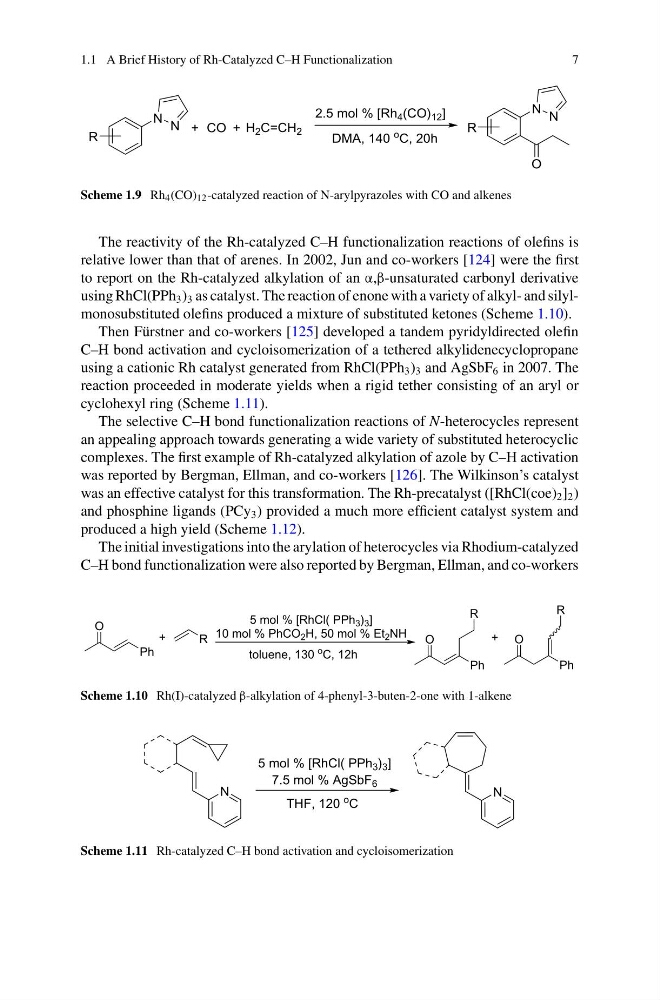
Scheme 1.9 Rh 4 (CO) 12 -catalyzed reaction of N-arylpyrazoles with CO and alkenes
The reactivity of the Rh-catalyzed C–H functionalization reactions of olefins is
relative lower than that of arenes. In 2002, Jun and co-workers [124] were the first
to report on the Rh-catalyzed alkylation of an α,β-unsaturated carbonyl derivative
using RhCl(PPh 3 ) 3 as catalyst. The reaction of enone with a variety of alkyl- and silylmonosubstituted olefins produced a mixture of substituted ketones (Scheme 1.10).
Then Fürstner and co-workers [125] developed a tandem pyridyldirected olefin
C–H bond activation and cycloisomerization of a tethered alkylidenecyclopropane
using a cationic Rh catalyst generated from RhCl(PPh 3 ) 3 and AgSbF 6 in 2007. The
reaction proceeded in moderate yields when a rigid tether consisting of an aryl or
cyclohexyl ring (Scheme 1.11).
The selective C–H bond functionalization reactions of N-heterocycles represent
an appealing approach towards generating a wide variety of substituted heterocyclic
complexes. The first example of Rh-catalyzed alkylation of azole by C–H activation
was reported by Bergman, Ellman, and co-workers [126]. The Wilkinson’s catalyst
was an effective catalyst for this transformation. The Rh-precatalyst ([RhCl(coe) 2 ] 2 )
and phosphine ligands (PCy 3 ) provided a much more efficient catalyst system and
produced a high yield (Scheme 1.12).
The initial investigations into the arylation of heterocycles via Rhodium-catalyzed
C–H bond functionalization were also reported by Bergman, Ellman, and co-workers
Ph
O
R
+
O
O
R
+
5 mol % [RhCl( PPh 3 ) 3 ]
10 mol % PhCO 2 H, 50 mol % Et 2 NH
toluene, 130
o C, 12h
Ph
R
Ph
Scheme 1.10 Rh(I)-catalyzed β-alkylation of 4-phenyl-3-buten-2-one with 1-alkene
N
THF, 120
o C
5 mol % [RhCl( PPh 3 ) 3 ]
7.5 mol % AgSbF 6
N
Scheme 1.11 Rh-catalyzed C–H bond activation and cycloisomerization
7
N N
N N
DMA, 140
o C, 20h
R
+ CO
H 2 C=CH 2
+
2.5 mol % [Rh 4 (CO) 12 ]
O
R
Scheme 1.9 Rh 4 (CO) 12 -catalyzed reaction of N-arylpyrazoles with CO and alkenes
The reactivity of the Rh-catalyzed C–H functionalization reactions of olefins is
relative lower than that of arenes. In 2002, Jun and co-workers [124] were the first
to report on the Rh-catalyzed alkylation of an α,β-unsaturated carbonyl derivative
using RhCl(PPh 3 ) 3 as catalyst. The reaction of enone with a variety of alkyl- and silylmonosubstituted olefins produced a mixture of substituted ketones (Scheme 1.10).
Then Fürstner and co-workers [125] developed a tandem pyridyldirected olefin
C–H bond activation and cycloisomerization of a tethered alkylidenecyclopropane
using a cationic Rh catalyst generated from RhCl(PPh 3 ) 3 and AgSbF 6 in 2007. The
reaction proceeded in moderate yields when a rigid tether consisting of an aryl or
cyclohexyl ring (Scheme 1.11).
The selective C–H bond functionalization reactions of N-heterocycles represent
an appealing approach towards generating a wide variety of substituted heterocyclic
complexes. The first example of Rh-catalyzed alkylation of azole by C–H activation
was reported by Bergman, Ellman, and co-workers [126]. The Wilkinson’s catalyst
was an effective catalyst for this transformation. The Rh-precatalyst ([RhCl(coe) 2 ] 2 )
and phosphine ligands (PCy 3 ) provided a much more efficient catalyst system and
produced a high yield (Scheme 1.12).
The initial investigations into the arylation of heterocycles via Rhodium-catalyzed
C–H bond functionalization were also reported by Bergman, Ellman, and co-workers
Ph
O
R
+
O
O
R
+
5 mol % [RhCl( PPh 3 ) 3 ]
10 mol % PhCO 2 H, 50 mol % Et 2 NH
toluene, 130
o C, 12h
Ph
R
Ph
Scheme 1.10 Rh(I)-catalyzed β-alkylation of 4-phenyl-3-buten-2-one with 1-alkene
N
THF, 120
o C
5 mol % [RhCl( PPh 3 ) 3 ]
7.5 mol % AgSbF 6
N
Scheme 1.11 Rh-catalyzed C–H bond activation and cycloisomerization