

10.4 Magnetic Random Access Memories (MRAM)
241
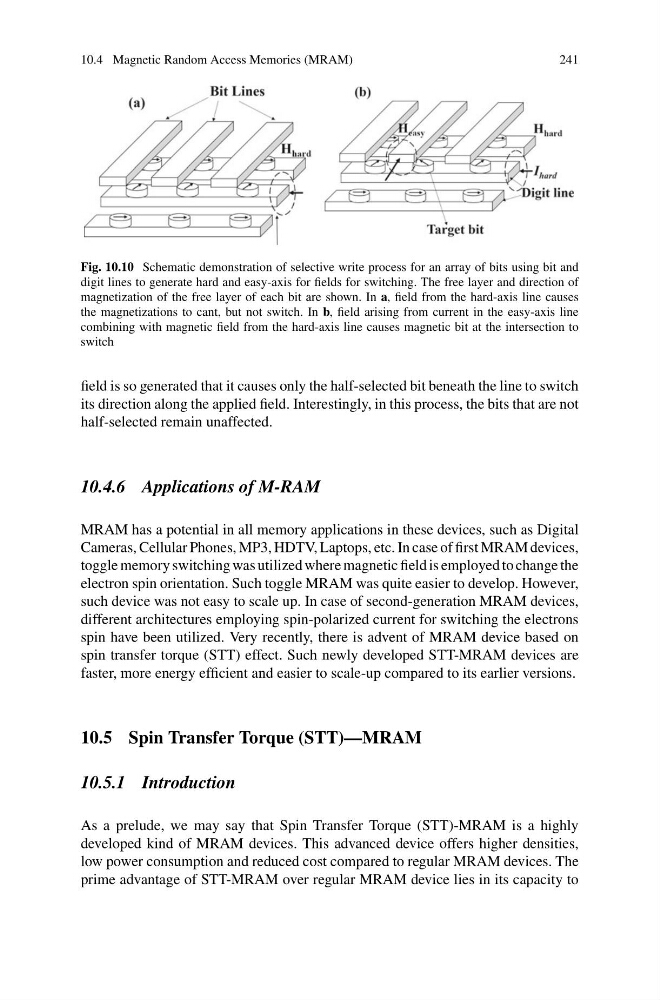
Fig. 10.10 Schematic demonstration of selective write process for an array of bits using bit and
digit lines to generate hard and easy-axis for fields for switching. The free layer and direction of
magnetization of the free layer of each bit are shown. In a, field from the hard-axis line causes
the magnetizations to cant, but not switch. In b, field arising from current in the easy-axis line
combining with magnetic field from the hard-axis line causes magnetic bit at the intersection to
switch
field is so generated that it causes only the half-selected bit beneath the line to switch
its direction along the applied field. Interestingly, in this process, the bits that are not
half-selected remain unaffected.
10.4.6 Applications of M-RAM
MRAM has a potential in all memory applications in these devices, such as Digital
Cameras, Cellular Phones, MP3, HDTV, Laptops, etc. In case of first MRAM devices,
toggle memory switching was utilized where magnetic field is employed to change the
electron spin orientation. Such toggle MRAM was quite easier to develop. However,
such device was not easy to scale up. In case of second-generation MRAM devices,
different architectures employing spin-polarized current for switching the electrons
spin have been utilized. Very recently, there is advent of MRAM device based on
spin transfer torque (STT) effect. Such newly developed STT-MRAM devices are
faster, more energy efficient and easier to scale-up compared to its earlier versions.
10.5 Spin Transfer Torque (STT)—MRAM
10.5.1 Introduction
As a prelude, we may say that Spin Transfer Torque (STT)-MRAM is a highly
developed kind of MRAM devices. This advanced device offers higher densities,
low power consumption and reduced cost compared to regular MRAM devices. The
prime advantage of STT-MRAM over regular MRAM device lies in its capacity to
241
Fig. 10.10 Schematic demonstration of selective write process for an array of bits using bit and
digit lines to generate hard and easy-axis for fields for switching. The free layer and direction of
magnetization of the free layer of each bit are shown. In a, field from the hard-axis line causes
the magnetizations to cant, but not switch. In b, field arising from current in the easy-axis line
combining with magnetic field from the hard-axis line causes magnetic bit at the intersection to
switch
field is so generated that it causes only the half-selected bit beneath the line to switch
its direction along the applied field. Interestingly, in this process, the bits that are not
half-selected remain unaffected.
10.4.6 Applications of M-RAM
MRAM has a potential in all memory applications in these devices, such as Digital
Cameras, Cellular Phones, MP3, HDTV, Laptops, etc. In case of first MRAM devices,
toggle memory switching was utilized where magnetic field is employed to change the
electron spin orientation. Such toggle MRAM was quite easier to develop. However,
such device was not easy to scale up. In case of second-generation MRAM devices,
different architectures employing spin-polarized current for switching the electrons
spin have been utilized. Very recently, there is advent of MRAM device based on
spin transfer torque (STT) effect. Such newly developed STT-MRAM devices are
faster, more energy efficient and easier to scale-up compared to its earlier versions.
10.5 Spin Transfer Torque (STT)—MRAM
10.5.1 Introduction
As a prelude, we may say that Spin Transfer Torque (STT)-MRAM is a highly
developed kind of MRAM devices. This advanced device offers higher densities,
low power consumption and reduced cost compared to regular MRAM devices. The
prime advantage of STT-MRAM over regular MRAM device lies in its capacity to