

82
3 Giant Magnetoresistance (GMR)
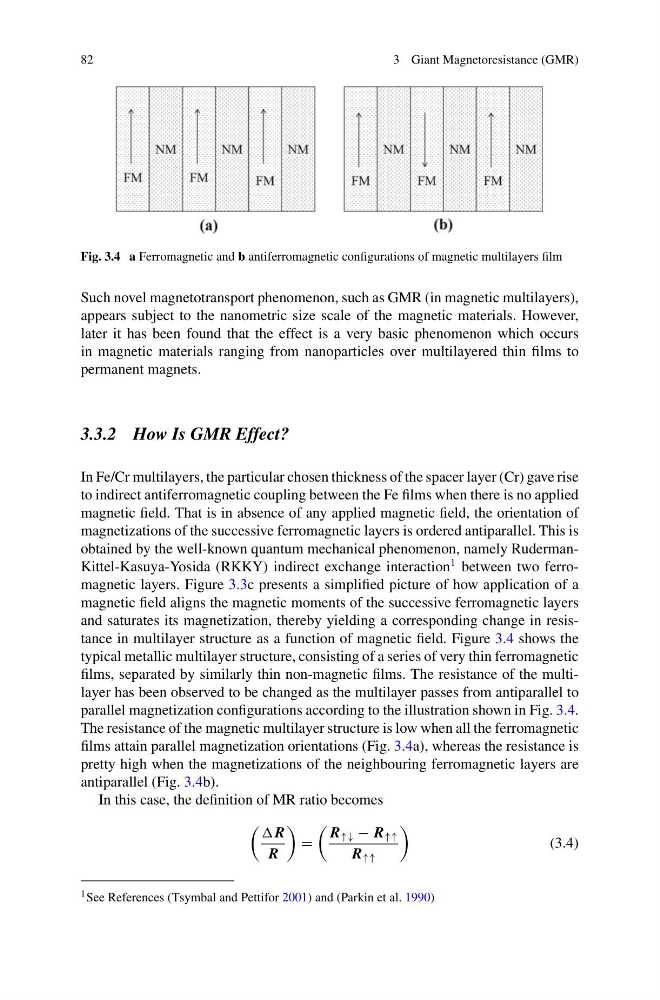
Fig. 3.4 a Ferromagnetic and b antiferromagnetic configurations of magnetic multilayers film
Such novel magnetotransport phenomenon, such as GMR (in magnetic multilayers),
appears subject to the nanometric size scale of the magnetic materials. However,
later it has been found that the effect is a very basic phenomenon which occurs
in magnetic materials ranging from nanoparticles over multilayered thin films to
permanent magnets.
3.3.2 How Is GMR Effect?
In Fe/Cr multilayers, the particular chosen thickness of the spacer layer (Cr) gave rise
to indirect antiferromagnetic coupling between the Fe films when there is no applied
magnetic field. That is in absence of any applied magnetic field, the orientation of
magnetizations of the successive ferromagnetic layers is ordered antiparallel. This is
obtained by the well-known quantum mechanical phenomenon, namely RudermanKittel-Kasuya-Yosida (RKKY) indirect exchange interaction
1 between two ferromagnetic layers. Figure 3.3c presents a simplified picture of how application of a
magnetic field aligns the magnetic moments of the successive ferromagnetic layers
and saturates its magnetization, thereby yielding a corresponding change in resistance in multilayer structure as a function of magnetic field. Figure 3.4 shows the
typical metallic multilayer structure, consisting of a series of very thin ferromagnetic
films, separated by similarly thin non-magnetic films. The resistance of the multilayer has been observed to be changed as the multilayer passes from antiparallel to
parallel magnetization configurations according to the illustration shown in Fig. 3.4.
The resistance of the magnetic multilayer structure is low when all the ferromagnetic
films attain parallel magnetization orientations (Fig. 3.4a), whereas the resistance is
pretty high when the magnetizations of the neighbouring ferromagnetic layers are
antiparallel (Fig. 3.4b).
In this case, the definition of MR ratio becomes
R
R
=
R ↑↓ − R ↑↑
R ↑↑
(3.4)
1 See References (Tsymbal and Pettifor 2001) and (Parkin et al. 1990)
3 Giant Magnetoresistance (GMR)
Fig. 3.4 a Ferromagnetic and b antiferromagnetic configurations of magnetic multilayers film
Such novel magnetotransport phenomenon, such as GMR (in magnetic multilayers),
appears subject to the nanometric size scale of the magnetic materials. However,
later it has been found that the effect is a very basic phenomenon which occurs
in magnetic materials ranging from nanoparticles over multilayered thin films to
permanent magnets.
3.3.2 How Is GMR Effect?
In Fe/Cr multilayers, the particular chosen thickness of the spacer layer (Cr) gave rise
to indirect antiferromagnetic coupling between the Fe films when there is no applied
magnetic field. That is in absence of any applied magnetic field, the orientation of
magnetizations of the successive ferromagnetic layers is ordered antiparallel. This is
obtained by the well-known quantum mechanical phenomenon, namely RudermanKittel-Kasuya-Yosida (RKKY) indirect exchange interaction
1 between two ferromagnetic layers. Figure 3.3c presents a simplified picture of how application of a
magnetic field aligns the magnetic moments of the successive ferromagnetic layers
and saturates its magnetization, thereby yielding a corresponding change in resistance in multilayer structure as a function of magnetic field. Figure 3.4 shows the
typical metallic multilayer structure, consisting of a series of very thin ferromagnetic
films, separated by similarly thin non-magnetic films. The resistance of the multilayer has been observed to be changed as the multilayer passes from antiparallel to
parallel magnetization configurations according to the illustration shown in Fig. 3.4.
The resistance of the magnetic multilayer structure is low when all the ferromagnetic
films attain parallel magnetization orientations (Fig. 3.4a), whereas the resistance is
pretty high when the magnetizations of the neighbouring ferromagnetic layers are
antiparallel (Fig. 3.4b).
In this case, the definition of MR ratio becomes
R
R
=
R ↑↓ − R ↑↑
R ↑↑
(3.4)
1 See References (Tsymbal and Pettifor 2001) and (Parkin et al. 1990)