

10 kV
× 4000
5 μm
1 0 22 SEI
369
Other Biomedical Imaging Techniques
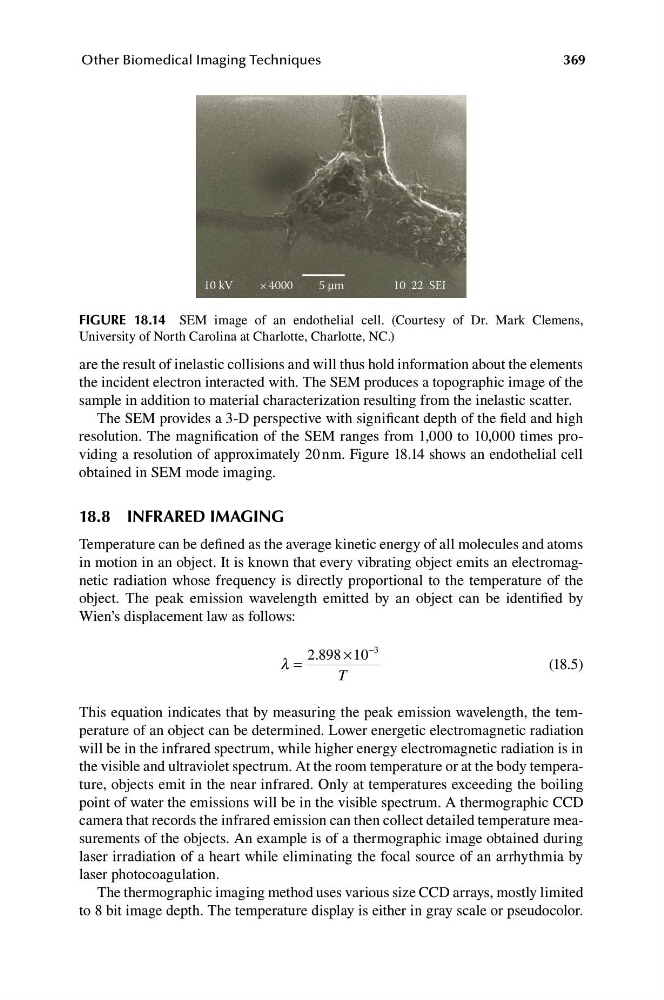
FIGURE 18.14 SEM image of an endothelial cell. (Courtesy of Dr. Mark Clemens,
University of North Carolina at Charlotte, Charlotte, NC.)
are the result of inelastic collisions and will thus hold information about the elements
the incident electron interacted with. The SEM produces a topographic image of the
sample in addition to material characterization resulting from the inelastic scatter.
The SEM provides a 3-D perspective with significant depth of the field and high
resolution. The magnification of the SEM ranges from 1,000 to 10,000 times providing a resolution of approximately 20 nm. Figure 18.14 shows an endothelial cell
obtained in SEM mode imaging.
18.8 INFRARED IMAGING
Temperature can be defined as the average kinetic energy of all molecules and atoms
in motion in an object. It is known that every vibrating object emits an electromagnetic radiation whose frequency is directly proportional to the temperature of the
object. The peak emission wavelength emitted by an object can be identified by
Wien’s displacement law as follows:
2 898
.
×10
−3
l =
(18.5)
T
This equation indicates that by measuring the peak emission wavelength, the temperature of an object can be determined. Lower energetic electromagnetic radiation
will be in the infrared spectrum, while higher energy electromagnetic radiation is in
the visible and ultraviolet spectrum. At the room temperature or at the body temperature, objects emit in the near infrared. Only at temperatures exceeding the boiling
point of water the emissions will be in the visible spectrum. A thermographic CCD
camera that records the infrared emission can then collect detailed temperature measurements of the objects. An example is of a thermographic image obtained during
laser irradiation of a heart while eliminating the focal source of an arrhythmia by
laser photocoagulation.
The thermographic imaging method uses various size CCD arrays, mostly limited
to 8 bit image depth. The temperature display is either in gray scale or pseudocolor.
× 4000
5 μm
1 0 22 SEI
369
Other Biomedical Imaging Techniques
FIGURE 18.14 SEM image of an endothelial cell. (Courtesy of Dr. Mark Clemens,
University of North Carolina at Charlotte, Charlotte, NC.)
are the result of inelastic collisions and will thus hold information about the elements
the incident electron interacted with. The SEM produces a topographic image of the
sample in addition to material characterization resulting from the inelastic scatter.
The SEM provides a 3-D perspective with significant depth of the field and high
resolution. The magnification of the SEM ranges from 1,000 to 10,000 times providing a resolution of approximately 20 nm. Figure 18.14 shows an endothelial cell
obtained in SEM mode imaging.
18.8 INFRARED IMAGING
Temperature can be defined as the average kinetic energy of all molecules and atoms
in motion in an object. It is known that every vibrating object emits an electromagnetic radiation whose frequency is directly proportional to the temperature of the
object. The peak emission wavelength emitted by an object can be identified by
Wien’s displacement law as follows:
2 898
.
×10
−3
l =
(18.5)
T
This equation indicates that by measuring the peak emission wavelength, the temperature of an object can be determined. Lower energetic electromagnetic radiation
will be in the infrared spectrum, while higher energy electromagnetic radiation is in
the visible and ultraviolet spectrum. At the room temperature or at the body temperature, objects emit in the near infrared. Only at temperatures exceeding the boiling
point of water the emissions will be in the visible spectrum. A thermographic CCD
camera that records the infrared emission can then collect detailed temperature measurements of the objects. An example is of a thermographic image obtained during
laser irradiation of a heart while eliminating the focal source of an arrhythmia by
laser photocoagulation.
The thermographic imaging method uses various size CCD arrays, mostly limited
to 8 bit image depth. The temperature display is either in gray scale or pseudocolor.