

Lung
Aorta
Heart
Stomach
Kidney
Abdomen
Leg/arm
Liver
Inferior vena cava
173
Electrocardiogram
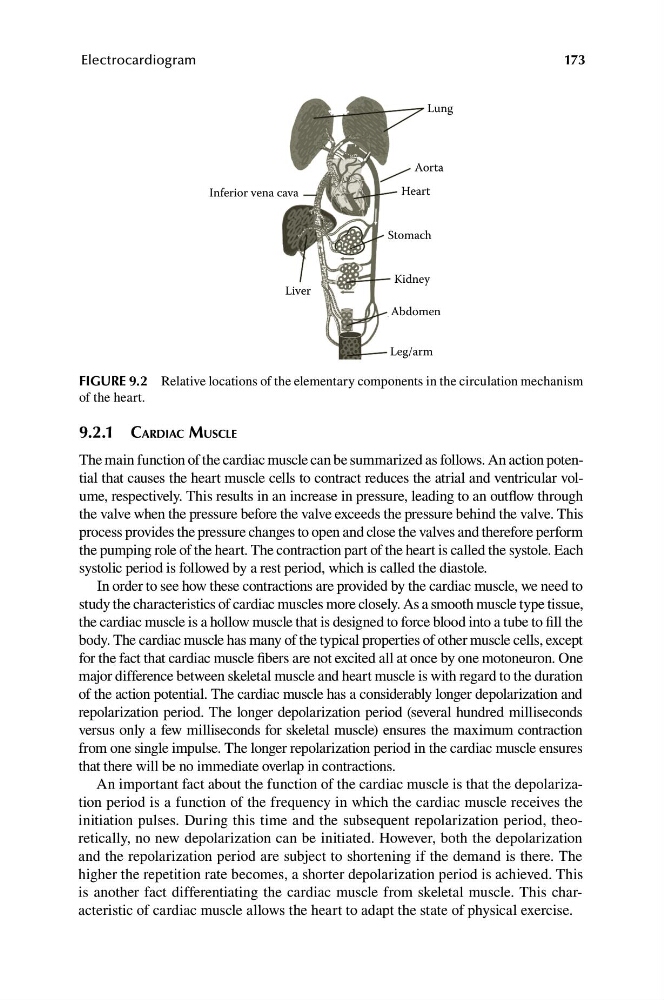
FIGURE 9.2 Relative locations of the elementary components in the circulation mechanism
of the heart.
9.2.1 CARDIAC MUSCLE
The main function of the cardiac muscle can be summarized as follows. An action potential that causes the heart muscle cells to contract reduces the atrial and ventricular volume, respectively. This results in an increase in pressure, leading to an outflow through
the valve when the pressure before the valve exceeds the pressure behind the valve. This
process provides the pressure changes to open and close the valves and therefore perform
the pumping role of the heart. The contraction part of the heart is called the systole. Each
systolic period is followed by a rest period, which is called the diastole.
In order to see how these contractions are provided by the cardiac muscle, we need to
study the characteristics of cardiac muscles more closely. As a smooth muscle type tissue,
the cardiac muscle is a hollow muscle that is designed to force blood into a tube to fill the
body. The cardiac muscle has many of the typical properties of other muscle cells, except
for the fact that cardiac muscle fibers are not excited all at once by one motoneuron. One
major difference between skeletal muscle and heart muscle is with regard to the duration
of the action potential. The cardiac muscle has a considerably longer depolarization and
repolarization period. The longer depolarization period (several hundred milliseconds
versus only a few milliseconds for skeletal muscle) ensures the maximum contraction
from one single impulse. The longer repolarization period in the cardiac muscle ensures
that there will be no immediate overlap in contractions.
An important fact about the function of the cardiac muscle is that the depolarization period is a function of the frequency in which the cardiac muscle receives the
initiation pulses. During this time and the subsequent repolarization period, theoretically, no new depolarization can be initiated. However, both the depolarization
and the repolarization period are subject to shortening if the demand is there. The
higher the repetition rate becomes, a shorter depolarization period is achieved. This
is another fact differentiating the cardiac muscle from skeletal muscle. This characteristic of cardiac muscle allows the heart to adapt the state of physical exercise.
Aorta
Heart
Stomach
Kidney
Abdomen
Leg/arm
Liver
Inferior vena cava
173
Electrocardiogram
FIGURE 9.2 Relative locations of the elementary components in the circulation mechanism
of the heart.
9.2.1 CARDIAC MUSCLE
The main function of the cardiac muscle can be summarized as follows. An action potential that causes the heart muscle cells to contract reduces the atrial and ventricular volume, respectively. This results in an increase in pressure, leading to an outflow through
the valve when the pressure before the valve exceeds the pressure behind the valve. This
process provides the pressure changes to open and close the valves and therefore perform
the pumping role of the heart. The contraction part of the heart is called the systole. Each
systolic period is followed by a rest period, which is called the diastole.
In order to see how these contractions are provided by the cardiac muscle, we need to
study the characteristics of cardiac muscles more closely. As a smooth muscle type tissue,
the cardiac muscle is a hollow muscle that is designed to force blood into a tube to fill the
body. The cardiac muscle has many of the typical properties of other muscle cells, except
for the fact that cardiac muscle fibers are not excited all at once by one motoneuron. One
major difference between skeletal muscle and heart muscle is with regard to the duration
of the action potential. The cardiac muscle has a considerably longer depolarization and
repolarization period. The longer depolarization period (several hundred milliseconds
versus only a few milliseconds for skeletal muscle) ensures the maximum contraction
from one single impulse. The longer repolarization period in the cardiac muscle ensures
that there will be no immediate overlap in contractions.
An important fact about the function of the cardiac muscle is that the depolarization period is a function of the frequency in which the cardiac muscle receives the
initiation pulses. During this time and the subsequent repolarization period, theoretically, no new depolarization can be initiated. However, both the depolarization
and the repolarization period are subject to shortening if the demand is there. The
higher the repetition rate becomes, a shorter depolarization period is achieved. This
is another fact differentiating the cardiac muscle from skeletal muscle. This characteristic of cardiac muscle allows the heart to adapt the state of physical exercise.