

58
3 Dopaquinone Conversion and Related Reactions
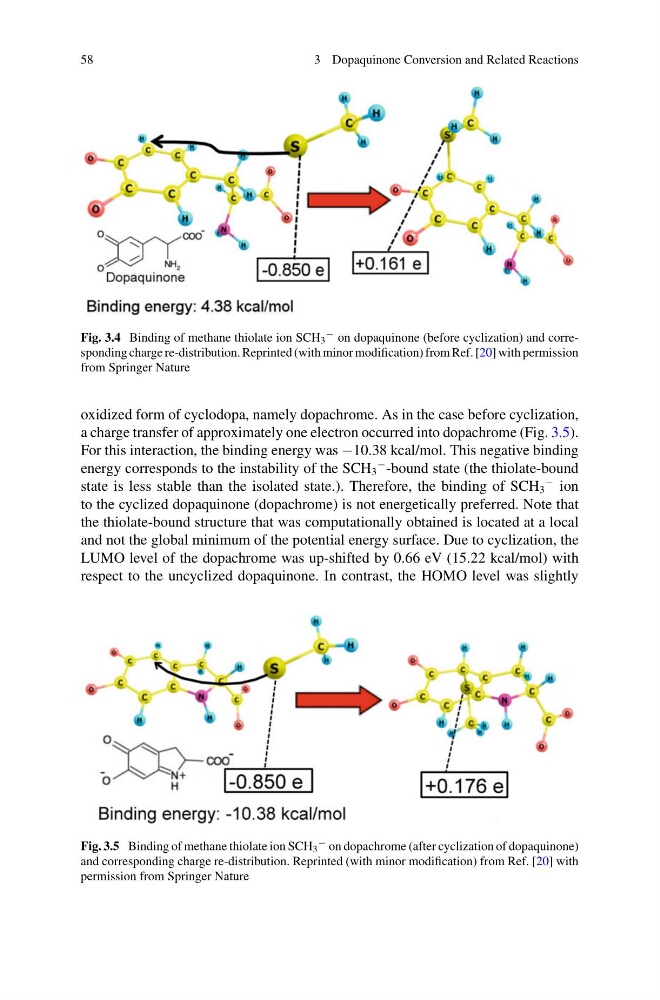
Fig. 3.4 Binding of methane thiolate ion SCH 3
− on dopaquinone (before cyclization) and corresponding charge re-distribution. Reprinted (with minor modification) from Ref. [20] with permission
from Springer Nature
oxidized form of cyclodopa, namely dopachrome. As in the case before cyclization,
a charge transfer of approximately one electron occurred into dopachrome (Fig. 3.5).
For this interaction, the binding energy was −10.38 kcal/mol. This negative binding
energy corresponds to the instability of the SCH 3
− -bound state (the thiolate-bound
state is less stable than the isolated state.). Therefore, the binding of SCH 3
− ion
to the cyclized dopaquinone (dopachrome) is not energetically preferred. Note that
the thiolate-bound structure that was computationally obtained is located at a local
and not the global minimum of the potential energy surface. Due to cyclization, the
LUMO level of the dopachrome was up-shifted by 0.66 eV (15.22 kcal/mol) with
respect to the uncyclized dopaquinone. In contrast, the HOMO level was slightly
Fig. 3.5 Binding of methane thiolate ion SCH 3
− on dopachrome (after cyclization of dopaquinone)
and corresponding charge re-distribution. Reprinted (with minor modification) from Ref. [20] with
permission from Springer Nature
3 Dopaquinone Conversion and Related Reactions
Fig. 3.4 Binding of methane thiolate ion SCH 3
− on dopaquinone (before cyclization) and corresponding charge re-distribution. Reprinted (with minor modification) from Ref. [20] with permission
from Springer Nature
oxidized form of cyclodopa, namely dopachrome. As in the case before cyclization,
a charge transfer of approximately one electron occurred into dopachrome (Fig. 3.5).
For this interaction, the binding energy was −10.38 kcal/mol. This negative binding
energy corresponds to the instability of the SCH 3
− -bound state (the thiolate-bound
state is less stable than the isolated state.). Therefore, the binding of SCH 3
− ion
to the cyclized dopaquinone (dopachrome) is not energetically preferred. Note that
the thiolate-bound structure that was computationally obtained is located at a local
and not the global minimum of the potential energy surface. Due to cyclization, the
LUMO level of the dopachrome was up-shifted by 0.66 eV (15.22 kcal/mol) with
respect to the uncyclized dopaquinone. In contrast, the HOMO level was slightly
Fig. 3.5 Binding of methane thiolate ion SCH 3
− on dopachrome (after cyclization of dopaquinone)
and corresponding charge re-distribution. Reprinted (with minor modification) from Ref. [20] with
permission from Springer Nature