

46
2 Dopachrome Conversion
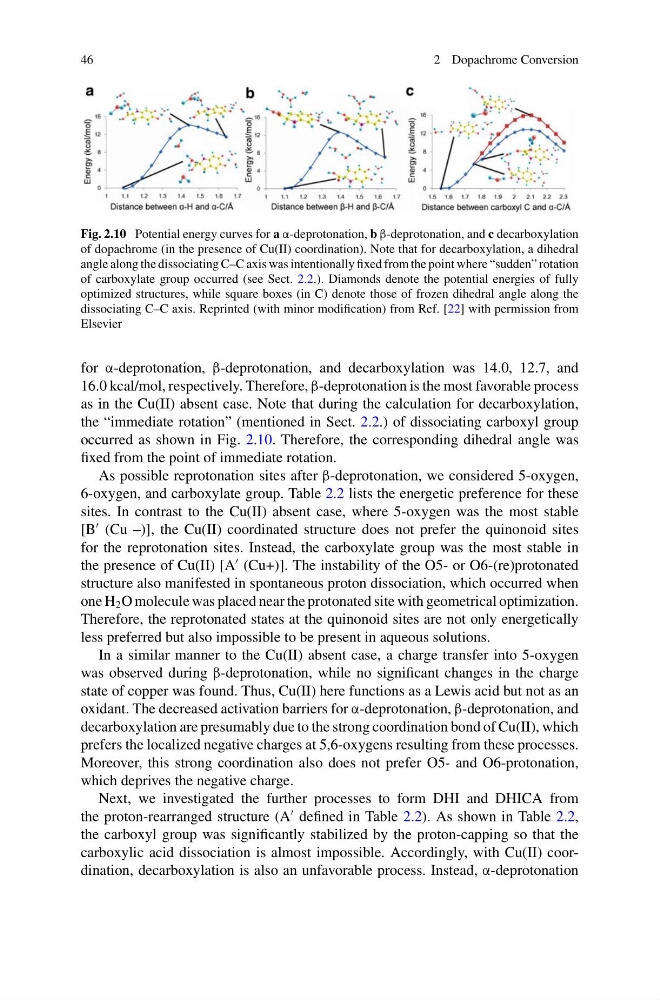
Fig. 2.10 Potential energy curves for a α-deprotonation, b β-deprotonation, and c decarboxylation
of dopachrome (in the presence of Cu(II) coordination). Note that for decarboxylation, a dihedral
angle along the dissociating C–C axis was intentionally fixed from the point where “sudden” rotation
of carboxylate group occurred (see Sect. 2.2.). Diamonds denote the potential energies of fully
optimized structures, while square boxes (in C) denote those of frozen dihedral angle along the
dissociating C–C axis. Reprinted (with minor modification) from Ref. [22] with permission from
Elsevier
for α-deprotonation, β-deprotonation, and decarboxylation was 14.0, 12.7, and
16.0 kcal/mol, respectively. Therefore, β-deprotonation is the most favorable process
as in the Cu(II) absent case. Note that during the calculation for decarboxylation,
the “immediate rotation” (mentioned in Sect. 2.2.) of dissociating carboxyl group
occurred as shown in Fig. 2.10. Therefore, the corresponding dihedral angle was
fixed from the point of immediate rotation.
As possible reprotonation sites after β-deprotonation, we considered 5-oxygen,
6-oxygen, and carboxylate group. Table 2.2 lists the energetic preference for these
sites. In contrast to the Cu(II) absent case, where 5-oxygen was the most stable
[B
(Cu –)], the Cu(II) coordinated structure does not prefer the quinonoid sites
for the reprotonation sites. Instead, the carboxylate group was the most stable in
the presence of Cu(II) [A
(Cu+)]. The instability of the O5- or O6-(re)protonated
structure also manifested in spontaneous proton dissociation, which occurred when
one H 2 O molecule was placed near the protonated site with geometrical optimization.
Therefore, the reprotonated states at the quinonoid sites are not only energetically
less preferred but also impossible to be present in aqueous solutions.
In a similar manner to the Cu(II) absent case, a charge transfer into 5-oxygen
was observed during β-deprotonation, while no significant changes in the charge
state of copper was found. Thus, Cu(II) here functions as a Lewis acid but not as an
oxidant. The decreased activation barriers for α-deprotonation, β-deprotonation, and
decarboxylation are presumably due to the strong coordination bond of Cu(II), which
prefers the localized negative charges at 5,6-oxygens resulting from these processes.
Moreover, this strong coordination also does not prefer O5- and O6-protonation,
which deprives the negative charge.
Next, we investigated the further processes to form DHI and DHICA from
the proton-rearranged structure (A
defined in Table 2.2). As shown in Table 2.2,
the carboxyl group was significantly stabilized by the proton-capping so that the
carboxylic acid dissociation is almost impossible. Accordingly, with Cu(II) coordination, decarboxylation is also an unfavorable process. Instead, α-deprotonation
2 Dopachrome Conversion
Fig. 2.10 Potential energy curves for a α-deprotonation, b β-deprotonation, and c decarboxylation
of dopachrome (in the presence of Cu(II) coordination). Note that for decarboxylation, a dihedral
angle along the dissociating C–C axis was intentionally fixed from the point where “sudden” rotation
of carboxylate group occurred (see Sect. 2.2.). Diamonds denote the potential energies of fully
optimized structures, while square boxes (in C) denote those of frozen dihedral angle along the
dissociating C–C axis. Reprinted (with minor modification) from Ref. [22] with permission from
Elsevier
for α-deprotonation, β-deprotonation, and decarboxylation was 14.0, 12.7, and
16.0 kcal/mol, respectively. Therefore, β-deprotonation is the most favorable process
as in the Cu(II) absent case. Note that during the calculation for decarboxylation,
the “immediate rotation” (mentioned in Sect. 2.2.) of dissociating carboxyl group
occurred as shown in Fig. 2.10. Therefore, the corresponding dihedral angle was
fixed from the point of immediate rotation.
As possible reprotonation sites after β-deprotonation, we considered 5-oxygen,
6-oxygen, and carboxylate group. Table 2.2 lists the energetic preference for these
sites. In contrast to the Cu(II) absent case, where 5-oxygen was the most stable
[B
(Cu –)], the Cu(II) coordinated structure does not prefer the quinonoid sites
for the reprotonation sites. Instead, the carboxylate group was the most stable in
the presence of Cu(II) [A
(Cu+)]. The instability of the O5- or O6-(re)protonated
structure also manifested in spontaneous proton dissociation, which occurred when
one H 2 O molecule was placed near the protonated site with geometrical optimization.
Therefore, the reprotonated states at the quinonoid sites are not only energetically
less preferred but also impossible to be present in aqueous solutions.
In a similar manner to the Cu(II) absent case, a charge transfer into 5-oxygen
was observed during β-deprotonation, while no significant changes in the charge
state of copper was found. Thus, Cu(II) here functions as a Lewis acid but not as an
oxidant. The decreased activation barriers for α-deprotonation, β-deprotonation, and
decarboxylation are presumably due to the strong coordination bond of Cu(II), which
prefers the localized negative charges at 5,6-oxygens resulting from these processes.
Moreover, this strong coordination also does not prefer O5- and O6-protonation,
which deprives the negative charge.
Next, we investigated the further processes to form DHI and DHICA from
the proton-rearranged structure (A
defined in Table 2.2). As shown in Table 2.2,
the carboxyl group was significantly stabilized by the proton-capping so that the
carboxylic acid dissociation is almost impossible. Accordingly, with Cu(II) coordination, decarboxylation is also an unfavorable process. Instead, α-deprotonation