

The aquaculture cages shown in Fig. 2.16a–b have been proposed to co-use the
space within offshore wind farms under open sea conditions. These cages are
planned to be used in an IMTA mode with seaweed and bivalves as well as sea
cucumbers. The co-location of aquaculture (small scale) will provide insights into
the real barriers and risks encountered. The operational experience gained will
encourage the stakeholders’ interests in the development of commercial co-location.
Using offshore wind technology has the potential to help accelerate the movement of aquaculture to open water sites in China where the water quality is better.
Combining both offshore wind farm with aquaculture meets the challenge of both
the production of clean energy and high quality seafood while maintaining minimum environmental impact.
More than 50 experts from energy, vessels and fishery research groups and
industries gathered at Jiangsu University of Science and Technology, China, to
discuss: Going offshore: Combining offshore renewable energy and high-quality
seafood production. The plan was to set-up a center for offshore aquaculture and
renewable energy. The work plan for the center for combining offshore renewable
energy and aquaculture have been proposed and discussed.
Chinese energy companies presented the energy technology development map
including 44 offshore wind farms in China. The fishery research institute and
university presented the Chinese aquaculture farms and the challenges.
2.7 Ecosystem Services
Most studies on macroalgae from temperate regions used as biofilters in IMTA
focus on Saccharina latissima, Alaria esculenta, Ulva spp., Gracilaria spp. and
Pyropia/Porphyra, which are well-established aquaculture species and whose
nutrient uptake abilities are high compared to most other seaweeds (e.g. Chopin
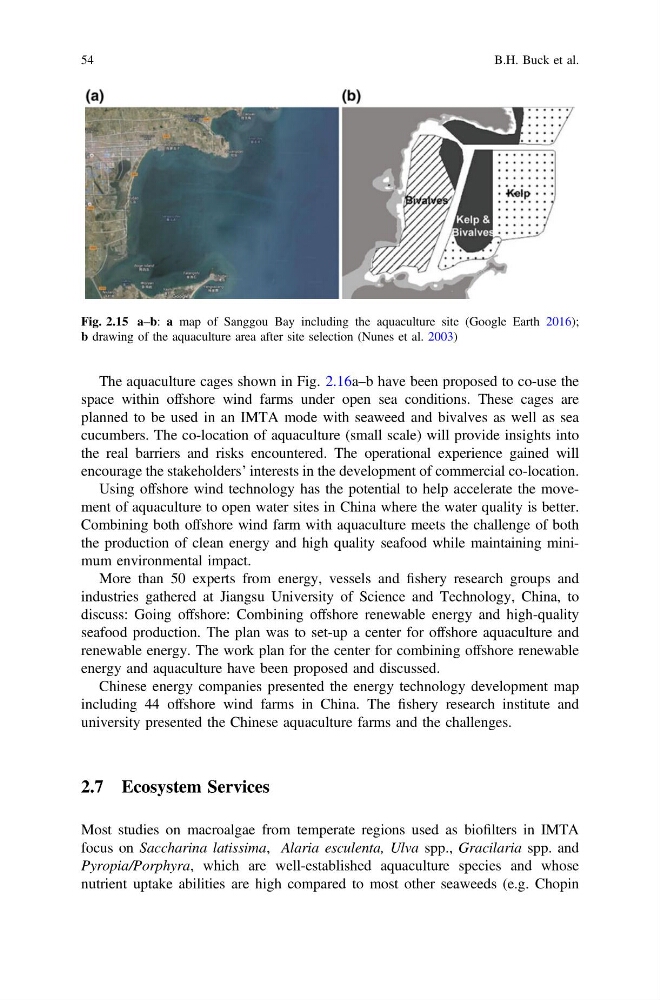
Fig. 2.15 a–b: a map of Sanggou Bay including the aquaculture site (Google Earth 2016);
b drawing of the aquaculture area after site selection (Nunes et al. 2003)
54
B.H. Buck et al.
space within offshore wind farms under open sea conditions. These cages are
planned to be used in an IMTA mode with seaweed and bivalves as well as sea
cucumbers. The co-location of aquaculture (small scale) will provide insights into
the real barriers and risks encountered. The operational experience gained will
encourage the stakeholders’ interests in the development of commercial co-location.
Using offshore wind technology has the potential to help accelerate the movement of aquaculture to open water sites in China where the water quality is better.
Combining both offshore wind farm with aquaculture meets the challenge of both
the production of clean energy and high quality seafood while maintaining minimum environmental impact.
More than 50 experts from energy, vessels and fishery research groups and
industries gathered at Jiangsu University of Science and Technology, China, to
discuss: Going offshore: Combining offshore renewable energy and high-quality
seafood production. The plan was to set-up a center for offshore aquaculture and
renewable energy. The work plan for the center for combining offshore renewable
energy and aquaculture have been proposed and discussed.
Chinese energy companies presented the energy technology development map
including 44 offshore wind farms in China. The fishery research institute and
university presented the Chinese aquaculture farms and the challenges.
2.7 Ecosystem Services
Most studies on macroalgae from temperate regions used as biofilters in IMTA
focus on Saccharina latissima, Alaria esculenta, Ulva spp., Gracilaria spp. and
Pyropia/Porphyra, which are well-established aquaculture species and whose
nutrient uptake abilities are high compared to most other seaweeds (e.g. Chopin
Fig. 2.15 a–b: a map of Sanggou Bay including the aquaculture site (Google Earth 2016);
b drawing of the aquaculture area after site selection (Nunes et al. 2003)
54
B.H. Buck et al.