

most important mariculture regions for the scallop Chlamys farreri and the kelp
Saccharina japonica in northern China (Fig. 2.15). The abalone H. discus hannai is
also cultured there, and to a lesser degree the blue mussel M. edulis. The bay
stretches 8 km from the coast, has a depth of 20–30 m and has currents up to
60 cm s
−1 . It has been estimated that dissolved nitrogen excreted by scallops in the
Bay (2 billion individuals) amounts to 284 t during a kelp culturing period.
Similarly, the inorganic nitrogen excretion by mussels in the Bay (0.27 billion
individuals) amounts to more than 11 t. Together with the excretion of other fouling
animals such as sea squirt and oyster, the total inorganic nitrogen excretion of
cultivated and fouling animals in the Bay amounts to more than 300 t. Twenty
thousand tons of dried kelps can be produced annually through uptake of inorganic
nitrogen from the Bay (Troell et al. 2009) (Fig. 2.15).
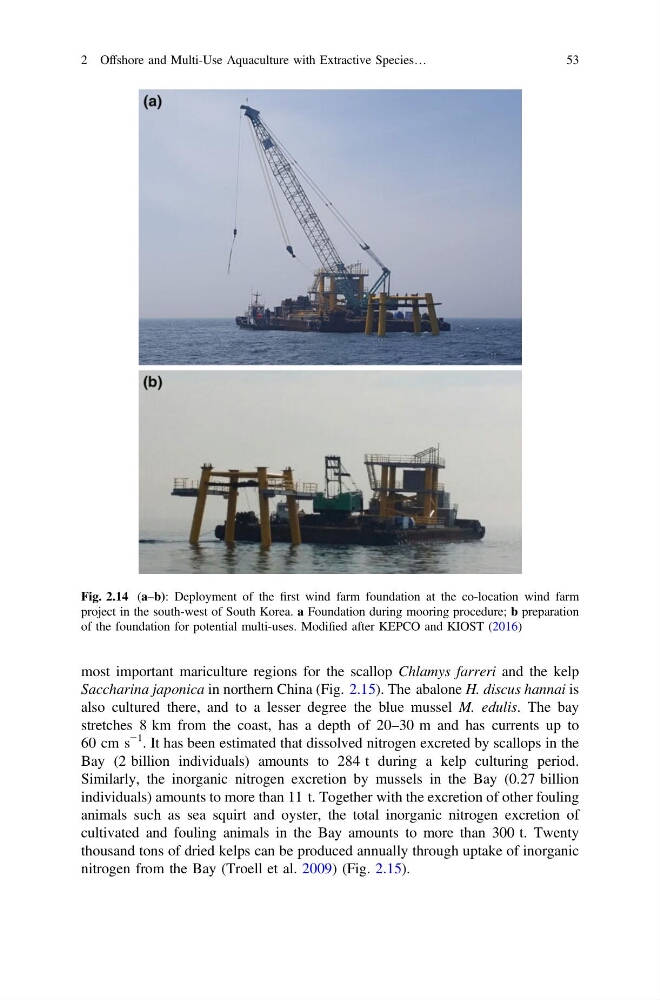
Fig. 2.14 (a–b): Deployment of the first wind farm foundation at the co-location wind farm
project in the south-west of South Korea. a Foundation during mooring procedure; b preparation
of the foundation for potential multi-uses. Modified after KEPCO and KIOST (2016)
2 Offshore and Multi-Use Aquaculture with Extractive Species…
53
Saccharina japonica in northern China (Fig. 2.15). The abalone H. discus hannai is
also cultured there, and to a lesser degree the blue mussel M. edulis. The bay
stretches 8 km from the coast, has a depth of 20–30 m and has currents up to
60 cm s
−1 . It has been estimated that dissolved nitrogen excreted by scallops in the
Bay (2 billion individuals) amounts to 284 t during a kelp culturing period.
Similarly, the inorganic nitrogen excretion by mussels in the Bay (0.27 billion
individuals) amounts to more than 11 t. Together with the excretion of other fouling
animals such as sea squirt and oyster, the total inorganic nitrogen excretion of
cultivated and fouling animals in the Bay amounts to more than 300 t. Twenty
thousand tons of dried kelps can be produced annually through uptake of inorganic
nitrogen from the Bay (Troell et al. 2009) (Fig. 2.15).
Fig. 2.14 (a–b): Deployment of the first wind farm foundation at the co-location wind farm
project in the south-west of South Korea. a Foundation during mooring procedure; b preparation
of the foundation for potential multi-uses. Modified after KEPCO and KIOST (2016)
2 Offshore and Multi-Use Aquaculture with Extractive Species…
53