

2.3 Design Requirements
27
Filters
Compression
Data
formatting
FIFO
Serialization
Configuration and
status registers
Configuration
registers
I2C
Event
manager
Daisy
chaining
Analogue
and ADC
32x channels
Trigger-delay
compensation
Bunch crossing
manager
Heartbeat
manager
Clock
generator
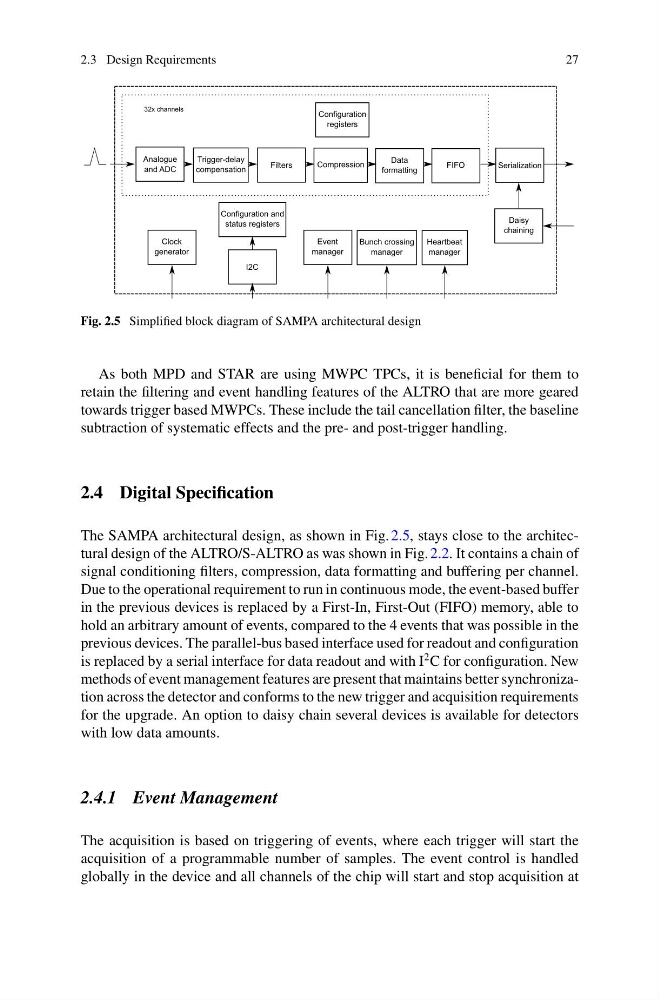
Fig. 2.5 Simplified block diagram of SAMPA architectural design
As both MPD and STAR are using MWPC TPCs, it is beneficial for them to
retain the filtering and event handling features of the ALTRO that are more geared
towards trigger based MWPCs. These include the tail cancellation filter, the baseline
subtraction of systematic effects and the pre- and post-trigger handling.
2.4 Digital Specification
The SAMPA architectural design, as shown in Fig. 2.5, stays close to the architectural design of the ALTRO/S-ALTRO as was shown in Fig. 2.2. It contains a chain of
signal conditioning filters, compression, data formatting and buffering per channel.
Due to the operational requirement to run in continuous mode, the event-based buffer
in the previous devices is replaced by a First-In, First-Out (FIFO) memory, able to
hold an arbitrary amount of events, compared to the 4 events that was possible in the
previous devices. The parallel-bus based interface used for readout and configuration
is replaced by a serial interface for data readout and with I
2 C for configuration. New
methods of event management features are present that maintains better synchronization across the detector and conforms to the new trigger and acquisition requirements
for the upgrade. An option to daisy chain several devices is available for detectors
with low data amounts.
2.4.1 Event Management
The acquisition is based on triggering of events, where each trigger will start the
acquisition of a programmable number of samples. The event control is handled
globally in the device and all channels of the chip will start and stop acquisition at
27
Filters
Compression
Data
formatting
FIFO
Serialization
Configuration and
status registers
Configuration
registers
I2C
Event
manager
Daisy
chaining
Analogue
and ADC
32x channels
Trigger-delay
compensation
Bunch crossing
manager
Heartbeat
manager
Clock
generator
Fig. 2.5 Simplified block diagram of SAMPA architectural design
As both MPD and STAR are using MWPC TPCs, it is beneficial for them to
retain the filtering and event handling features of the ALTRO that are more geared
towards trigger based MWPCs. These include the tail cancellation filter, the baseline
subtraction of systematic effects and the pre- and post-trigger handling.
2.4 Digital Specification
The SAMPA architectural design, as shown in Fig. 2.5, stays close to the architectural design of the ALTRO/S-ALTRO as was shown in Fig. 2.2. It contains a chain of
signal conditioning filters, compression, data formatting and buffering per channel.
Due to the operational requirement to run in continuous mode, the event-based buffer
in the previous devices is replaced by a First-In, First-Out (FIFO) memory, able to
hold an arbitrary amount of events, compared to the 4 events that was possible in the
previous devices. The parallel-bus based interface used for readout and configuration
is replaced by a serial interface for data readout and with I
2 C for configuration. New
methods of event management features are present that maintains better synchronization across the detector and conforms to the new trigger and acquisition requirements
for the upgrade. An option to daisy chain several devices is available for detectors
with low data amounts.
2.4.1 Event Management
The acquisition is based on triggering of events, where each trigger will start the
acquisition of a programmable number of samples. The event control is handled
globally in the device and all channels of the chip will start and stop acquisition at