

74
5 Life Cycle Assessment of Chemical Products and Processes
physical or chemical relationships that exist: (i) for heat produced on the specific
heat of combustion of the inputs, (ii) for SO 2 on the sulfur content of the inputs,
(iii) for NO x both on the nitrogen content of the inputs and on the thermal NO x
produced that is dependent on the combustion temperature, and (iv) for CO 2 on
the stoichiometry of the combustion reaction.
3. If no physical/chemical relationships exist, allocate according to other relationships, e.g., economic value or mass of the products.
If there are several options for allocation available, it is important to carefully
compare the different options and transparently document the procedure taken.
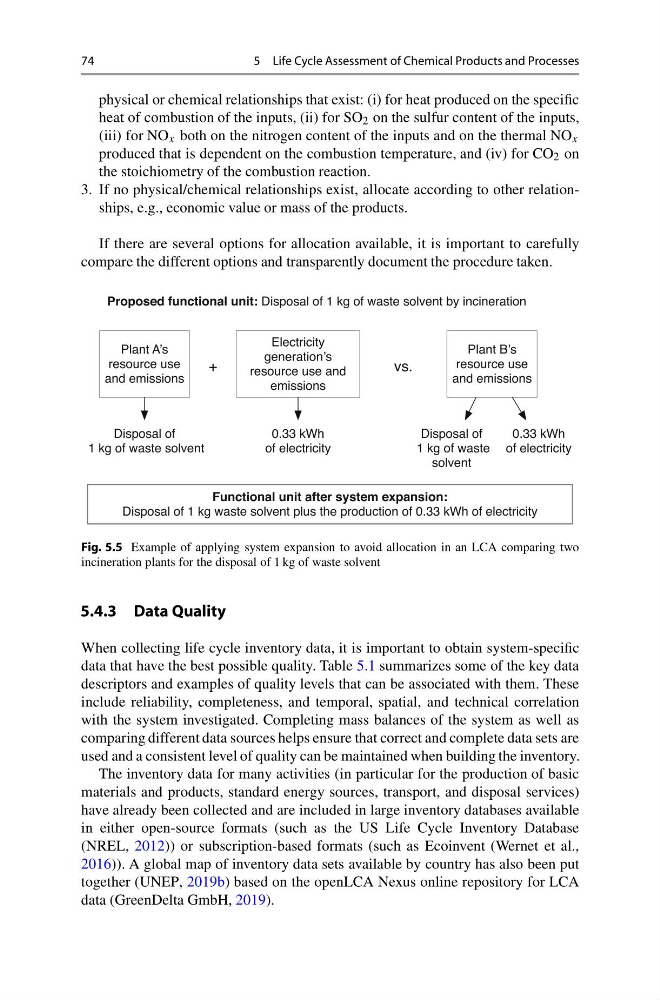
Fig. 5.5 Example of applying system expansion to avoid allocation in an LCA comparing two
incineration plants for the disposal of 1 kg of waste solvent
5.4.3 Data Quality
When collecting life cycle inventory data, it is important to obtain system-specific
data that have the best possible quality. Table 5.1 summarizes some of the key data
descriptors and examples of quality levels that can be associated with them. These
include reliability, completeness, and temporal, spatial, and technical correlation
with the system investigated. Completing mass balances of the system as well as
comparing different data sources helps ensure that correct and complete data sets are
used and a consistent level of quality can be maintained when building the inventory.
The inventory data for many activities (in particular for the production of basic
materials and products, standard energy sources, transport, and disposal services)
have already been collected and are included in large inventory databases available
in either open-source formats (such as the US Life Cycle Inventory Database
(NREL, 2012)) or subscription-based formats (such as Ecoinvent (Wernet et al.,
2016)). A global map of inventory data sets available by country has also been put
together (UNEP, 2019b) based on the openLCA Nexus online repository for LCA
data (GreenDelta GmbH, 2019).
5 Life Cycle Assessment of Chemical Products and Processes
physical or chemical relationships that exist: (i) for heat produced on the specific
heat of combustion of the inputs, (ii) for SO 2 on the sulfur content of the inputs,
(iii) for NO x both on the nitrogen content of the inputs and on the thermal NO x
produced that is dependent on the combustion temperature, and (iv) for CO 2 on
the stoichiometry of the combustion reaction.
3. If no physical/chemical relationships exist, allocate according to other relationships, e.g., economic value or mass of the products.
If there are several options for allocation available, it is important to carefully
compare the different options and transparently document the procedure taken.
Fig. 5.5 Example of applying system expansion to avoid allocation in an LCA comparing two
incineration plants for the disposal of 1 kg of waste solvent
5.4.3 Data Quality
When collecting life cycle inventory data, it is important to obtain system-specific
data that have the best possible quality. Table 5.1 summarizes some of the key data
descriptors and examples of quality levels that can be associated with them. These
include reliability, completeness, and temporal, spatial, and technical correlation
with the system investigated. Completing mass balances of the system as well as
comparing different data sources helps ensure that correct and complete data sets are
used and a consistent level of quality can be maintained when building the inventory.
The inventory data for many activities (in particular for the production of basic
materials and products, standard energy sources, transport, and disposal services)
have already been collected and are included in large inventory databases available
in either open-source formats (such as the US Life Cycle Inventory Database
(NREL, 2012)) or subscription-based formats (such as Ecoinvent (Wernet et al.,
2016)). A global map of inventory data sets available by country has also been put
together (UNEP, 2019b) based on the openLCA Nexus online repository for LCA
data (GreenDelta GmbH, 2019).