

72
5 Life Cycle Assessment of Chemical Products and Processes
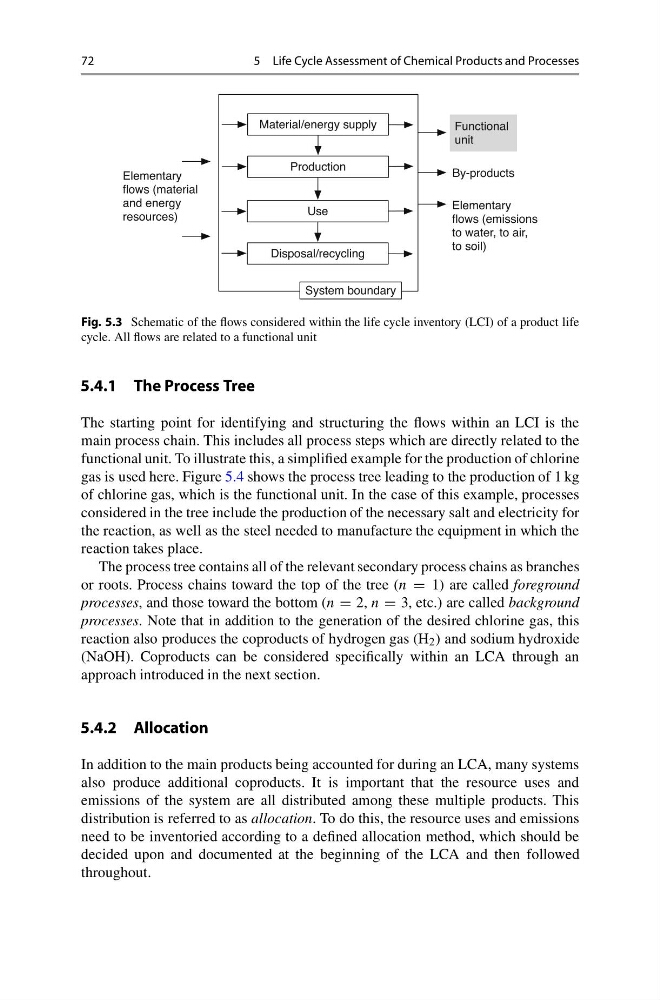
Fig. 5.3 Schematic of the flows considered within the life cycle inventory (LCI) of a product life
cycle. All flows are related to a functional unit
5.4.1 The Process Tree
The starting point for identifying and structuring the flows within an LCI is the
main process chain. This includes all process steps which are directly related to the
functional unit. To illustrate this, a simplified example for the production of chlorine
gas is used here. Figure 5.4 shows the process tree leading to the production of 1 kg
of chlorine gas, which is the functional unit. In the case of this example, processes
considered in the tree include the production of the necessary salt and electricity for
the reaction, as well as the steel needed to manufacture the equipment in which the
reaction takes place.
The process tree contains all of the relevant secondary process chains as branches
or roots. Process chains toward the top of the tree (n = 1) are called foreground
processes, and those toward the bottom (n = 2, n = 3, etc.) are called background
processes. Note that in addition to the generation of the desired chlorine gas, this
reaction also produces the coproducts of hydrogen gas (H 2 ) and sodium hydroxide
(NaOH). Coproducts can be considered specifically within an LCA through an
approach introduced in the next section.
5.4.2 Allocation
In addition to the main products being accounted for during an LCA, many systems
also produce additional coproducts. It is important that the resource uses and
emissions of the system are all distributed among these multiple products. This
distribution is referred to as allocation. To do this, the resource uses and emissions
need to be inventoried according to a defined allocation method, which should be
decided upon and documented at the beginning of the LCA and then followed
throughout.
5 Life Cycle Assessment of Chemical Products and Processes
Fig. 5.3 Schematic of the flows considered within the life cycle inventory (LCI) of a product life
cycle. All flows are related to a functional unit
5.4.1 The Process Tree
The starting point for identifying and structuring the flows within an LCI is the
main process chain. This includes all process steps which are directly related to the
functional unit. To illustrate this, a simplified example for the production of chlorine
gas is used here. Figure 5.4 shows the process tree leading to the production of 1 kg
of chlorine gas, which is the functional unit. In the case of this example, processes
considered in the tree include the production of the necessary salt and electricity for
the reaction, as well as the steel needed to manufacture the equipment in which the
reaction takes place.
The process tree contains all of the relevant secondary process chains as branches
or roots. Process chains toward the top of the tree (n = 1) are called foreground
processes, and those toward the bottom (n = 2, n = 3, etc.) are called background
processes. Note that in addition to the generation of the desired chlorine gas, this
reaction also produces the coproducts of hydrogen gas (H 2 ) and sodium hydroxide
(NaOH). Coproducts can be considered specifically within an LCA through an
approach introduced in the next section.
5.4.2 Allocation
In addition to the main products being accounted for during an LCA, many systems
also produce additional coproducts. It is important that the resource uses and
emissions of the system are all distributed among these multiple products. This
distribution is referred to as allocation. To do this, the resource uses and emissions
need to be inventoried according to a defined allocation method, which should be
decided upon and documented at the beginning of the LCA and then followed
throughout.