

7.9 Example: Wet Grinding of Cyanuric Chloride
189
Cyanuric Chloride
• Molecular weight: 184 g/mol
• Water solubility at 25 ◦ C: 44 mg/L
• Reaction enthalpy change from hydrolysis: −450 kJ/mol
Buffer (Na 2 HPO 4 )
• Health hazards: minimal to no effects found
• Environmental hazards: minimal to no effects found
Hydrochloric Acid (HCl)
• Molecular weight: 36.5 g/mol
• Health hazards: causes severe skin burns and eye damage, causes respiratory
irritation above set maximum exposure level 7 of 0.03 g/m 3 air
• Environmental hazards: minimal to no effects found
Cyanuric Acid
• Health hazards: causes serious eye, skin, and respiratory irritation
• Environmental hazards: minimal to no effects found
Interaction Matrix of the Grinding Process
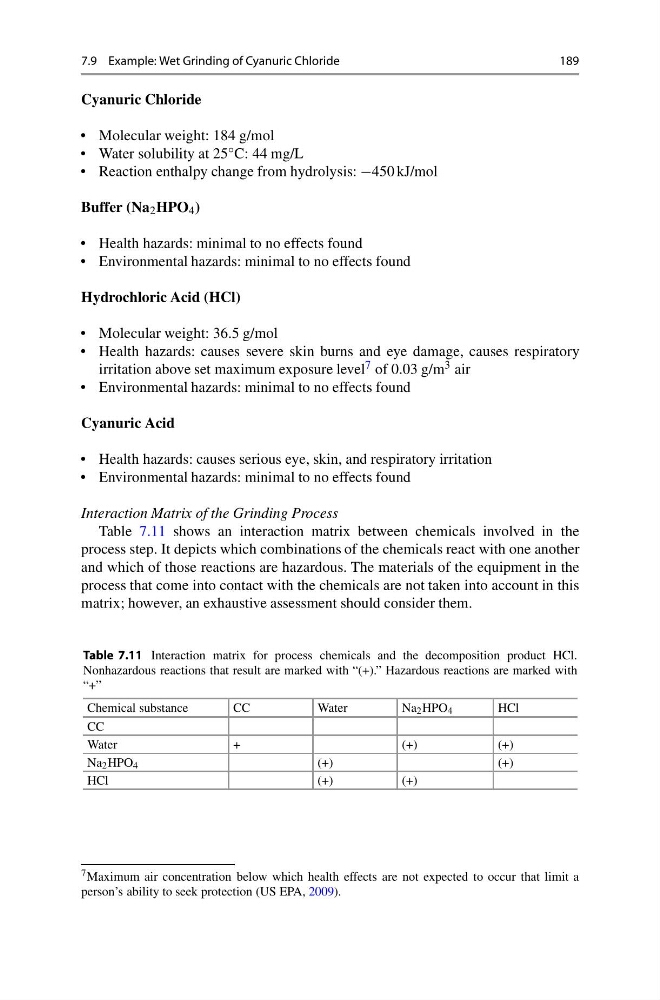
Table 7.11 shows an interaction matrix between chemicals involved in the
process step. It depicts which combinations of the chemicals react with one another
and which of those reactions are hazardous. The materials of the equipment in the
process that come into contact with the chemicals are not taken into account in this
matrix; however, an exhaustive assessment should consider them.
Table 7.11 Interaction matrix for process chemicals and the decomposition product HCl.
Nonhazardous reactions that result are marked with “(+).” Hazardous reactions are marked with
“+”
Chemical substance
CC
Water
Na 2 HPO 4
HCl
CC
Water
+
(+)
(+)
Na 2 HPO 4
(+)
(+)
HCl
(+)
(+)
7 Maximum air concentration below which health effects are not expected to occur that limit a
person’s ability to seek protection (US EPA, 2009).
189
Cyanuric Chloride
• Molecular weight: 184 g/mol
• Water solubility at 25 ◦ C: 44 mg/L
• Reaction enthalpy change from hydrolysis: −450 kJ/mol
Buffer (Na 2 HPO 4 )
• Health hazards: minimal to no effects found
• Environmental hazards: minimal to no effects found
Hydrochloric Acid (HCl)
• Molecular weight: 36.5 g/mol
• Health hazards: causes severe skin burns and eye damage, causes respiratory
irritation above set maximum exposure level 7 of 0.03 g/m 3 air
• Environmental hazards: minimal to no effects found
Cyanuric Acid
• Health hazards: causes serious eye, skin, and respiratory irritation
• Environmental hazards: minimal to no effects found
Interaction Matrix of the Grinding Process
Table 7.11 shows an interaction matrix between chemicals involved in the
process step. It depicts which combinations of the chemicals react with one another
and which of those reactions are hazardous. The materials of the equipment in the
process that come into contact with the chemicals are not taken into account in this
matrix; however, an exhaustive assessment should consider them.
Table 7.11 Interaction matrix for process chemicals and the decomposition product HCl.
Nonhazardous reactions that result are marked with “(+).” Hazardous reactions are marked with
“+”
Chemical substance
CC
Water
Na 2 HPO 4
HCl
CC
Water
+
(+)
(+)
Na 2 HPO 4
(+)
(+)
HCl
(+)
(+)
7 Maximum air concentration below which health effects are not expected to occur that limit a
person’s ability to seek protection (US EPA, 2009).