

the liquid fuel, with typical examples being solutions of water-free chlorides in
acetonitrile (CH 3 CN) or solutions of acetylacetonates (e.g., (C 5 H 8 O 2 ) 3 Al) in appropriate organic solvents. The selection of an organic solvent may be problematic, as
the compounds selected should not have the propensity to produce soot. Therefore,
the use of benzene should be avoided, although mixtures of benzene and ethanol
have been applied with reasonable success.
4.7
Synthesis of Coated Particles
Many applications of nanomaterials require the use of nanocomposites. The
impossibility of obtaining well-distributed nanocomposites simply by blending
processes led to the development of coated nanoparticles. The aims of coating
may be manifold: in the simplest case, the coating serves simply as a second phase to
dilute the nanoparticles; typical applications include the addition of ceramic nanoparticles to adjust the refractive index or improve the mechanical properties of a
polymer. A directly related case, although much more sophisticated, is to use a
coating as a distance holder to adjust particle interactions; this may be used in
connection with magnetic nanoparticles. Finally, the most advanced case is to design
coatings (or combinations of different coatings) to add additional properties to the
particles; here, the most advanced examples include bifunctional particles [30], such
as magnetic particles with luminescent coatings or similar constructs.
The processes used for particle coating must fulfill a series of requirements. The
first and most important point is that the particles remain individualized and are not
agglomerated. As explained above, this requires either extremely low particle
concentrations in the gas atmosphere or particles that carry electrical charges of
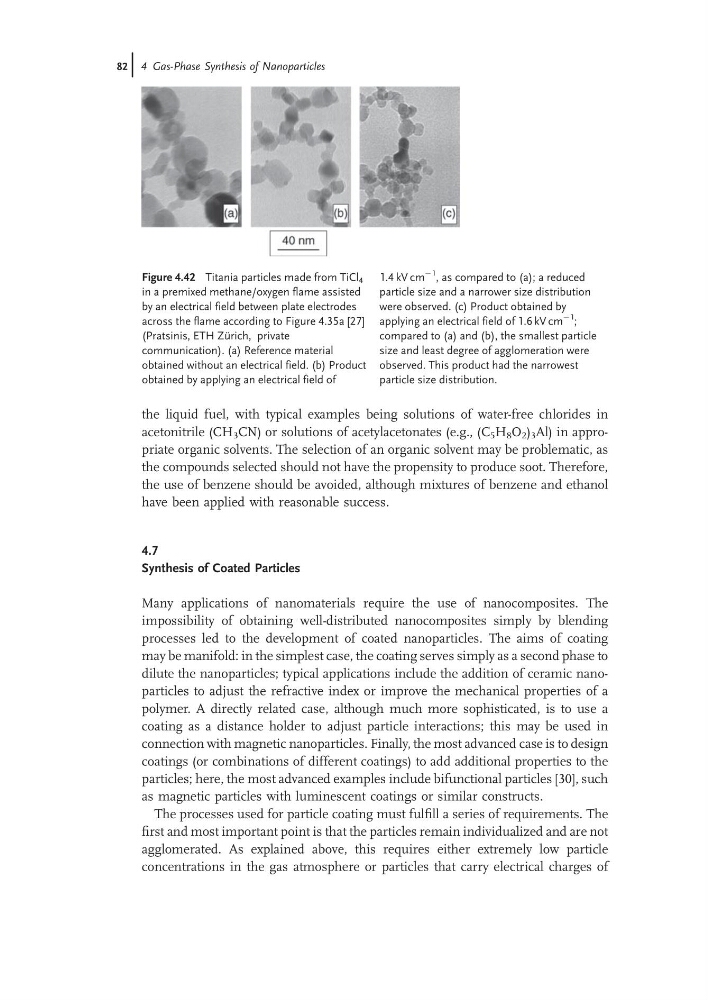
Figure 4.42 Titania particles made from TiCl 4
in a premixed methane/oxygen flame assisted
by an electrical field between plate electrodes
across the flame according to Figure 4.35a [27]
(Pratsinis, ETH Zürich, private
communication). (a) Reference material
obtained without an electrical field. (b) Product
obtained by applying an electrical field of
1.4 kV cm
À1
, as compared to (a); a reduced
particle size and a narrower size distribution
were observed. (c) Product obtained by
applying an electrical field of 1.6 kV cm
À1
;
compared to (a) and (b), the smallest particle
size and least degree of agglomeration were
observed. This product had the narrowest
particle size distribution.
82j 4 Gas-Phase Synthesis of Nanoparticles
acetonitrile (CH 3 CN) or solutions of acetylacetonates (e.g., (C 5 H 8 O 2 ) 3 Al) in appropriate organic solvents. The selection of an organic solvent may be problematic, as
the compounds selected should not have the propensity to produce soot. Therefore,
the use of benzene should be avoided, although mixtures of benzene and ethanol
have been applied with reasonable success.
4.7
Synthesis of Coated Particles
Many applications of nanomaterials require the use of nanocomposites. The
impossibility of obtaining well-distributed nanocomposites simply by blending
processes led to the development of coated nanoparticles. The aims of coating
may be manifold: in the simplest case, the coating serves simply as a second phase to
dilute the nanoparticles; typical applications include the addition of ceramic nanoparticles to adjust the refractive index or improve the mechanical properties of a
polymer. A directly related case, although much more sophisticated, is to use a
coating as a distance holder to adjust particle interactions; this may be used in
connection with magnetic nanoparticles. Finally, the most advanced case is to design
coatings (or combinations of different coatings) to add additional properties to the
particles; here, the most advanced examples include bifunctional particles [30], such
as magnetic particles with luminescent coatings or similar constructs.
The processes used for particle coating must fulfill a series of requirements. The
first and most important point is that the particles remain individualized and are not
agglomerated. As explained above, this requires either extremely low particle
concentrations in the gas atmosphere or particles that carry electrical charges of
Figure 4.42 Titania particles made from TiCl 4
in a premixed methane/oxygen flame assisted
by an electrical field between plate electrodes
across the flame according to Figure 4.35a [27]
(Pratsinis, ETH Zürich, private
communication). (a) Reference material
obtained without an electrical field. (b) Product
obtained by applying an electrical field of
1.4 kV cm
À1
, as compared to (a); a reduced
particle size and a narrower size distribution
were observed. (c) Product obtained by
applying an electrical field of 1.6 kV cm
À1
;
compared to (a) and (b), the smallest particle
size and least degree of agglomeration were
observed. This product had the narrowest
particle size distribution.
82j 4 Gas-Phase Synthesis of Nanoparticles