

Many systems using radiofrequency (RF) working in range II are described in the
literature. In general, they deliver products with relatively broad particle size
distribution. A very special system, powered with RF, which works in range III
was described by Buss [17] and later by Matsui [18]. The basic design of such a
system is sketched in Figure 4.27.
The system as depicted in Figure 4.27 consists of a reaction tube containing two
gas-permeable electrodes. The gas pressure is adjusted in such a way that there are
only unipolar charged particles in the system. This is possible because the energy of
the electrons is only 3 eV. Therefore, the electrons are unable to ionize the particles;
rather, they attach at the surface of the particles. As the particles are charged
unipolar, products obtained excel with quite a narrow particle size distribution. The
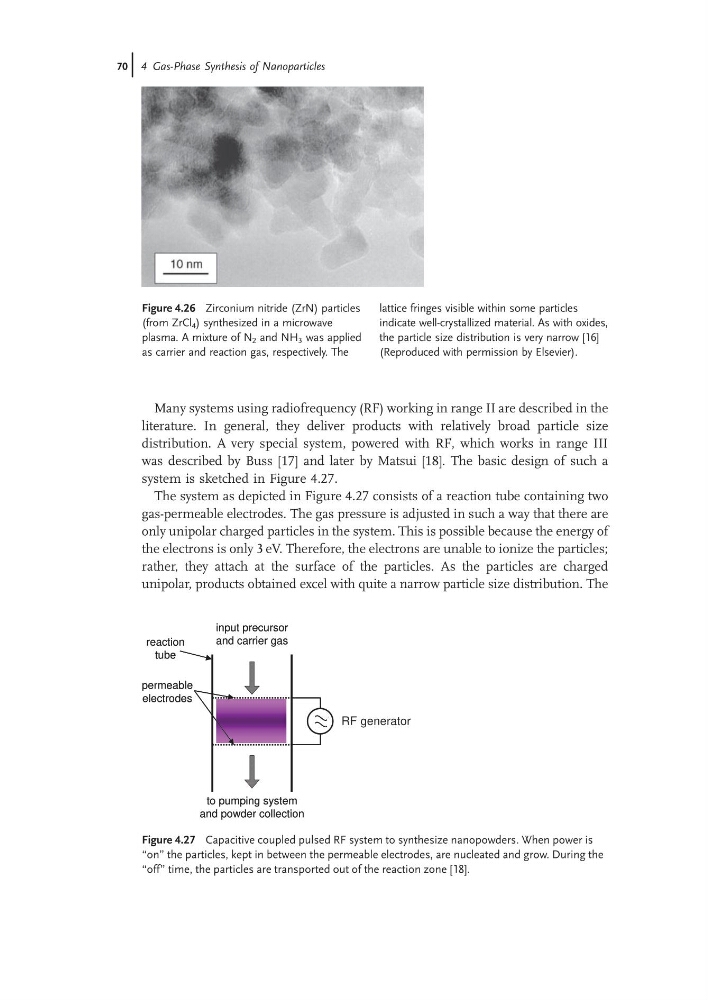
Figure 4.26 Zirconium nitride (ZrN) particles
(from ZrCl 4 ) synthesized in a microwave
plasma. A mixture of N 2 and NH 3 was applied
as carrier and reaction gas, respectively. The
lattice fringes visible within some particles
indicate well-crystallized material. As with oxides,
the particle size distribution is very narrow [16]
(Reproduced with permission by Elsevier).
reaction
tube
input precursor
and carrier gas
to pumping system
and powder collection
permeable
electrodes
reaction
tube
input precursor
and carrier gas
to pumping system
and powder collection
permeable
electrodes
RF generator
Figure 4.27 Capacitive coupled pulsed RF system to synthesize nanopowders. When power is
“on” the particles, kept in between the permeable electrodes, are nucleated and grow. During the
“off” time, the particles are transported out of the reaction zone [18].
70j 4 Gas-Phase Synthesis of Nanoparticles
literature. In general, they deliver products with relatively broad particle size
distribution. A very special system, powered with RF, which works in range III
was described by Buss [17] and later by Matsui [18]. The basic design of such a
system is sketched in Figure 4.27.
The system as depicted in Figure 4.27 consists of a reaction tube containing two
gas-permeable electrodes. The gas pressure is adjusted in such a way that there are
only unipolar charged particles in the system. This is possible because the energy of
the electrons is only 3 eV. Therefore, the electrons are unable to ionize the particles;
rather, they attach at the surface of the particles. As the particles are charged
unipolar, products obtained excel with quite a narrow particle size distribution. The
Figure 4.26 Zirconium nitride (ZrN) particles
(from ZrCl 4 ) synthesized in a microwave
plasma. A mixture of N 2 and NH 3 was applied
as carrier and reaction gas, respectively. The
lattice fringes visible within some particles
indicate well-crystallized material. As with oxides,
the particle size distribution is very narrow [16]
(Reproduced with permission by Elsevier).
reaction
tube
input precursor
and carrier gas
to pumping system
and powder collection
permeable
electrodes
reaction
tube
input precursor
and carrier gas
to pumping system
and powder collection
permeable
electrodes
RF generator
Figure 4.27 Capacitive coupled pulsed RF system to synthesize nanopowders. When power is
“on” the particles, kept in between the permeable electrodes, are nucleated and grow. During the
“off” time, the particles are transported out of the reaction zone [18].
70j 4 Gas-Phase Synthesis of Nanoparticles