

asymmetric, there being few large particles in the system, which indicated that the
particles had grown by a process of random collisions. Although a particle size of
3 nm is extremely small, the smallest oxide particles produced in the microwave
plasma process are approximately 2 nm.
Very similar results are obtained when synthesizing nitrides, which, in general,
are well crystallized and show a narrow particle size distribution. ZrN prepared
using ZrCl 4 as the precursor and a mixture of N 2 and NH 3 as the carrier and reaction
gases, respectively, is illustrated in Figure 4.26.
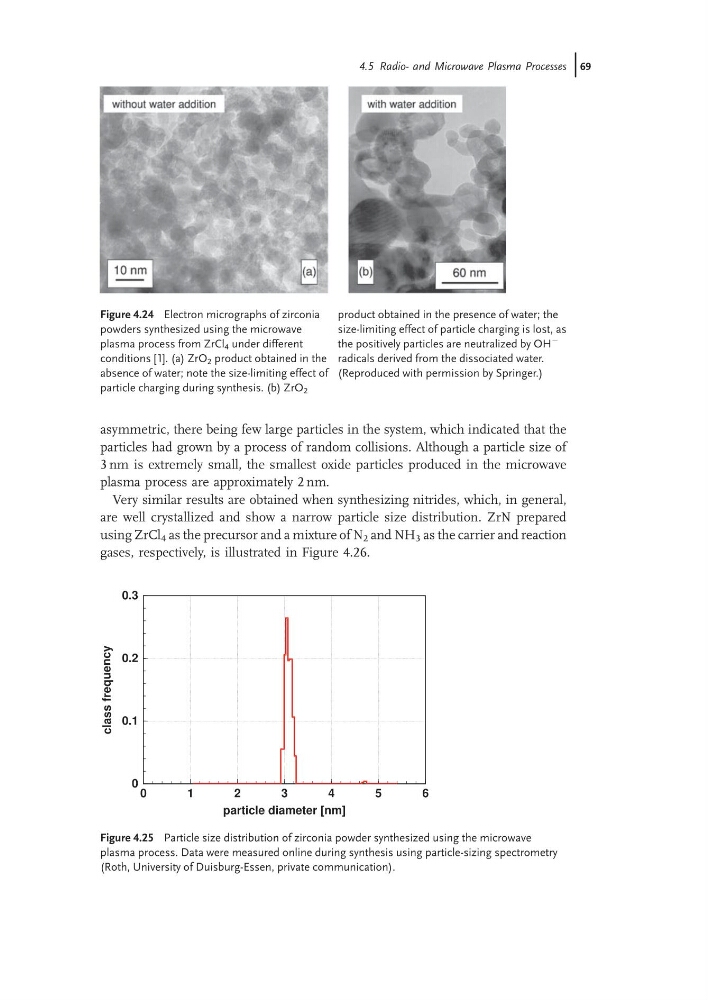
Figure 4.24 Electron micrographs of zirconia
powders synthesized using the microwave
plasma process from ZrCl 4 under different
conditions [1]. (a) ZrO 2 product obtained in the
absence of water; note the size-limiting effect of
particle charging during synthesis. (b) ZrO 2
product obtained in the presence of water; the
size-limiting effect of particle charging is lost, as
the positively particles are neutralized by OH
À
radicals derived from the dissociated water.
(Reproduced with permission by Springer.)
0
1
2
3
4
5
6
particle diameter [nm]
0
0.1
0.2
0.3
class
frequency
Figure 4.25 Particle size distribution of zirconia powder synthesized using the microwave
plasma process. Data were measured online during synthesis using particle-sizing spectrometry
(Roth, University of Duisburg-Essen, private communication).
4.5 Radio- and Microwave Plasma Processes j69
particles had grown by a process of random collisions. Although a particle size of
3 nm is extremely small, the smallest oxide particles produced in the microwave
plasma process are approximately 2 nm.
Very similar results are obtained when synthesizing nitrides, which, in general,
are well crystallized and show a narrow particle size distribution. ZrN prepared
using ZrCl 4 as the precursor and a mixture of N 2 and NH 3 as the carrier and reaction
gases, respectively, is illustrated in Figure 4.26.
Figure 4.24 Electron micrographs of zirconia
powders synthesized using the microwave
plasma process from ZrCl 4 under different
conditions [1]. (a) ZrO 2 product obtained in the
absence of water; note the size-limiting effect of
particle charging during synthesis. (b) ZrO 2
product obtained in the presence of water; the
size-limiting effect of particle charging is lost, as
the positively particles are neutralized by OH
À
radicals derived from the dissociated water.
(Reproduced with permission by Springer.)
0
1
2
3
4
5
6
particle diameter [nm]
0
0.1
0.2
0.3
class
frequency
Figure 4.25 Particle size distribution of zirconia powder synthesized using the microwave
plasma process. Data were measured online during synthesis using particle-sizing spectrometry
(Roth, University of Duisburg-Essen, private communication).
4.5 Radio- and Microwave Plasma Processes j69