

direct current (DC) plasma, where temperatures of up to 10
4 K are observed. By
using the appropriate controls, the temperature in the microwave plasma process
can be adjusted within the range from 400 to 1200 K.
Figure 4.22 displays the energy transferred in a plasma to charged particles as
function of the collision frequency z (see Eq. (4.19)). In this graph, three ranges are
marked. In range I, the energy of the electrons is very high; it is that high that the
electrons ionize the particles. Hence, the particles carry positive charges. In range
III, the energy of the electrons is in the range of a few electron volts. These electrons
carrying only a very low energy will attach at the surface of the particles. Consequently, in this range, the particles carry negative charges. The ranges I and III have
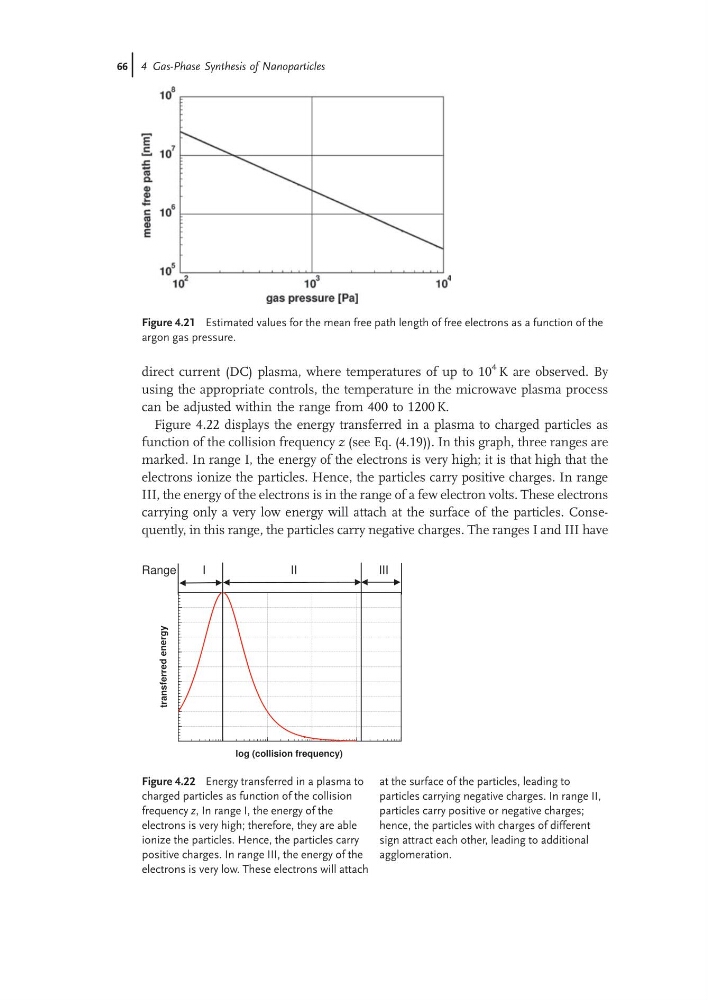
Figure 4.21 Estimated values for the mean free path length of free electrons as a function of the
argon gas pressure.
log (collision frequency)
transferred
energy
Range
I
II
III
Figure 4.22 Energy transferred in a plasma to
charged particles as function of the collision
frequency z, In range I, the energy of the
electrons is very high; therefore, they are able
ionize the particles. Hence, the particles carry
positive charges. In range III, the energy of the
electrons is very low. These electrons will attach
at the surface of the particles, leading to
particles carrying negative charges. In range II,
particles carry positive or negative charges;
hence, the particles with charges of different
sign attract each other, leading to additional
agglomeration.
66j 4 Gas-Phase Synthesis of Nanoparticles
4 K are observed. By
using the appropriate controls, the temperature in the microwave plasma process
can be adjusted within the range from 400 to 1200 K.
Figure 4.22 displays the energy transferred in a plasma to charged particles as
function of the collision frequency z (see Eq. (4.19)). In this graph, three ranges are
marked. In range I, the energy of the electrons is very high; it is that high that the
electrons ionize the particles. Hence, the particles carry positive charges. In range
III, the energy of the electrons is in the range of a few electron volts. These electrons
carrying only a very low energy will attach at the surface of the particles. Consequently, in this range, the particles carry negative charges. The ranges I and III have
Figure 4.21 Estimated values for the mean free path length of free electrons as a function of the
argon gas pressure.
log (collision frequency)
transferred
energy
Range
I
II
III
Figure 4.22 Energy transferred in a plasma to
charged particles as function of the collision
frequency z, In range I, the energy of the
electrons is very high; therefore, they are able
ionize the particles. Hence, the particles carry
positive charges. In range III, the energy of the
electrons is very low. These electrons will attach
at the surface of the particles, leading to
particles carrying negative charges. In range II,
particles carry positive or negative charges;
hence, the particles with charges of different
sign attract each other, leading to additional
agglomeration.
66j 4 Gas-Phase Synthesis of Nanoparticles