

mentioned in particular: (i) no particles with sizes below 3 nm were detected
(possibly they were not collected because most of particle collection systems are
size sensitive and prefer the larger ones) and (ii) there is a long tail towards the larger
particle sizes. Both features are characteristic for particles produced by a purely
random process. In addition to this particle size distribution function, Figure 4.9
shows an electron micrograph of titania powder with a broad particle size distribution, wherein the particle sizes range from 5 to 50 nm.
0.0x10
0
5.0x10
9
1.0x10
10
1.5x10
10
2.0x10
10
2.5x10
10
number of collisions
0
5
10
15
20
25
30
35
40
45
50
average
particle
diameter
[a.u.]
Charge condiditions
charged
neutral
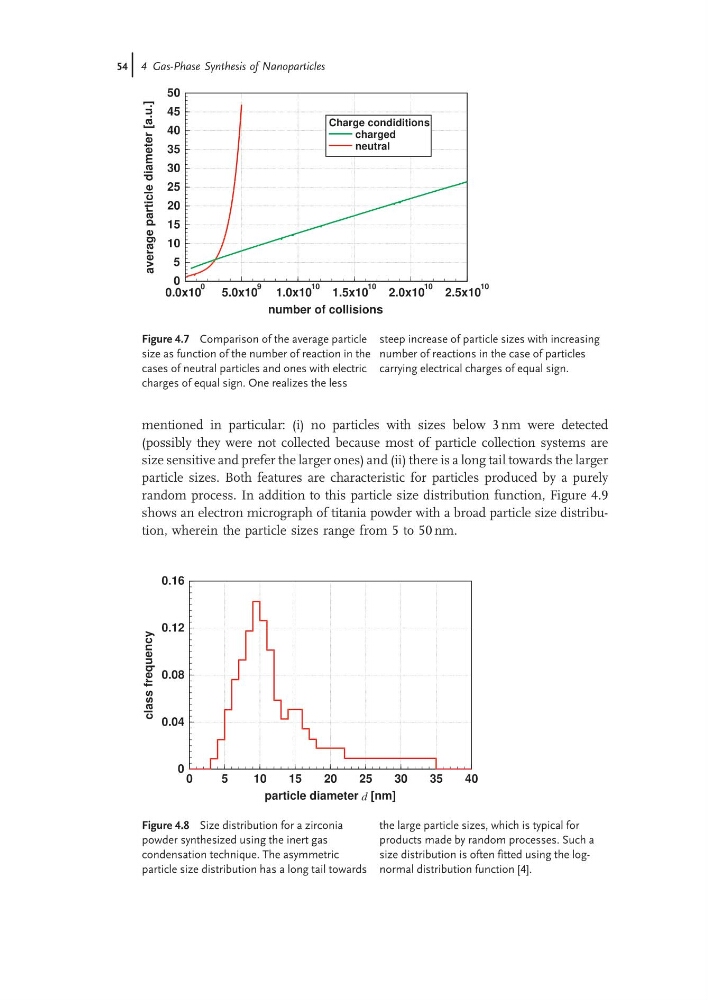
Figure 4.7 Comparison of the average particle
size as function of the number of reaction in the
cases of neutral particles and ones with electric
charges of equal sign. One realizes the less
steep increase of particle sizes with increasing
number of reactions in the case of particles
carrying electrical charges of equal sign.
0
5
10
15
20
25
30
35
40
particle diameter d [nm]
0
0.04
0.08
0.12
0.16
class
frequency
Figure 4.8 Size distribution for a zirconia
powder synthesized using the inert gas
condensation technique. The asymmetric
particle size distribution has a long tail towards
the large particle sizes, which is typical for
products made by random processes. Such a
size distribution is often fitted using the lognormal distribution function [4].
54j 4 Gas-Phase Synthesis of Nanoparticles
(possibly they were not collected because most of particle collection systems are
size sensitive and prefer the larger ones) and (ii) there is a long tail towards the larger
particle sizes. Both features are characteristic for particles produced by a purely
random process. In addition to this particle size distribution function, Figure 4.9
shows an electron micrograph of titania powder with a broad particle size distribution, wherein the particle sizes range from 5 to 50 nm.
0.0x10
0
5.0x10
9
1.0x10
10
1.5x10
10
2.0x10
10
2.5x10
10
number of collisions
0
5
10
15
20
25
30
35
40
45
50
average
particle
diameter
[a.u.]
Charge condiditions
charged
neutral
Figure 4.7 Comparison of the average particle
size as function of the number of reaction in the
cases of neutral particles and ones with electric
charges of equal sign. One realizes the less
steep increase of particle sizes with increasing
number of reactions in the case of particles
carrying electrical charges of equal sign.
0
5
10
15
20
25
30
35
40
particle diameter d [nm]
0
0.04
0.08
0.12
0.16
class
frequency
Figure 4.8 Size distribution for a zirconia
powder synthesized using the inert gas
condensation technique. The asymmetric
particle size distribution has a long tail towards
the large particle sizes, which is typical for
products made by random processes. Such a
size distribution is often fitted using the lognormal distribution function [4].
54j 4 Gas-Phase Synthesis of Nanoparticles